





Sonars
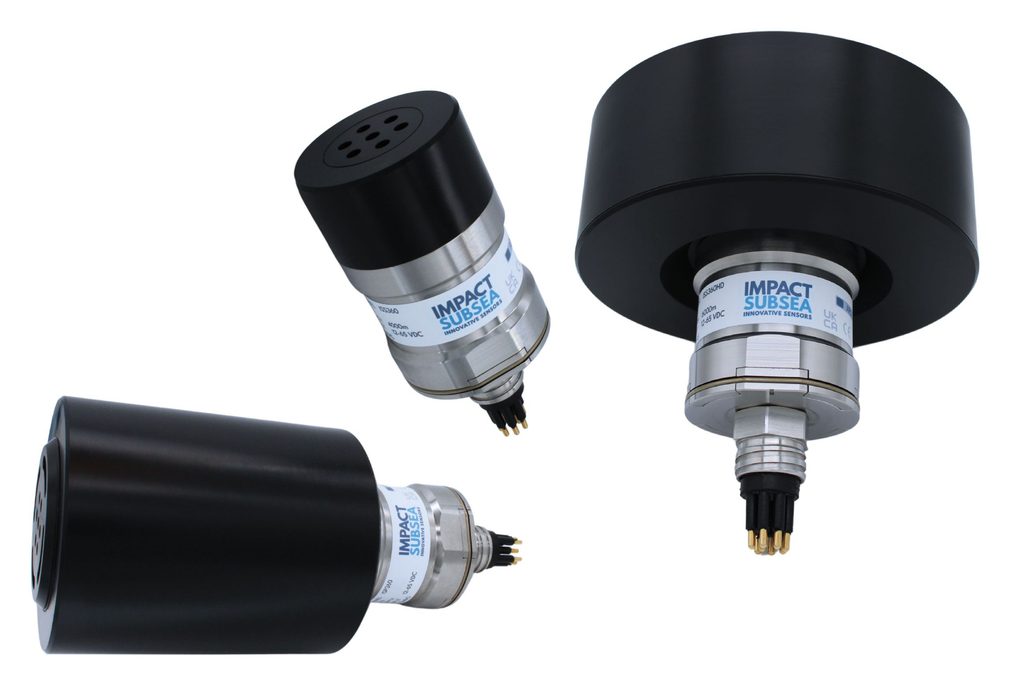
(Image: Impact Subsea)
Power of sound
Rory Jackson investigates how sonars are evolving to better suit both uncrewed systems and the niche requirements of widespread marine organisations
Sonar is a technology that has existed for over a century, although until a handful of years ago, the product space for acoustic imaging and mapping – as far as UUV and USV manufacturers were concerned – was largely limited to either highly expensive sonars produced as fewer than a dozen units per year, or mass-produced, low-priced, highly accessible but low-quality devices. The latter also tend to be very small sonars, lacking in performance and lifespan, while the former come as large, unwieldy solutions requiring similarly large vehicles to carry them (making for a combined solution that is cumbersome to transport and prohibitively costly to own for many parties in need of ocean data).
Over the past five or six years, however, a space has grown between the two, occupied by companies designing small-to-medium-sized sonars sold at mid-level prices. This proliferating breed is capable of very strong performance relative to their size, driven by both advances in hardware componentry and new approaches to embedded software.
And while previously limited to a mid-point in terms of production volume, commercial success is propelling the manufactures of these smaller, software-defined sonars to expand their output volumes from the dozens to hundreds (and in some cases, thousands) of sonars per year, enabling access to economies of scale previously restricted to mass-produced, poorer-quality solutions.
That expansion is rushing to meet audible demand for these products, with USVs and UUVs coming in smaller, more transportable and affordable variations to meet the niche requirements of marine researchers, port authorities, swarm-minded defence services and other use-cases besides the classic petroleum industry requirements. Such suppliers are then going the extra mile by innovating new variations of their products suited to the myriad functions across the oceans.
Those include higher-definition imaging sonars for detailed mapping, multi-aperture side-scan sonars for deeper surveys than previously possible with small AUVs, novel beamforming profilers for advanced navigation and obstacle avoidance, and longer-range and lower-latency forward-looking sonars (FLSs) for simultaneous survey and navigation applications. Even synthetic aperture sonars, once an integration challenge for any small-to-medium-sized uncrewed system because of their large size, are now coming in packages small enough to be hand-carried by a single person.
(Image: Exail)
As sonar types and numbers proliferate, it is worth investigating and appreciating the inputs – whether hardware, software or operating concepts – that are driving the rapid evolution in these systems, central as they are to the past, present and future of uncrewed systems atop and under the waves.
New componentry
While a degree of design variation is inevitable between different types, sizes and grades of sonars, their common functions mean that they broadly tend to follow a general architecture of two tightly-coupled enclosures: an acoustic half housing the operative componentry by which sonic pulses are generated and received, and an inner or lower half encompassing the various electronics key to managing the technologies of the acoustic half. Some characteristics standard of either half are described in the following.
While the electronics can be mounted on varying combinations and types of PCB, it is increasingly conventional to house them within thick-walled titanium enclosures to maximise pressure tolerance and longevity, including down to the increasingly-demanded 6000 m depth capability, although less-costly steels and aluminiums are still widely employed when capability requirements permit.
The acoustic end, being the section containing the sound-sensitive transducers, cannot be walled so thickly as the electronics section because sound permeability may be reduced (and the core purpose of the sonar lost) otherwise. Consequently, the acoustic section will typically come oil-filled to compensate (and equalise) for the high external pressure and relatively low internal pressure amid much lower mechanical protection relative to its electronics. With sufficient design rigour and aiding components (such as rubber diaphragms inside the housing, to seal against and rapidly compensate for ambient pressure differentials), modern acoustics in small, mid-priced sonars may be housed in thin-walled plastic enclosures and still be capable of surveying at 6000 m depths for significant periods.
As uncrewed systems are increasingly adopted as the primary survey tool among industrial hydrographers, SWaP-optimisation of system designs and components naturally becomes more of a priority. And while that is a challenge for most kinds of products, sonars represent a particular frustration for engineers to shrink down owing to the inherent trade-off between transducer array size and beamwidth. A smaller sonar (relative to a given wavelength) emits a wider, less precise beam, making it harder to discern between two or more objects, including in the consequently low-resolution imagery.
To compensate, small sonars are often configured with a higher frequency, which in turn narrows the wavelength and enhances the resolution. However, at a certain point, this strategy risks the same problem of attenuation that RF wireless signals suffer underwater: high-frequency acoustic emissions will have a shorter operating range than low-frequency emissions. Hence, attempts to SWaP-optimise sonars must eventually hit a wall as dictated by the physics of conventional transducers.
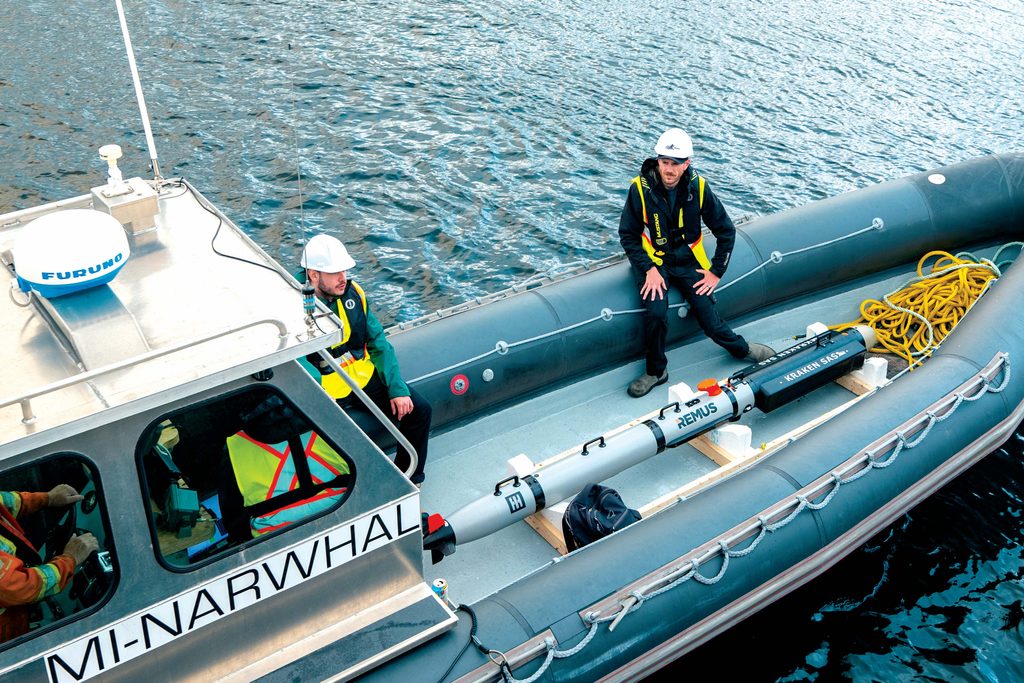
Newer, composite-type transducers are among the innovations enabling that wall to be scaled. While traditional transducers tend to be monolithic pieces of ceramic material, composite transducers are typically supplied as a carefully cut-and-assembled matrix of ceramic and rubber, with electrical meshes wrapped front-and-back.
(Image: Kraken Robotics)
The production process is more labour-intensive than with conventional transducers, but the result is something akin to many small, electrically interwoven transducers working as one, which is considerably more sensitive and more capable than a monolithic transducer of handling wide bandwidth frequencies. While composite transducers may be adjusted to perform across frequencies ranging from hundreds of kilohertz apart, thereby enabling great selectivity of range and resolution to suit the use-case, conventional transducers must be factory-set to handle only one defined frequency especially well.
Other components aiding sonar SWaP-optimisation include flexible circuit boards and similar flat cable harnesses, particularly as these can be folded and routed snugly to overcome the perennial issue of conventional PCBs stacking atop each other in too tall and bulky an assembly for engineers’ (and users’) preferred degree of sonar shrinkage. Such innovations hence enable the sonars’ electronics half to compress down to match the SWaP-reduction of the acoustic half that composite transducers and robust seals are facilitating.
New integrations & features
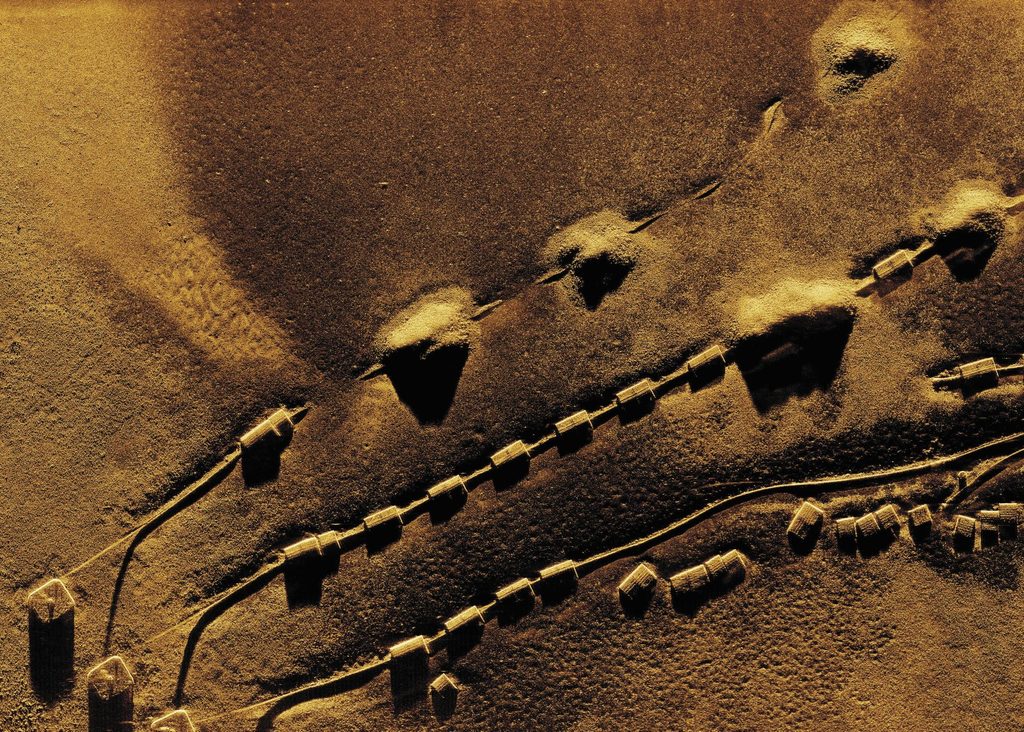
With sonars being made smaller to better suit autonomous surveys, some supplier–customer collaborations are taking advantage by fitting multiple acoustic imagers on a single vehicle. A prominent example is to fit two profilers on the forward face of an AUV, ROV or hybrid UUV, so that as the vehicle traverses along a subsea pipeline or cable, it can ping and image the undersides (its profilers effectively hanging over the sides of the installation), whereas using just one would prevent a clear line-of-sight of whatever is underneath the pipe or cable.
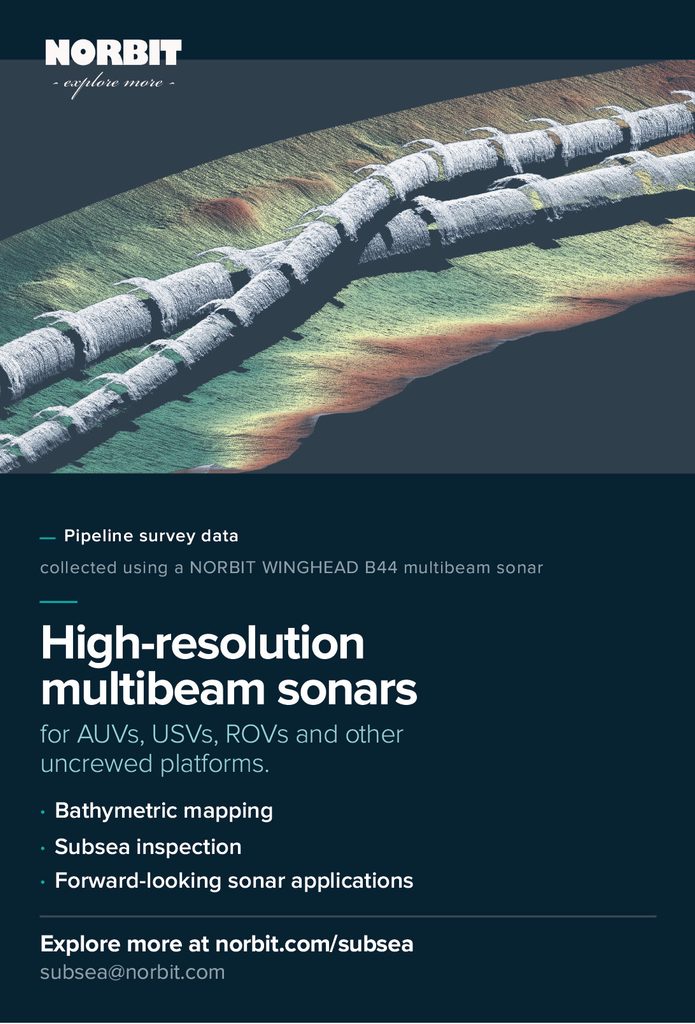
As such underwater infrastructure can be moved from its original location (particularly due to storm currents displacing whatever sand or sediment may have buried a pipeline or cable in-place, leaving them vulnerable to anchors, sand dunes and other interference), this enables the UUV to track – in a single pass – whether such movement has caused anything of immediate concern, like a pipeline hanging over a free space and suffering resultant mechanical stress, or one pipeline having draped over another and potentially damaging the latter.
Such multi-sonar integrations are nontrivial to engineers because two or more small systems pinging with similar frequencies can interfere with one another, unless one accounts for that via ping-syncing. However, engineering this becomes more of a challenge the faster the sonars are meant to run (especially if the customer and supplier wish to ensure quicker surveys over larger areas per dive). If the profilers work using CHIRPs (compressed high-intensity radar pulses) for enhanced range, resolution and sensitivity, it can become almost impossible.
One supplier’s solution has been to adopt phase-shift keying, by which each profiler offsets its frequency and varies its acoustic sinusoidal inputs with different sequences of phase shifts across each transmitted pulse, these representing binary sequences of digits that either profiler then specifically listens for. Two profilers can then run simultaneously, including with CHIRPs, without any significant interference.
It is increasingly commonplace for sonar developers to differentiate themselves through such software-defined capabilities, enabling new functionalities for existing customers – typically just via a patch – without them needing to buy new acoustic hardware.
A standout example of this comes from another supplier, which has engineered the means to use a multibeam echosounder to acoustically identify and measure the layers of traversable sediment – that is, the thin beds of soft, free-flowing fluid mud that hug the seafloor and which vessels can safely move through – to distinguish them from the hard seabed that can actually ground or damage hulls.
Being able to do this will greatly aid commercial and defence fleets in their safe freedom of movement, particularly in and out of ports, harbours and canals, by accurately defining where they can and cannot sail. Conventional approaches to mapping the seafloor and informing navigation charts typically centre around dual-frequency single-beam echosounders, with a higher frequency intended to detect the upper layer of mud and a lower frequency then searching for the harder, non-navigable surface below (the two different pulses separated by a time gate or offset to minimise errors).

The principal problem with that conventional approach is that single-beam sonars only capture a single point below their survey vehicle – constituting a continuous, but very thin line of data along the survey path, which does almost nothing to faithfully map out the dunes and patches of fluid mud that can vary erratically in their distribution and depth about the seafloor. Creating an actionably complete and safe map could thus require potentially hundreds of passes over a small area – an impractical proposition.
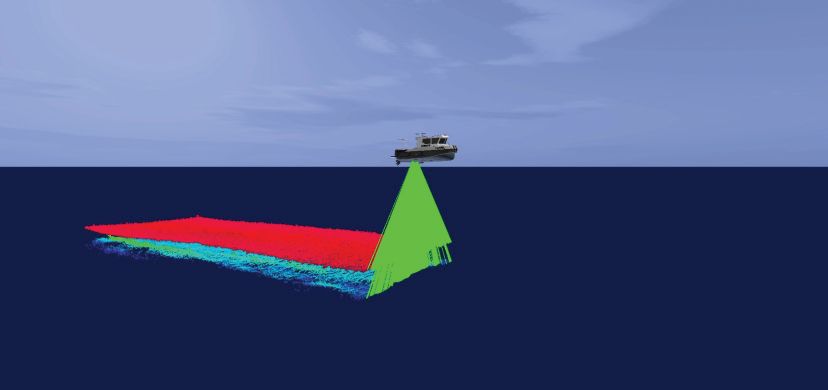
The new approach works by first governing an existing multibeam echosounder to emit both high and low frequencies (ranging from 400 kHz down to 50–100 kHz) in a single ping, with a robust hardware design and configurable software being crucial to effective transmit and receive here. The high frequency, as normal, tracks the upper layer of the fluid mud, with adaptive gates that follow the variations in that top layer (correlating with the physical inconsistency of the mud, being distinct from the hard, constant shape of the seafloor below). A proprietary algorithm then analyses closely to aggressively eliminate outliers and define average mud depths, those figures then defining a new adaptive gate that directly informs the low-frequency search for the hard seafloor.
The outcome is a fine estimation of seafloor hydrography (with further processing able to further remove outliers) that enables much smarter, safer and more comfortable ‘use of space’ by vessels using navigation charts that are informed by this method – as validated by trials with major industrial partners such as dredging companies – including when compared against traditional practices with dual-frequency single-beam technology.
Being able to use a multibeam echosounder to map out the hard seafloor results in well-defined fluid mud volumes and closely defined seafloor hydrography over a wide sweep (with potentially tens of thousands of points measured per second) below the vehicle path. While a single-beam echosounder has been found to still produce a higher-resolution survey along its singular 1D mapping path than this new multibeam approach, the latter inarguably makes for a far more time- and cost-efficient (and overall more realistic) approach to detecting layered mud (and updating navigation charts accordingly) than with any approach previously popularised, making this and similar sonar innovations hugely significant whether an uncrewed vehicle carries just one sonar payload or several.
Hardware ecosystems
As many readers will know first-hand, USVs and UUVs today do typically incorporate a wide range of acoustic systems beyond their primary mission payload, including components for underwater navigation such as FLSs and Doppler velocity logs (DVLs) and, increasingly, acoustic modems for communications.
Altogether, these subsystems take considerable space and make it challenging to design smaller, lighter, more easily-affordable and -deployed maritime uncrewed vehicles. Combining them into one to save space is an appealing idea, but often impractical. For instance, trying to get a multibeam echosounder to track altitude and velocity over the seafloor as a replacement for DVLs would likely increase its latencies and fail to achieve very accurate velocity measurements.
By contrast, at least one supplier has successfully enabled an acoustic altimeter to generate downward-looking seafloor imagery simultaneously with its altitude readings, capturing up to 2000 points of sonic backscatter based on the energy returned per pulse, functionally modelling the seabed in a manner similar to side-scan sonars (except facing downwards) with sufficient resolution to identify objects like seaweed or debris.
Making components behave in this dual-use way is easier when planned for in the base design, for instance by overspecifying the processor far beyond the very basic needs of an altimeter, to ‘leave space’ for acoustic image processing later down the line. Otherwise, an altimeter is well-equipped with the transducers, housings and electronics to serve as a sonar of sorts, once programmed to send and receive 2000 readings rather than one every ping.
(Image: NORBIT)
And across the industry, acoustic system suppliers increasingly focus on interoperability and ease of integration with not only their sonars but also other acoustic subsystems, other underwater payloads and vehicle control subsystems, with well-rounded product ecosystems that plug-and-play as a group together being a boon to smooth and rapid vehicle development.
Software configurability
In addition to new software and hardware advancements, greater configurability of sonar payloads is offering new options and possibilities for hydrographic surveyors to fine-tune their operations towards specific niches.
For instance, we earlier discussed how newer forms of sonars can be made more capable of wide operating bandwidths, and with that territory comes the ability to specify parameters such as the duration of acoustic transmit pulses (or bandwidth, being the effective inverse). Users can then, via their GCS or mission planning software, opt between a longer, more energetic pulse and thus a greater survey range – potentially for a wide-area mapping survey – or a shorter pulse for a higher resolution albeit at shorter ranges, for point-specific inspections along a pipeline, harbour or similar infrastructure.
To illustrate this, a 500–600 kHz bandwidth CHIRP might give a range resolution of around 7.5 mm, while a double-length 500–700 kHz CHIRP would approximate half the range resolution, enabling seafloor objects to sit a few millimetres closer together and still be distinguishable in acoustic images.
In addition to adjusting bandwidths and frequencies, software-configured sonars might also toggle settings such as pulse amplitude or transmission energy level, ranging by tens of decibels depending on product and context to increase range at the cost of battery life, or sample rate, being the effective frame rate with which received pings are processed.
Manufacturing
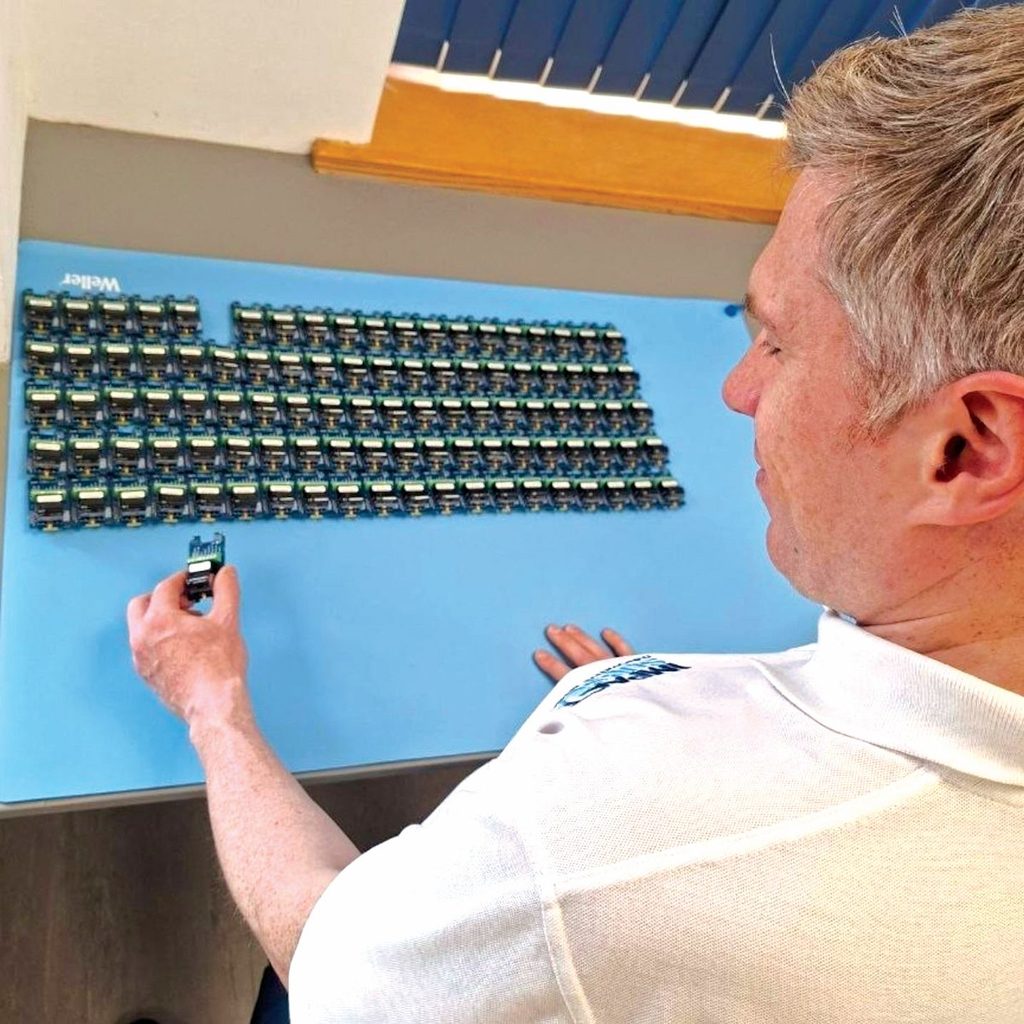
With uncrewed marine vehicles proliferating, more sonar suppliers are setting themselves up to produce large batches of dozens of units at a time, both for initial deliveries to vehicle manufacturers and fleet operations as much as for quick replacements for when maintenance or repairs are needed.
To that end, such suppliers increasingly invest in large manufacturing facilities to realise and produce their new product designs. Naturally, material housings such as plastic transducer array enclosures and metallic electronics housings can be subcontracted to machine shops, and the transducers themselves sourced from specialist suppliers. This does, however, put a significant quality control (QC) burden on the sonar manufacturer because a high-end sonar must be a tightly-integrated system with all mechanical, acoustic, electronic and electric parts fitting together and working as specified, with little tolerance for error or inconsistency in received components.
(Image: Impact Subsea)
Hence, a plethora of visual checks, or even non-destructive testing such as the use of coordinate measuring machines and 3D scanners can be leveraged for such supplied components to pass (or fail) checks before being accepted into part inventories. The same is generally performed on received PCB orders, although more for due diligence and for standards compliance (potentially through automated testing to validate and document each unit’s circuitry) rather than inconsistencies among circuit boards.
The ever-smaller PCBs in small-to-medium-sized sonars are increasingly too cumbersome to solder by hand. So pick-and-place machines are vital in such instances, even if the volumes of the uncrewed space do not seem to necessitate them because such machinery ensures exact and consistent arrangements of surface mount components. Moreover, subcontractors geared for high-end PCB batches tend to be well equipped with X-ray machines and optical inspection equipment that are used to heavily scrutinise each unit before it is approved for shipping.

And before production or QC, close interactions between PCB subcontractors and sonar developers are increasingly crucial to allow sonar companies to define how each product’s circuit boards must be packed and stacked to hit SWaP-C targets (including with flexible circuits, or new forms of chip chosen for SWaP or supply chain security).
Common practice among sonar manufacturers, whether producing units for stock or immediate delivery, is to then group ‘kits’ of all parts needed for a single unit, each part having been checked, documented and given a serial number via QC (with all PCBs being flashed with the appropriate software), and each kit then being ready-to-build into a working sonar.
Once assembled, each sonar is typically subjected to a series of tests lasting several hours to verify its operating capabilities – such as in-water tests in small tanks – after which final QC checks and customer-specific configurations can be performed.
Maintenance
As mentioned, sonar suppliers often manufacture for stock as well as delivery, not only to fulfil new orders more quickly, but also to provide replacements to customers at short notice. As much as the sea is unkind to materials and could risk driving up maintenance requirements over time, sonar designers tend to pay due diligence to minimising corrosion from salt and other sources. In general, uncrewed marine vehicles and their components are actually at far higher risk of damage when away from the water. The most common cause of sonar damage is impacts against ship hulls or decks during UUV recovery, particularly because sonar transducer arrays must face outwards from the vehicle’s hull, often protruding outside the safety of the UUV fairing.
Often, the electronics will remain protected inside their metallic housings, and so an impact breaking the transducers does not necessarily write off the entire sonar. Generally, the other parts can largely be recovered and remanufactured, and thus a detailed servicing arrangement is in the sonar supplier’s interest to reduce part waste.
There are a few exceptions to that rule, which necessitate a range of standard tasks when maintaining or repairing a recovered sonar. For instance, power management faults or human error (such as plugging a power connector into a comms line) can blow fuses and mandate their replacement, and mechanically rotating sonar arrays will typically make use of a slip ring to connect their transducers to the electronics, slip rings being brushed electric components that wear out over time.
Increasingly, however, sonar designers are innovating means of reducing these maintenance duties, thereby extending the lifespans of their products and minimising costs associated with returning sonars to their manufacturers. For example, using inductive couplings to interface transducers with their electronics eliminates the slip ring entirely and can make for a far longer-lasting connection, and designing protecting fairings can shield against impact damage without interfering with a sonars’ fields-of-view – such innovations are thus worth keeping an eye out for.
Future
Despite the lengthy history, sonar products are far from full maturity, with manufacturers of small-to-medium-sized sonars in particular slated to continue releasing new products in the years ahead, across navigation, mapping and inspection applications.
A few trends can be safely anticipated in these new products. For instance, SWaP-optimisation is challenging but inevitable, given the boom in uncrewed vehicle adoption throughout the maritime world driving demand for smaller components than those meant for large crewed vessels.
Additionally, with the need for agile autonomy in UUVs (owing to the difficulty of ensuring real-time operator connectivity underwater), tighter integration of AI and edge computing systems with sonars is being explored. That stands to enhance not only FLSs and profilers for smarter navigation, but also survey-class sonars for inspecting points of interest and military-grade sonars for automatic target recognition.
Advances in sensor fusion and underwater data links are also unlocking new capabilities combining multiple sensors. On a per-vehicle basis, that could mean forms of real-time analytics for more accurately defining physical features and targets using the different sensors onboard a UUV or USV. On a per-fleet or -swarm basis, that could mean real-time identification, triangulation and localisation of targets across vast swathes of sea, with distributed networks of autonomous vehicle swarms sharing data, cross-referencing each other’s findings, and engaging in new echelons of mission such as wide-area minefield countermeasures or oceanic border protection.
With sonar manufacturers upping both their product development and their manufacturing outputs to fulfil such auspicious promise for this critical technology, the sonar space undoubtedly bears watching in the years to come.
(Image: Kraken Robotics)
Acknowledgements
The author would like to thank Ben Grant at Impact Subsea, Paul Badger at Kraken Robotics, Uni Bull at NORBIT and Antoine Rochard and Nicolas Buisson at Exail for their help in researching this article.
UPCOMING EVENTS