







NEWT21 FOG

(Image: NEWT21)
Aquatic autonomy
Peter Donaldson presents a clear picture of NEWT21’s small, low-cost FOG USV designed for military and civilian applications
FOG is a new 4.7 m shallow-draft USV, offering a payload capacity of 200 kg, developed for use in coastal areas, estuaries, rivers and lakes in a variety of roles. The central idea behind its development, according to CEO Janis Garisons, was to create a cost-effective, low-signature USV that bridges what the Latvian developer NEWT21 identified as a capability gap – the need for a vehicle large enough for operations on the open sea, but smaller and more affordable than traditional naval assets, with the ability to take on both military and civilian/commercial roles.
FOG’s military potential was emphasised in a recently completed 100 km mission under autonomous control following the integration of the Vector 400 autopilot, together with a high-performance protected navigation system and high-end maritime EO/IR sensors (more on these later), paving the way for participation in NATO exercise Bold Machina 25 and a demonstration with the Latvian Navy in late September.
With a background in the development and manufacture of composite structures – principally in carbon fibre – and experience with various applications including boats, the team began design work on the FOG USV in 2022 as a response to the war in Ukraine, formally founding the company in January 2025. Their aim was to support the Ukrainian military and to meet Latvia’s own perceived defence needs. The primary missions for which FOG is designed include reconnaissance, patrol and surveillance, offensive and defensive combat, plus search and rescue.
Striking a balance
The main design challenge, Garisons says, was to strike the right balance between speed, payload, radar signature and shallow water capability. Although it draws on experience from NEWT21’s other USV platform – the earlier and more logistics-focused Ray catamaran – FOG was created from scratch with a narrow, flat hull designed for stability at all speeds to provide a good environment for sensors and other payloads including weapons.
The solution is a displacement hull (it does not rise onto the plane like a classic speedboat) that resembles a closely coupled trimaran when viewed bow-on. However, the ‘tunnels’ between the main hull and the smaller outer portions do not continue all the way through the stern, forming partially enclosed boxes that trap air at speed to improve stability. ‘Wings’ further improve stability at both high and low speeds, which is important if the drone has to remain in a chosen spot despite winds and currents, and they give FOG a distinctive broad-beamed appearance from behind. Improving steadiness in both roll and yaw, the wings were added to the USV’s design based on feedback from Ray catamaran logistics operations by Ukraine, Garisons adds. “It’s very stable, even if you accelerate to high speed, and it can accelerate very fast.”
While the Ray catamaran has a deck that is completely flat on each of its hulls (and a flat deck joining them), the upper part of FOG’s hull is raised to accommodate different electronics and mechanical components, and to improve seakeeping on open water, he explains.
The hull structure is made from a polymer reinforced with a mix of high-modulus carbon fibre and Kevlar (aramid) fibre, the proportions in the weave varying to meet localised requirements for different combinations of stiffness, strength and toughness identified with the aid of finite element analysis. This polymer–carbon–aramid composite forms skins either side of a Nomex core to create a sandwich that is laid up in the hull mould and cured in a single piece in the company’s own autoclave. The result is a light, durable structure that is simple to repair in the field. The latter is one area reflecting combat experience with the Ray catamaran; localised reinforcement with extra Kevlar has been designed in to FOG’s hull, and UV-curable composite repair patches developed for use in the field.

(Image: NEWT21)
The moulds from which the hulls are taken are modular, allowing variants to be built 80 cm longer to increase stability and/or payload capacity. Mould modularity also allows for customisation of the internal layout, such as enabling NEWT21’s designers to incorporate bespoke combinations and configurations of internal compartments to accommodate extra fuel tanks, payloads, batteries, weapons and even warheads for kamikaze attacks on ships.
Speed and power
Powered by a 90 hp (67 kW) three-cylinder petrol engine coupled to a water jet, FOG can cruise at 50 kph (27 kt) and reach a top speed of 86 kph (55 kt), and it can turn tightly at speed. (Under full autopilot control for the speed test, FOG proved too fast for the test team’s chase boat to catch, Garisons reports.) This combination of a four-stroke engine and a water jet propulsor was chosen for its capability in shallow water, low acoustic signature and reliability.
“So far it has proven very reliable and, because of the water jet principle, you can use it in very shallow waters. In patrolling some rivers, for example, you would probably have problems with any other type of propulsion system,” Garrison says.
Another option for operation in very shallow water is the surface drive or surface-piercing propeller, but that wasn’t seriously considered because the water jet concept was such a good fit for FOG, he explains. Electric outboard motors with conventional propellers are used on the Ray catamaran, but that vessel is designed for use in calmer waters, he notes.

(Image: UAV Navigation)
One discussion that did arise was whether to use a hydrofoil, which would have enabled even higher speeds. However, because hydrofoils raise a vessel’s hull mostly out of the water, they would have made FOG more noticeable on enemy radar, while also compromising use of hull-mounted sensors that have to remain in the water.
Different fuel tank configurations provide maximum capacities between 30 and 200 L, and with fuel consumption quoted at 11 L/hr, it can achieve a range of 900 km at its cruising speed, albeit leaving a very small fuel margin on that basis.

(Image: NEWT21)
Although there is, as yet, no integrated backup propulsion system, a small electric motor for use in silent surveillance missions is offered as an option. This has not yet been taken up by a customer and, in terms of priorities for military missions, Garisons sees a tamper-proof security system that destroys the most sensitive parts of the system if it is captured and opened by adversary forces as more important.
Designed to be able to work in conditions as rough as sea state 4, FOG has already demonstrated the ability to operate successfully in sea state 3. Eschewing tank testing, performance validation for FOG has been carried out at sea, while combat experience in Ukraine with the Ray system has informed design changes, more of which later. Testing at sea has included sorties into the challenging Baltic Sea with its unique wave conditions. The Baltic is relatively small, shallow and effectively (if not literally) enclosed with a complex coastline. Consequently, its waves tend to be shorter, steeper and more frequent than open ocean waves, and are also highly sensitive to local wind changes and bathymetry, characteristics that present their own difficulties and hazards.
The simplest method of launch and recovery is from and to a dockside, slipway or pontoon; however, the company is examining launch and recovery options from small ships, with an emphasis on simplicity and cost-effectiveness.

Garisons says that the main value NEWT21 adds to the system is in the hull and the integration software, emphasising that its policy is to integrate best-in-class subsystems such as propulsion, autopilot, sensors and communications. The company’s integration software also has sensor fusion capabilities that support functions such as collision avoidance, for example.
Vector 400 autopilot
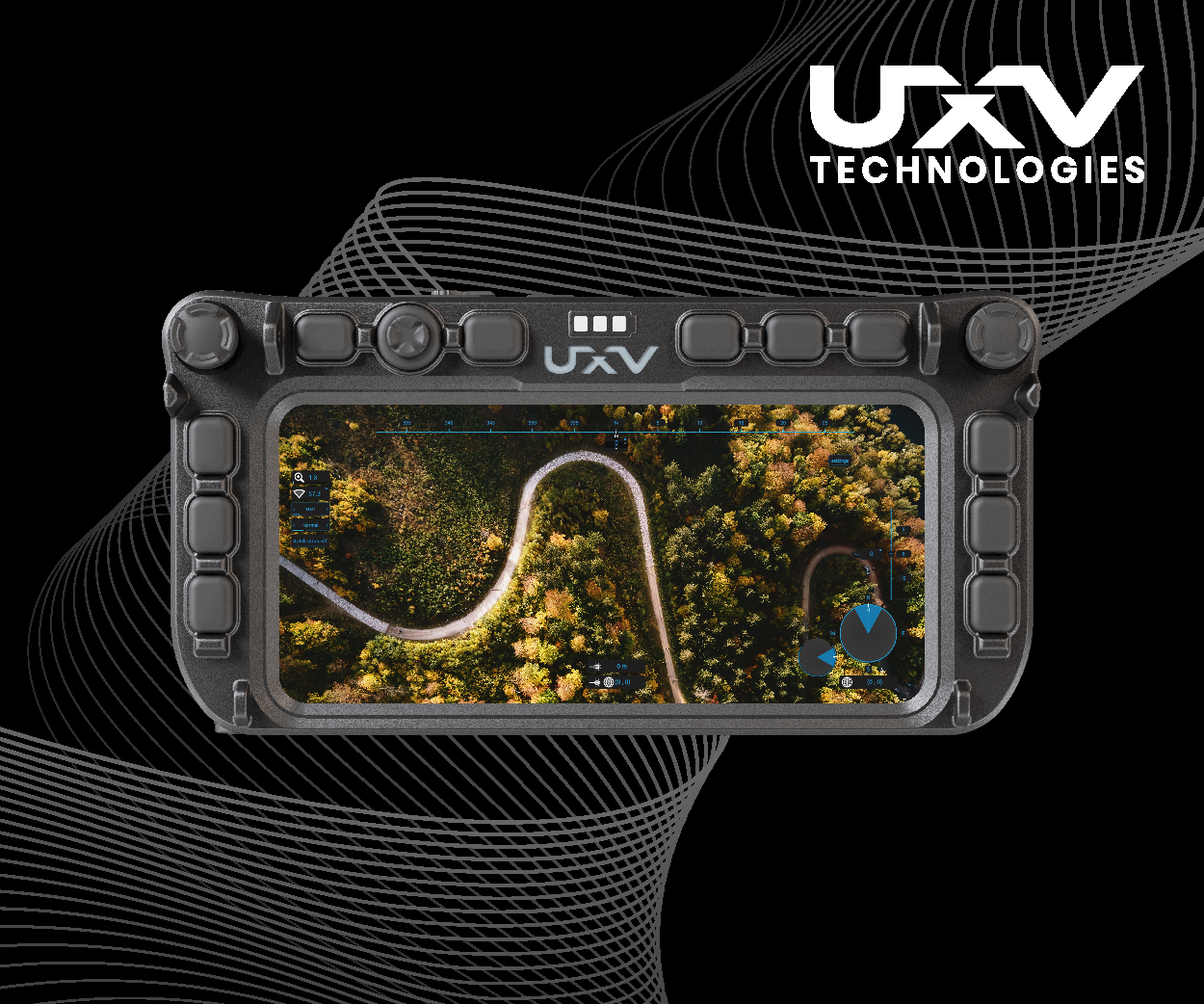
UAV Navigation provides the Vector 400 autopilot as part of a complete solution for FOG that includes the required navigation, attitude and heading sensors and the ground control station (GCS).
The system features dynamic positioning, automatic return on low fuel, and safety functions such as stop on comms loss and automated evasive manoeuvres. It also supports mothership approach protection to prevent collisions during close manoeuvres, dynamic relative routes that automatically adjust to the position of the vessel hosting the GCS, and health monitoring with fault tolerance. Further capabilities include multi-navigation plan operations, on-the-fly modification of plans, geofencing, multi-vehicle operations and automated recovery, while an integrated datalink is optional.
Low-level control is implemented via pulse-width modulation signals with configurable output frequencies of 50, 200 and 400 Hz to drive actuators such as the engine throttle and water jet nozzle servos (supplied by Contromax), for example. Latency is not a significant issue in autonomous mode, according to UAV Navigation’s Ignacio Calomarde, as commands are generated by the autopilot rather than by the GCS, and the system is designed to account for the inherent mechanical latency of the throttle and steering actuators, Calomarde says.
The autopilot’s PID controllers can be tuned in the field for major payload changes, although the system is highly adaptable out-of-the-box.
NEWT21 has also integrated Safran’s NAVKITE, a robust, self-contained position, navigation and timing (PNT) system designed to provide continuous and reliable data for military platforms operating in contested or degraded environments when GNSS signals are unavailable, jammed or spoofed.
Safety & reliability functions
The system includes a runaway protection function that uses engine rpm feedback with configured behaviour tables, ensuring that if engine response deviates significantly from the command, it can be shut down. Additionally, an emergency stop function triggers engine shutdown and issues a full left rudder command to make FOG idle in circles rather than run away. Finally, the primary safety feature is geofencing that keeps the USV within operational areas and away from no-navigation zones, Calomarde notes.

(Image: Safran)
The Vector 400 supports fully autonomous mission execution including following navigation plans, station keeping by countering drift caused by winds and currents, and detection and avoidance of traffic and obstacles to avoid collisions. A mission control computer interface enables customers to connect their own computer to the autopilot, granting it the same authority as a human at the GCS. This enables them to run advanced, custom logics such as ‘if sensor detects X, then do Y’, and automatic target following (or covert shadowing) based on a detection by the vehicle’s sensor system. The system also includes an override that deactivates the Mission Control Computer (MCC) if its behaviour is deemed unsafe, reverting to the core autopilot. “If the MCC detects that something is not running correctly within itself – if it’s not within voltage limits or some calculation hasn’t gone as it should – it lets the autopilot know and tells it to disregard its messages from that point on,” Calomarde explains. “And the same can be done from the GCS.”
It is possible to control multiple FOGs from a single GCS, but NEWT21 is developing a more advanced capability that will enable FOG to operate cooperatively and autonomously with other USVs, such as its own Ray platform. In one operational concept, a group of USVs could work together to follow a selected target, coordinating via satcom. Here, the company is working with German startup Uniq Things UG, and aims to demonstrate the system by mid-2026.
Sensor options
Garisons emphasises that the company takes a modular approach to sensors and other payloads and, rather than NEWT21 offering one or more standard packages, customers choose these systems based on their needs and budgets. This provides the flexibility to tailor sensor suites forming high-end combinations for demanding ISR and targeting missions down to basic packages for ‘one way’ tasks.
However, a number of systems from industry leaders have been integrated for demonstration purposes. One of these is the Vigy Observer system from Safran, integrated for Bold Machina 25. Vigy Observer is a 23 kg stabilised marine gimbal with an HD TV camera and a mid-wave (3–5 μm) cooled thermal imager as standard. The colour TV camera has a 1920 x 1080 chip and a lens system with 40°, 12° and 2.4° fields of view plus a digital continuous zoom capability. The thermal imager also offers continuous digital zoom, this time between 9° x 6.75° and 3° x 2.25° fields of view, along with automatic gain control and reverse polarity features. As options, a video automatic target tracking function and an eye-safe laser rangefinder can also be installed.

(Image: Safran)
Consisting of a stabilised head, a miniaturised electronic unit and a remote command and control function, Vigy Observer is designed for versatility through modularity. The stabilised head has a diameter in rotation of 355 mm and a height of 365 mm. It can rotate through n x 360° in azimuth at up to 70°/sec and elevate its line of sight from -30° to +70°. The electronic unit weighs less than 4 kg, measures 160 x 200 x 130 mm, and has peak power consumption under 180 W.
“Our experience with this camera was very beneficial for us,” Garisons says. “It was not easy because it has been used mainly on big ships and it consumes a lot of data, and therefore you need to ensure very stable communication. Once we did it, it allowed us to integrate many different sensors and link them to the USV’s autopilot and communication systems.”
A lighter option is the Milvus 14Z from Thales subsidiary Merio, which was mounted on a mast at the stern of the vessel to extend its visual horizon. Weighing 2 kg and measuring 14 cm in diameter, the gimballed turret houses a full HD camera with a 30X optical zoom lens and a 640 x 480 longwave infrared camera with a 5X optical zoom, plus a laser rangefinder that can measure target distances up to 12 km, and an 850 nm laser pointer.
Off-the-shelf EO/IR cameras from Teledyne FLIR and SEA.AI have also been integrated.
Comms and C2
Ensuring reliable communications is the biggest operational challenge for USVs, Garisons notes. The current solution is centred on a Starlink Marine system, which NEWT21 integrated for long-range, over-the-horizon control. “That works quite well, and we are also considering different backup options to provide more redundancy for operations on the open sea,” Garisons says.
The company has so far not integrated FOG with any specific military C2 systems, regarding this as a costly area and one in which demand won’t make the effort worthwhile until navies better define USV roles. However, sensor feeds such as camera data streams can be routed to separate receiving stations, but are not fused into a standardised tactical picture for sharing with other assets. “The philosophy of drones in general is to have cheap solutions. Once you start putting effort into integrating them into military C2s, they immediately skyrocket in price. Therefore, it is critical to identify the operational benefit before committing.”

(Image: NEWT21)
In terms of operational maturity, FOG is at the beginning of its life and undergoing testing and instructor training. The larger Ray catamaran is the operational workhorse, and is actively used in Ukraine for both logistics and combat missions, and lessons learned from this deployment directly informed FOG’s design. Combat experience proved the basic toughness of the composite structure, when opposing troops failed to destroy it with small arms fire, eventually succeeding after 20 hours with an anti-armour missile, Garisons recounts.
One FOG was lost during testing owing to what was described as ‘mechanical failure’, but because the cause was an improperly secured sandbag used as a payload surrogate, it could arguably be better described as ‘operator error’. This, Garisons notes, led to improvements in safety procedures and physical securing measures.
Basic maintenance is focused on checking communications, and looking for corrosion on some of the stainless steel fasteners, for which an alternative source may be needed. Also, hull seals are routinely monitored after the boat has been in rough seas.
Garisons reports that they have had no big issues with the reliability of mechanical parts. While some components have been changed, those decisions were connected either with upgrades to the USV itself or to reduce the cost of Ukrainian examples. Most of the latter have been intended for one-way missions, and the customer has no need to invest much in maintaining those machines. That led to a divergence between the one-way drones and the ones built for long-term use, which do need regular maintenance.
Ongoing development
For the immediate future, the company is focused on developing cost-effective fleet operations and selecting a mothership launch and recovery solution. Systems developed for use with large naval vessels are considered too expensive, says Garisons, probably costing more than a typical drone fleet. “We are looking for simpler solutions for use from smaller ships, which would require a special design to do it more efficiently and cost-effectively.”
Looking ahead, Garisons regards the disconnect between rapid innovation in industry and slow military adoption attributable to navies not having defined clear operational roles and requirements for USVs. “My feeling is that the industry is currently running ahead of customers, particularly in navies. Because the technology develops so fast, the challenge for the industry is how to help the customer accommodate all that knowledge.” However, he believes that USVs will drastically change naval warfare, especially in confined seas like the Baltic Sea, by reducing costs and risks – once the regulatory and doctrinal framework lags have been eliminated.
Key specifications
Length: 4.7 m
Width: 1.5 m
Gross weight: <200 kg
Payload capacity: up to 200 kg
Cruise speed: 50 kph
Maximum speed: 86 kph
Fuel tank capacity: 30 to 200 L
Fuel consumption: 11 L/hr
Max range at cruising speed: 900 km
Some key suppliers
Autopilot and autonomy:UAV Navigation Grupo Oesia
EO/IR cameras: Teledyne FLIR
IR zoom modules: Workswell
Inertial navigation: Safran
Multisensor HD gimbal: Safran
Lightweight EO/IR gimbal: Merio
Multi-USV target following software: Uniq Things UG
Satcom: Starlink
Servos: Contromax
Situational awareness/ hazard detection cameras: SEA.AI
UPCOMING EVENTS