





EDAG CityBot
(All images: EDAG Group, except where specified otherwise)
All the world’s a stage…
…and this self-driven vehicle plays many parts, whether in public transport, logistics, waste collection, greencare and more, thanks to robust software, hardware and module design, as Rory Jackson investigates
Those deeply involved in the automotive world will likely be familiar with EDAG Group, an international engineering services provider that has worked with major OEMs since the 1970s.
Originally founded in Darmstadt (Germany) in 1969, this multi-faceted company has grown to encompass 70 offices worldwide and nearly 8000 employees, all dedicated to pushing the limits of efficiency, sustainability and functional safety across commercial mobility.
In the years leading up to 2019, the company’s researchers observed that, despite the endless advancement in mobility technologies, traffic congestion had only worsened worldwide, driving up costs (in terms of labour or supply inefficiencies, healthcare, collision damages and so on) throughout cities globally, due to the overwhelming number of cars in each, despite the statistical finding that the average car goes unused for 23 hours per day.
EDAG then juxtaposed this highly wasteful, inefficient scenario against the very converse, bio-inspired example of red blood cells in a human body. These vessels transport either oxygen or carbon dioxide as needed – and with equal efficiency – throughout the body’s pathways without relying on traffic lights, and with constant flow free from congestion that might restrict the flow of white cells or plasma (in healthy individuals).
Faced with the question of how city roads could be made equally so – and how traffic ‘jams’ might be permanently replaced with traffic ‘flow’ – EDAG determined that a new kind of road vehicle could be the solution to that systemic problem, if it was made modular enough to execute multiple applications, automated enough to work independently of human downtime or ancillary responsibilities, and connected enough to monitor, plan and negotiate its way out of traffic jams before they could occur. Being an EV would also be a crucial factor, both for eliminating harmful emissions and for enabling energy replenishment without being restricted by fuel type or availability.
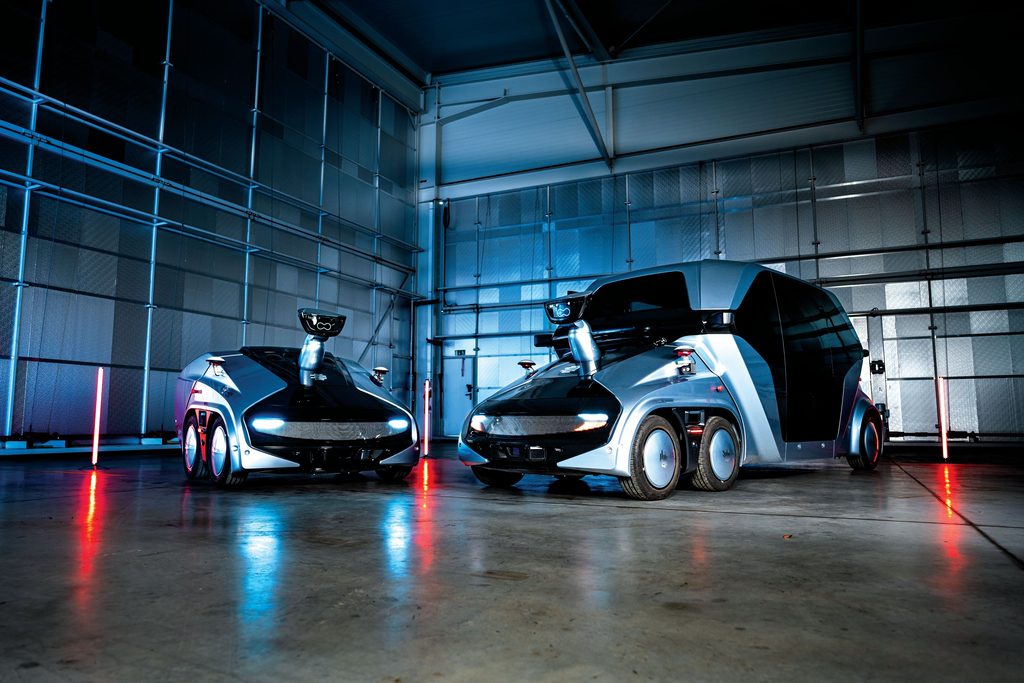
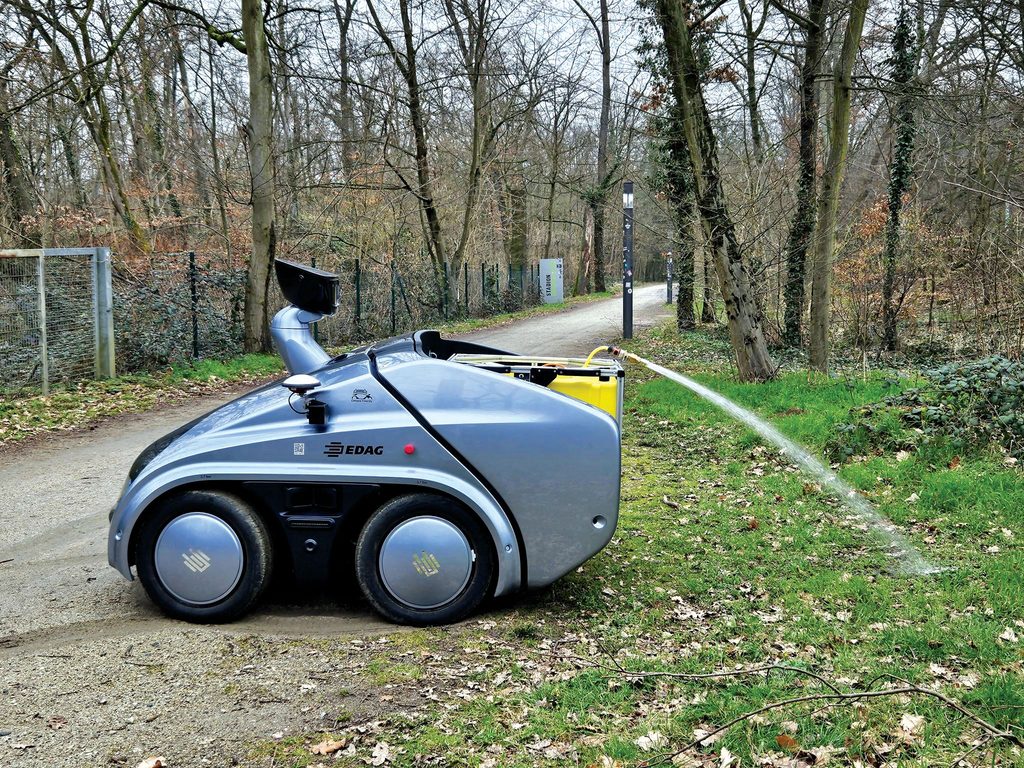
The EDAG CityBot is the company’s concept envisaged from mixing these ingredients. This four-wheeled, electrified and highly automated vehicle comes with an interfacing system at its rear such that many different, application-specific trailers or ‘backpacks’ can be installed (without human input), with CityBot then functioning as the roadgoing, path-planning tractor to those trailers. Payloads designed, built and tested in the vehicle’s autonomous trials already include passenger cabins for public transportation, irrigation modules for greencare work, a dumper module and waste collectors for urban sanitation, and different logistics trailers for middle-mile, last-mile and even intra-hub freight movement. Through this modularity, EDAG estimates 100 CityBots could perform the work of the 580 vehicles normally used to serve every 1000 people in and around the average city.
“Given our reach in automotive technology, we saw many AV and EV concepts being worked on before 2019, but no concepts for connecting or digitalising them in a way that could ultimately resolve the endemic issue of congestion,” recounts Gerhard Körbel, head of program management at EDAG Group.
“Moreover, almost every AV company was trying to make a robotaxi or roboshuttle, despite that being a difficult concept to win consumer acceptance around, and the fact that there’s far more to urban mobility than just moving commuters about.”

Hence, why the vehicle’s open interface can haul a variety of different backpacks (the smaller, payload-like attachments for work such as street sweeping or light logistics) or larger trailers (for passenger transport, last-mile freight and similar applications). Operating concepts for CityBot include hauling passenger cabins for ridesharing by day, and swapping these for sanitation or greencare backpacks by night, hypothetically eliminating the need for many vehicles in favour of one doing many jobs over the course of each week.
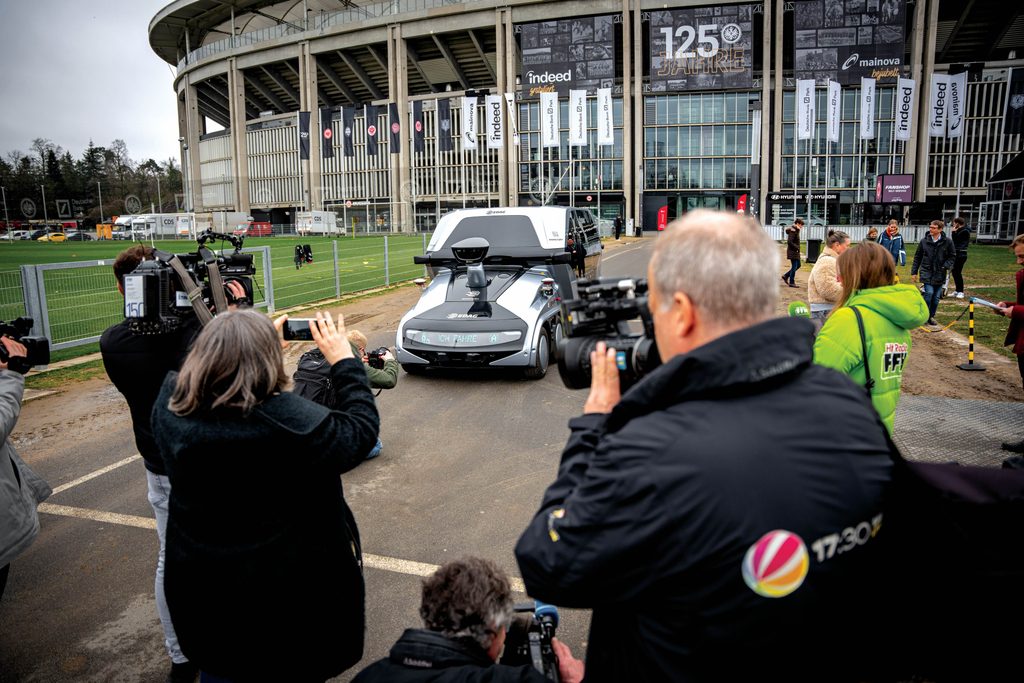
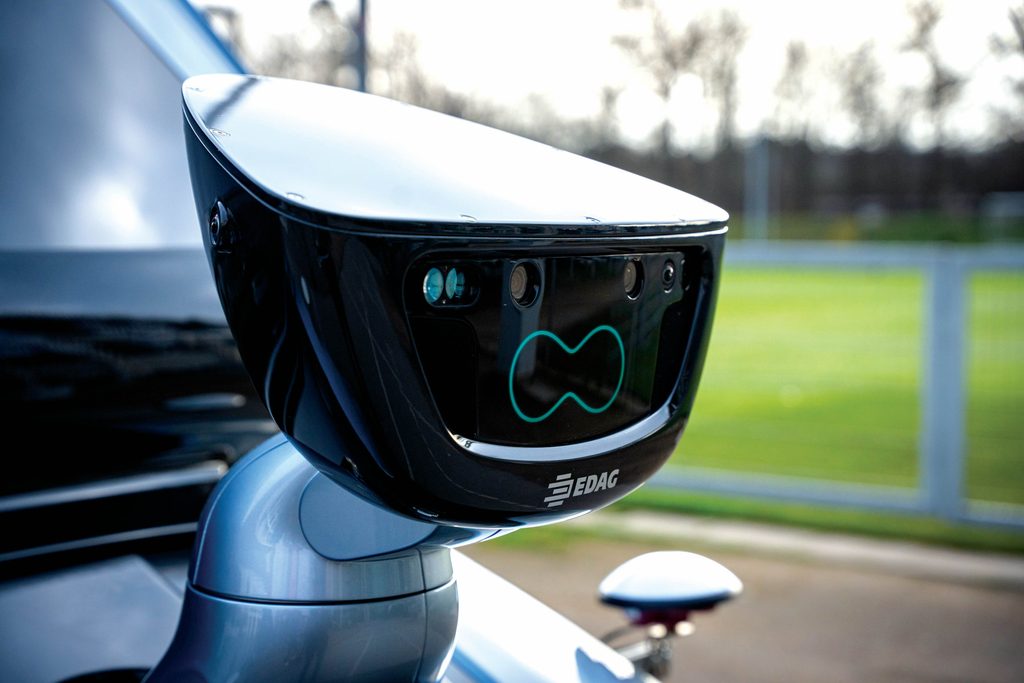
To resolve the challenge of public acceptance, EDAG’s engineers have also designed their ‘avatar’ onto the vehicle. This is the articulating, face-like human–machine interface (HMI) atop CityBot’s bonnet that is electromechanically actuated to meet the gaze of those trying to interact with it (which has met with a warm, well-humoured reception from the public in virtually all of EDAG’s demonstrations and showcasings of CityBot).
The avatar, backpacks and trailers sit around a 910 kg vehicle body, which integrates all sensors, navigation, propulsion and by-wire systems needed for autonomous driving, as well as comms and safety systems for EDAG’s goal of connected, free-flowing traffic. Such systems largely operate off a 56 V DC network, powered by 24 kWh of Li-ion batteries that typically enable up to eight hours of work (based on tests with backpack modules weighing 87 kg on average).
While attaching the heavier trailers will reduce that endurance figure by varying amounts, the battery charges at roughly 100 A or 5.8 kW to minimise downtime. Additionally, the vehicle’s drivetrain mechanics enable it to drive sideways and to rotate through 360° on the spot; these abilities grant it great manoeuvrability through narrow or complex spaces, and enable multiple CityBots to park very tightly together, making the swapping of vehicles in and out of charging spaces or parking yards a straightforward affair.
Given this vehicle’s potential to contribute to more efficient automated mobility and services, we reached out to EDAG, who were happy to explain the engineering behind CityBot’s novel capabilities.
Application & project history
The CityBot concept was first unveiled at the 2019 International Motor Show in Frankfurt, to a profound and significantly broader sense of approval from attendees than might have been expected, with that buzz continuing for the subsequent few years (particularly since, as EDAG notes to us, attitudes across Europe and beyond have changed to prioritise sustainable, autonomous mobility for all, based on community-oriented and experience-driven mobility concepts).
Körbel has been closely involved in the EDAG CityBot project since its early stages and now leads its further development. In doing so, he draws on his almost 30 years of engineering experience at EDAG, and also on EDAG Group’s many decades of development expertise as an independent engineering partner to many of the world’s leading OEMs.
“CityBot seemed like a crazy thing to suggest to the public back in 2019, but their response was so wildly positive that our executive management became fully convinced we had to proceed with its technical development,” he recounts.
“Since the pandemic came soon after, we presented our first ‘technology carrier’ in a series of digital sessions: a viable CityBot design with a waste collector trailer. The concept drew a German politician to visit our headquarters in Fulda, and – impressed by the holistic approach – he supported government funding for its further development.”
That soon led to Campus FreeCity, a publicly funded research project, in which EDAG and its partners explored the use of modular, autonomous CityBots for urban mobility, transport and service operations in a real-world test environment.
“That hardened our determination to advance the CityBot’s TRL to 4, which we defined as a demo in some kind of living laboratory,” Körbel continues. “This led to interest from the department of Eintracht Frankfurt in the Bundesliga [Germany’s premier football league] responsible for advancing and digitalising their arena.
“Surrounding that arena is the very large Deutsche Bank Park, where public events like concerts frequently take place. It’s a place that needs complex logistics, greencare, waste collection and passenger transport – and the public’s cars and bicycles are periodically allowed in through the park’s controls. It was everything we could have wanted for a real, hard test of CityBot’s different capabilities.”
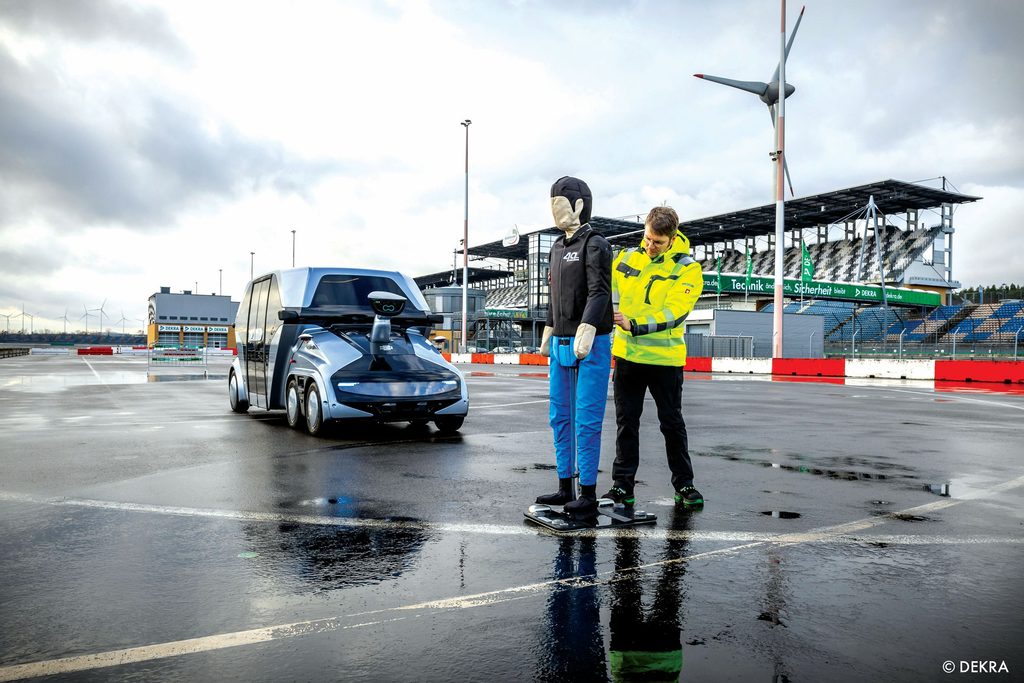
In addition to trialling the CityBot in all of these applications throughout the Deutsche Bank Park in 2024, the company has also trialled the AV in partnership with German automotive testing company DEKRA, with videos taken at the Lausitzring racing and testing complex showcasing its ability to brake or gently swerve in response to objects thrown in its path, or cyclists merging and turning in its way without warning.
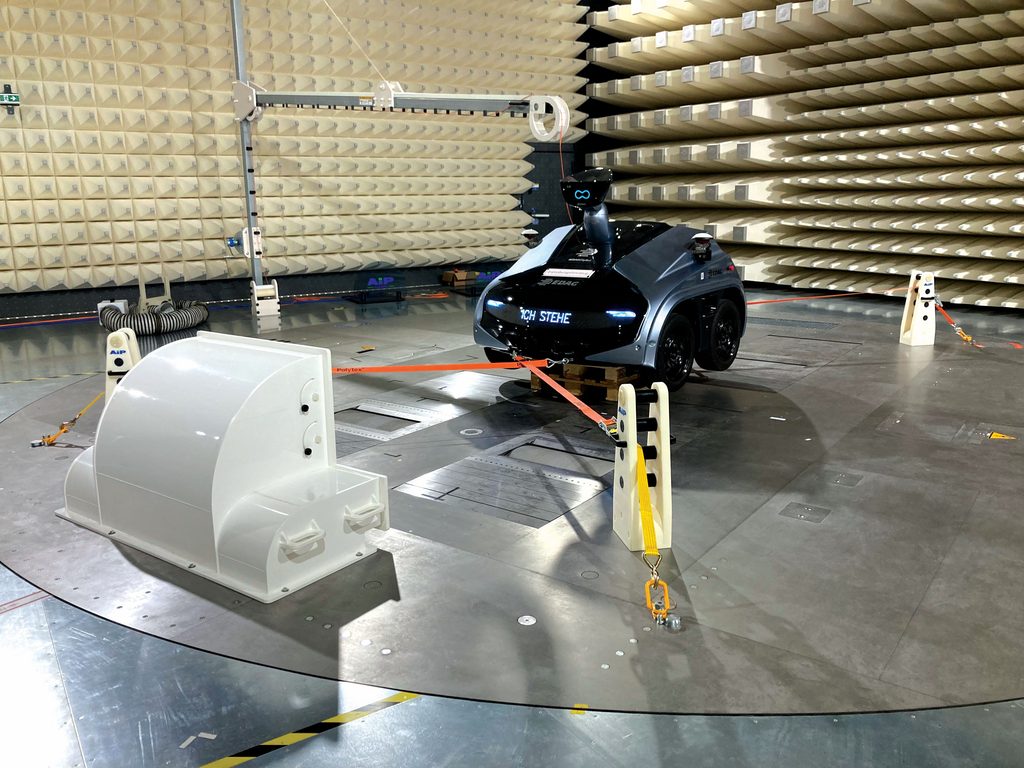
“We’ve also performed winter testing in -10 C outdoor conditions, and extensive EMC testing in our team’s own laboratory in Fulda, switching on all the electrical systems, including the powertrain, to measure the full extent of EM emissions, and also to gauge how well the vehicle and its subsystems resist such emissions from external sources,” Körbel adds.
Vehicle overview
Designing CityBot came with several crucial challenges, not least of which was that EDAG had never designed an entirely uncrewed system before. On top of fully exploiting the space-saving opened up by getting rid of the driver, and making a functioning self-driving stack from scratch, the vehicle had to be structurally capable of hauling wildly different loads (which one can gauge by observing the difference in sizes between its roughly 87 kg backpack modules and the approximately 1180 kg PeopleMover passenger trailer), and also capable of communicating with passengers.

The latter of these requirements, as mentioned, is why the roughly 1.55 m tall, four-wheeled vehicle features the avatar HMI device on its front. The other requirements are made more achievable by the CityBot’s speed limit of 25 kph, as specified within the control software to reflect typical airport driving regulations. Although the vehicle is physically capable of 50 kph at its maximum voltage, many applications – such as greencare or street sweeping – require it to move slower than 10 kph to perform effectively.
With such low speed and dynamics, the chassis has been designed for varying axle loads and applications, ranging from around 700 kg when unladen to a limit of 1600 kg for the five-seater passenger trailer. One of the seats can optionally be converted for wheelchair users, who can access the vehicle via an extendable ramp.
The chassis design therefore mounts coilover struts on symmetrical double-wishbone axles at the front and rear. Subsequent variations of CityBot are slated to use electrically adjusted spring plates on the suspension struts to automatically adapt the vehicle height to changes in axle loads.
While CityBot’s structure is primarily made of steel, the chassis and steering system are made of aluminium. The non-tractor modules are typically made of a mix of metallic materials (particularly aluminium and steel) combined with fibre-reinforced plastic composite components.
Naturally, ensuring automation (from simple waypoint following, up to comprehensive full autonomy without need for an operator in the loop, the latter being EDAG’s long-term goal) meant that integrating drive-by-wire systems and a detailed software stack were requirements from the earliest versions. Also, 360° mobility was needed to ensure the necessary agility and range of applications of the modular vehicle concept.
“For us, ‘autonomous’ means all decisions are made safely by the vehicle, with no need for a safety driver, monitor or teleoperator. So, we prefer to be honest and call CityBot just ‘highly automated’ for now,” Körbel says.
To ensure a stable, secure connection of the trailer and backpack modules to the tractor, the interfacing bay at CityBot’s rear integrates five electromechanical linear actuators, which extend outwards – two horizontally, two vertically downwards, and one rearward – to connect the module to the AV. The rearward actuator functions as a plug for mating and unmating the data and communications interface between tractor and trailer. That connector also optionally serves to power the backpack modules, while the other four servos provide the mechanical bonding.
Autonomy
EDAG’s control autonomy stack is composed of more than 100 software modules, which CityBot’s engineers largely categorise under its perception, planning and acting functions (those being listed in the chronological order in which they are performed).
Perception, as one might anticipate, includes tracking and measurement of surrounding objects; these functions are presently carried out using a combination of Lidar and 3D stereo camera sensors. Critically however, that perception data also informs CityBot’s localisation by recognising landmarks within the AV’s operating environment (as a vital aid to its RTK-GNSS and Inertial Measurement Unit, which also provides centimetre-accurate heading data through a dual antenna integration), on top of detecting and classifying objects to inform its avoidance behaviours.
“Those sensors act as the CityBot’s eyes, and the planning software, along with its hardware carrier, serve as the brain, particularly for those core driving, route calculation and real-time recalculation functions that are universal across its use-cases,” Körbel muses.
“Acting, meanwhile, is the critical stage of how planned behaviours – not just route trajectories but rapid route amendments based on collision and accident avoidance – translate into steering, braking or speed commands for the actuated systems.”
Here, he shows us a route trajectory recording from EDAG’s Deutsche Bank Park collaboration to illustrate how these functions play out in real time. The CityBot’s effective world is bounded by virtual lane markers, as defined within a map of the operating environment constructed by EDAG during the on-boarding phase. A reference trajectory is also typically defined prior to routine operations, ensuring the vehicle preferentially sticks to a given side of the road per the traffic norms (in the Deutsche Bank Park case, the right-hand side).
However, per CityBot’s ‘highly automated’ nature, a situational trajectory for the vehicle’s actual movement is also calculated in real time, constituting the AV’s actual speed, acceleration, steering angles and other vital driving settings. Naturally, that planning behaviour considers the avoidance of pedestrians or other vehicles on the road, whether by slowing, braking or steering depending on which of these the core control software deems the safest and most achievable response – bearing in mind its slow standard speed.
On top of this, however, the planning module also uses the fused sensor data and its AI algorithms to definitively recognise objects outside of the lane markers, these being filtered such that the situational trajectory pre-emptively accounts for the most relevant, safety-critical roadside objects.
“It can, for instance, recognise trees at first – but we only need those that are relevant for maintaining safety distances,” Körbel explains.
“We need to know if there are people or animals, especially ones heading towards the road, or wheeled objects like bins or carts that someone might be pushing onto the road.
“If, say, there are people who are roadside but clearly heading away from or alongside the road, instead of towards it, then it’s not necessary for CityBot to take a wide angle avoiding their position. Ultimately, we’ve put a lot of work and effort into really simplifying all the sensor information into an easy, non-complex picture for CityBot’s brain to use for automated driving with minimised computing power.”
The perception, planning and acting substacks compose the bulk of the core control software. Perception is outwardly the largest of these three, including specific modules for the different sensors, for sensor fusion (and a dedicated close-range fusion function), for the map and for ‘ego’ localisation of the vehicle. The acting modules are almost as numerous, encompassing low-level controls, lateral and longitudinal dynamic controls, chassis data interfaces, the interface for the optional teleoperation and more.
“However, the behaviour planning module, in the planning section, was the biggest challenge to produce because it’s there that you must deal with all the special edge cases that real life can throw at you and a robotic vehicle must react to,” Körbel explains.
“It’s what will eventually make the difference between ‘highly automated’ and ‘autonomous’, defining for instance how CityBot reacts to ambiguous situations. Say a cyclist is trying to veer ahead of you, around a pedestrian crossing the street: how should CityBot behave? Should it stop and observe the situation, or follow the cyclist – or perhaps overtake them? What is the safe decision?
“Alternatively, what if a vehicle in front spuriously slows to a halt at a corner and CityBot can see that there’s no one else around or on the road. Should it overtake immediately or give that other vehicle a moment to sort itself out? Those situations will, one by one, need to be resolved in the behaviour planning module in the future, with great scope for AI to help in context-specific readings of other vehicles’ or pedestrians’ intentions.”
The rest of the core stack is composed of three further groups of modules. First is platform management, which covers vital functions relating to CityBot’s overall state of health, such as its energy management, data logging and global state machine (its centralised model for logic and current status). Then come use-case specific controls largely relating to the actuation of trailers and backpacks. Last are HMI and interactive functions, including the avatar’s kinematics, sounds and LEDs, as well as speech recognition and voice direction detection for persons talking to it.
Within those functions, the avatar’s eye graphics can be customised in terms of both colour and shape depending on the situation. Alternatively, QR codes are displayed for user authentication, which the user can scan using a CityBot app on their cell phone, identifying them as a legitimate, paying passenger. Only after this process is complete do the PeopleMover’s doors open, although voice control can also activate mechatronic functions such as extending the PeopleMover’s wheelchair ramp.
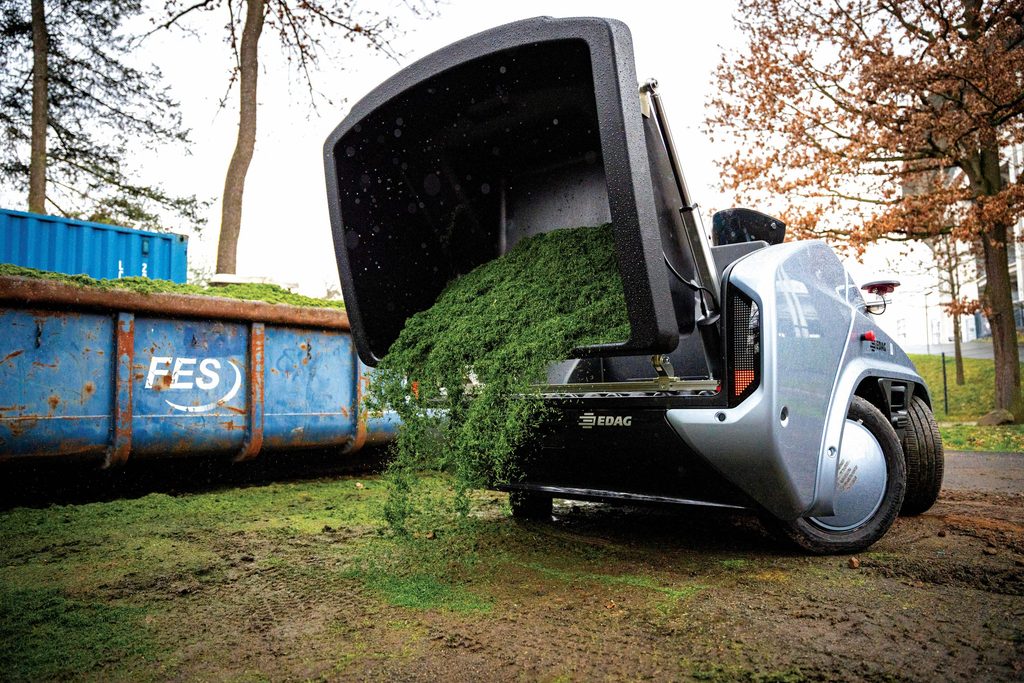
Non-universal, application-specific software functions, such as monitoring and control of the PeopleMover trailer’s doors and ramps, or of the greencare watering module’s fluid levels, flow rates and pump health, are placed outside of the core software stack, with dedicated stacks for auxiliary sensors and actuators (including for the avatar’s microphones and servos).
The overall software architecture has been built using ROS2, having been initiated on ROS in 2019. ROS2’s extended real-time processing capabilities have proven highly effective, and use of the Data Distribution Service as communication middleware is particularly important.
“The different software module groups were developed by different teams, working separately to really focus and flesh out each of their targets. ROS2 enables distributed systems, allowing components to run on different computers. For example, image processing can run on a powerful computer, while motor control runs on an embedded system,” Körbel recounts.
“Moreover, our software platform is, in essence, a broadcaster: it is constantly sending out data signals, be it on subsystems’ health statuses, sensor information, or whatever that’s needed for vehicle monitoring and planning and so forth, and all of that data has to be transmitted and received by the correct modules all the time.”

Platform scalability was also a key development goal: with ROS2-based systems, components can be added or swapped out without having to redevelop the entire system. A prime example here is the teleoperation component integrated at a later stage of the project, particularly because it is hosted entirely in an external cloud.
Communications network & strategy
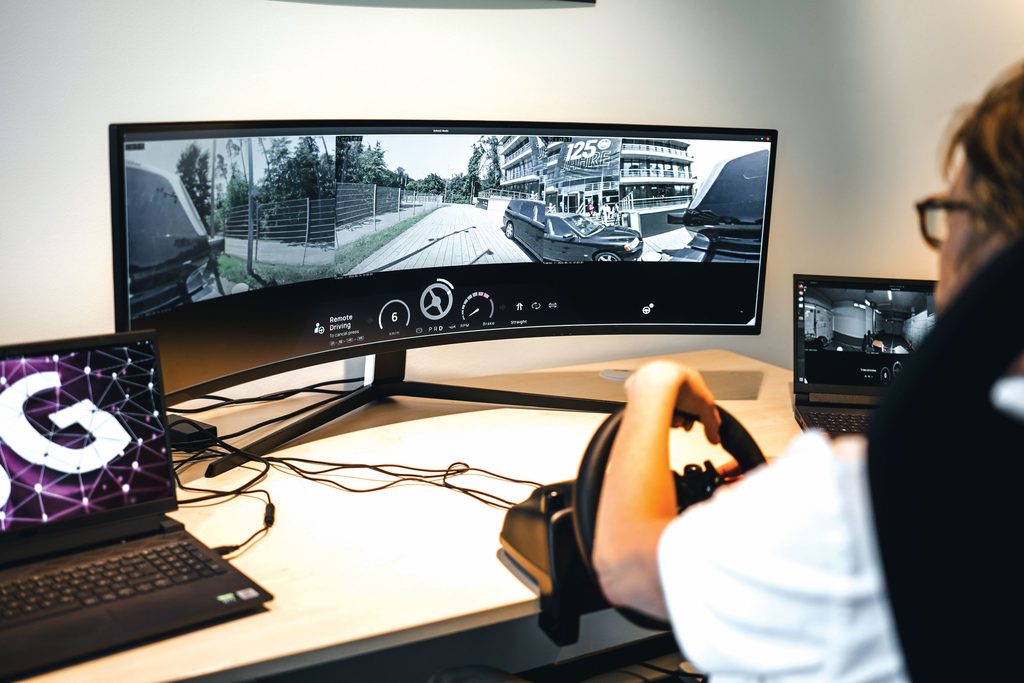
To ensure the teleoperator’s ability to take control if needed – for instance, if the GNSS feed is entirely lost for a certain threshold of time – CityBot’s 5G router integrates dual SIM cards, one being reserved exclusively for the teleoperator’s use.
“That allows the teleoperator to take control of the CityBot until safe automated driving is ensured again; we’ve shown that it even works over huge distances, having demonstrated that teleoperated control over approximately 3000 km was safely possible,” Körbel says.
“But it’s only a fallback, and we’ve very deliberately dedicated no software or hardware resources to teleoperation physically onboard CityBot because we’re convinced that in five to 10 years, as full autonomy comes closer, teleoperation would only be required in a few exceptional situations.”
Minimising CityBot’s comms latency and maximising its integrity were crucial first steps towards EDAG’s broader communications concept for distributed, connected mobility. Under that plan and how the network has been engineered consequently, the CityBots all communicate persistently with each other over 5G cellular links (using the second of the dual SIMs) and the internet.
Other nodes in that concept include case-specific operations centres responsible for fleet management and dispatch authorisation (but not teleoperation), the actual teleoperations personnel, groups of users or customers depending on interface requirements (such as ride hailing apps tracking proximity of CityBot transporters by GNSS, or groundskeepers tracking watering or mowing progress) and a mobility backend that performs several key functions.
Paramount among these is integration of real-time driving-critical information into the map, enabling encounters with problems such as roadworks, traffic jams or spilled cargo to be shared and georeferenced with the remainder of the fleet, which can then update its route planning behaviours to avoid work-efficiency losses.
“Importantly, the map isn’t only updated by CityBots. We also have an open interface for smart infrastructure to feed data into the map,” Körbel adds.
“For instance, trees at Deutsche Bank Park have long used small moisture sensors on the ground to directly call CityBot to specific locations in need of watering. That’s one example, but shrubs, flower gardens, fields or vineyards could be treated similarly.
“And in more urbanised settings, traffic cameras and other external sensors could be easily integrated to fuse road status information into our map, so that CityBots keep navigating from A to B as seamlessly as possible. And that can save each individual CityBot from having to actually encounter a traffic jam by knowing it’s there – smart infrastructure integration offers AVs the possibility to ‘peek around the corner’, as it were.”
Functional safety & control
Procedurally, each CityBot’s sensor data informs its own map updates of the operating environment, with key information (filtered principally to account for closures and blockages) including relevant aspects of ego localisation data then delivered to the backend’s shared map, and that more detailed map then updates the maps of other CityBot vehicles in real time.
“Planning this architecture took severely intensive paperwork over a few months, early in the 28 month project lifetime leading up to the Deutsche Bank Park living laboratory: many, many functional process fragments that describe incoming and outgoing information, commands and the like in detail – all of which had to be synchronised in terms of timing within a complex and comprehensive network,” Körbel explains.
Several further properties have been implemented to ensure a level of functional safety appropriate for laboratory operations, while ASIL automotive standards will be addressed at a future time, primarily as certain subsystems could not be available wholly compliant within the timeframe of the project.
“But to definitively work towards functional safety compliance, and thus bake a pathway to future ASIL compliance into the fundamental design of the CityBot, one thing we did focus engineering efforts on was our safety monitor,” Körbel notes.
The safety monitor is a software module sitting downstream from the VCU (under the ‘acting’ group of modules), which serves as a filter or gateway covering all mobility-related processes and tracks for signs of failures or faults, including when internal latencies start to exceed a defined maximum threshold (specified as the point at which vehicle response times are insufficient for safe operation).
If one of the safety monitor’s required conditions for safe operation ceases to be satisfied, it has the authority to bring CityBot to a full stop. For example, a loss of GNSS signals lasting more than an input length of time will, through the safety monitor, trigger a halt.
Alternatively, if a request for motor torque exceeds a specified limit value, the safety monitor can request the relevant software module to recalculate or validate the request, or stop the journey as a last resort.
“For laboratory operation, a specific safety concept with defined variables – like how long CityBot could run without GNSS, or how long signal latencies between subsystems could be allowed to grow – was approved, accounting for the fact that the campus had many other vehicles running logistics or transport, young and old visitors, and people going about their day,” Körbel explains.
Computers
When we investigated Schiebel’s Camcopter in Q3 2024 (Issue 57), the Austrian aerospace company explained how it integrated three computing units into the early design of its UAV to ensure, at the outset, a minimum of both redundancy and surplus computing power that would preclude having to change the system architecture for as long as possible, even if software bandwidth and latency requirements shot up exponentially in the years ahead.
EDAG’s computer hardware follows the same high-level architecture and engineering logic, having been powered by three COTS computers (two to the left of the avatar’s base, one to its right).
“On top of the many different software avenues we began with, like the perception, planning, acting, HMI, sensors and so on, we also had to consider that future backpack, trailer and smart infrastructure integrations will bring so many more control, monitoring, AI and HMI functional requirements than we can realistically predict. That, plus not knowing how functional safety regulations would affect computation or redundancy requirements, made it crucial that we maybe over-engineered it a little bit from the start,” Körbel says.
Over time, however, EDAG has determined that the energy consumption of its computing system bears optimisation. Possible approaches in this regard include use of field programmable gate arrays (FPGAs).
“Our results from an R&D partnership with the Fulda University of Applied Sciences are really promising so far, showing that – strategically speaking – relying more on FPGAs will make for a more scalable system with regards to expanding functions. So, come our next development level of CityBot, we’ll almost definitely have more FPGAs in our computing concept,” Körbel comments.
Upcoming versions of CityBot will also make greater use of industrial computers because of the greater robustness and thus more reliable operational readiness those stand to bring at later stages.
Sensors
A walk around CityBot will reveal three Lidars at its front, four side-mounted Lidars (two on its left, two on its right) and one final Lidar at its back. That eighth Lidar winds up covered when a backpack or trailer module attaches to the tractor. Hence, all those modules integrate a rearward Lidar of their own, which automatically interfaces with the tractor via Ethernet upon successful attachment to ensure CityBot retains that safety-critical rearview perspective.
No manual reconfiguration of the vehicle set-up in the system by the operator is required to continue automated operation with a different module. Detection and reconfiguration take place automatically.
“That might not sound like any noteworthy achievement, but bear in mind that the Lidars are feeding complex sensor fusion, obstacle avoidance and localisation-aiding algorithms, which must keep working despite changes in the number and location of sensors,” Körbel says.

“So, it’s really not as easy as you might think to automatically and seamlessly change one of the crucial inputs for those algorithms, from one sensor to another that’s in a different location, and have everything keep on working as consistently as before.”
Moreover, some modules are so large that the vehicle’s collision area grows to merit increased sensory awareness, such as its passenger transport trailers, logistics trailers and leaf collection trailers.
In these cases, additional sensors will be distributed about the trailer to update CityBot’s situational awareness and operations-critical algorithms. The PeopleMover, for instance, integrates two additional Lidars on top of the rear-facing one alluded to, which mount at the two front corners of the cuboid-shaped trailer, giving that complete tractor–trailer AV a total of 10 active Lidars.
To calculate safety distances between objects and the CityBots in various module configurations, its obstacle bypass trajectories must be described mathematically in the simplest possible way. For this purpose, a minimum 2D space around CityBot and its module – defined as three circles of equal radii extending from its front, rear and middle (or one such circle if only CityBot or a single small backpack are driving) – are strictly kept empty of sensed obstacles at all times.
“We could have chosen a different approach to the ego and situational trajectories than this circular, mathematical approach, but this way keeps things very computationally low-duty, and a tighter, more accurate reflection of the vehicle’s shape would have been far more complex,” Körbel
explains, before demonstrating a 2D simulation in which the bounded three-circles-area of the CityBot avoids (through appropriate trajectory calculation) penetrating an elliptical bounding area around a perceived obstacle in its path.
The Lidar model chosen to facilitate such avoidance and other driving intelligence was a compromise between the short- and mid-range systems available across the market at the time because that suited CityBot’s low operating speeds. EDAG also wanted to avoid complicating its engineering by using more than one Lidar model (and thus more than one interface, multiple sets of performance specifications and so on).
“We had already decided during the concept phase to use solid-state Lidars – despite the significantly higher costs at the time – because they offer greater mechanical robustness,” Körbel notes. “This is particularly important for CityBots deployed in off-road or rugged terrain, where such conditions pose a significant risk of failure for moving mechanical parts.”
The avatar integrates a 3D stereo camera module from Stereolabs for perception and classification of objects ahead of CityBot, which are fused with the Lidar data for automated driving. Körbel notes that self-driving was also successfully performed with an integrated radar in 2025 to demonstrate the system’s hardware scalability, but radar is not a strict requirement for any present use-cases.
“What is needed, however, is an additional laser rangefinder in the avatar because measuring exact distances to some objects is critical for certain work,” Körbel adds.
“We also have three additional surveillance streaming cameras around CityBot, which we dedicate to focusing on interactions with pedestrians and passengers and for the remote driving, so they don’t provide any crucial data for automated driving. There are four more surveillance cameras integrated on the PeopleMover: one inside the carriage to watch the doors and ramps, and two mounted on the right and left side and one at the back, which are especially important if the teleoperator ever needs to take over because they must have an overview around the size-increased vehicle.”
Powertrain
Each wheel is housed in its own ‘corner module’, with each corner module being a turnkey system comprising almost everything needed for steering, braking and power throttling.
At the core of each corner module is an in-wheel motor, above which is mounted an electromechanical steering actuator. The two rear corner modules each have an additional actuator that functions as a parking brake, while a single, central actuator on the vehicle chassis serves as the mechanical service brake while driving (routine braking otherwise coming from the in-wheel motor’s regenerative electromagnetic braking).
Each actuator (and the packaging around the wheel) gives its wheel a steering angle of 132°. That facilitates the aforementioned spot rotation (meaning a 0 cm turning radius) as well as a tight cornering capability when such manoeuvres are needed, skid-steering for 90° sideways movement, and a diagonal ‘heading-offset drive’ capacity, maximising how CityBot can navigate through cramped spaces such as park forests, logistics yards or even fleet parking zones where CityBots may be parked or charging in a tightly-packed area for space efficiency.
“That helps with work on awkward terrain like grass cutting or watering, and with edge cases like spot rotating while spraying water to cover trees or plant beds efficiently, but it also ensures CityBot can always couple with its trailer or backpack modules, no matter the angle of approach it needs to take,” Körbel says.
Each in-wheel motor produces 20 kW at standard battery voltage, and although that voltage can be doubled to enable 40 kW power output per motor, the total 160 kW power output (and 1000 Nm torque output) would be excessive for virtually all use-cases.
“They may technically be overpowered, but the COTS motor we’ve chosen was a really good fit for the tyres and rims we wanted in our design,” Körbel continues.
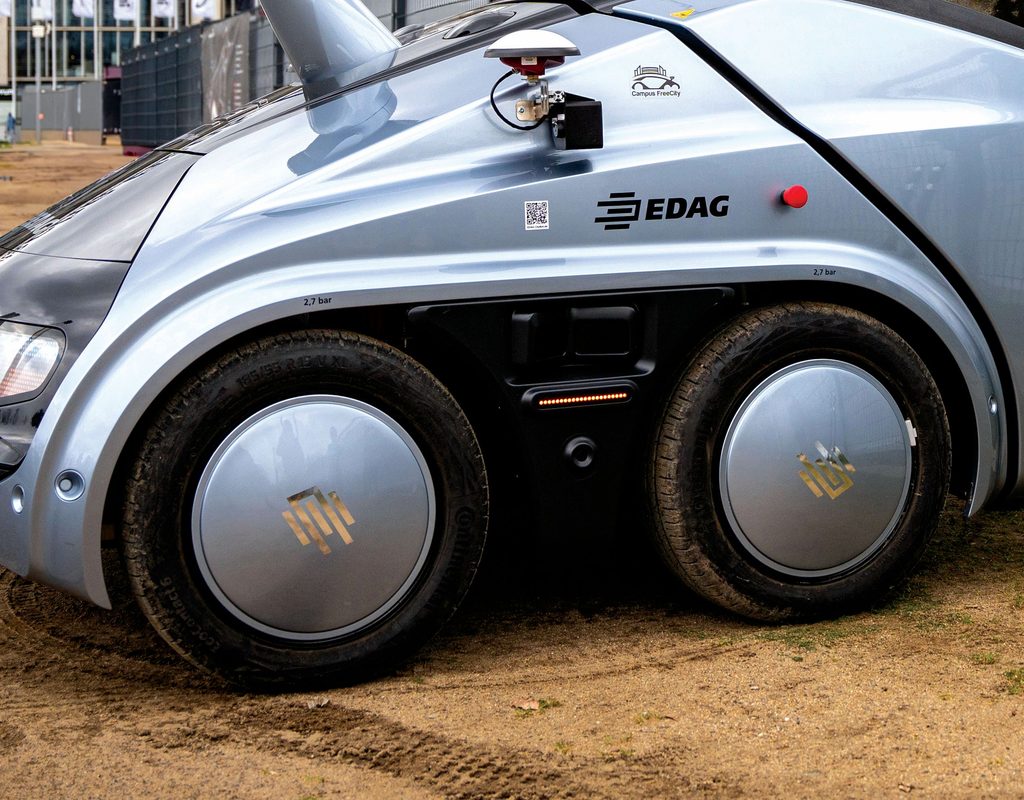
“Plus, they come with their own integrated drum brakes. While we mainly rely on electric motor braking, those drum brakes are very packaging-efficient and they are less susceptible to corrosion than disc brakes, especially if significant time is passing between mechanical braking because disc brakes will accumulate rust, dirt and so on if you don’t use them regularly. So, the drum brakes are a very appealing backup for safe braking.”
Each motor has a dedicated inverter, mounted on the chassis near its assigned corner module to minimise cable lengths, and paired with an additional DC-to-AC
power converter for the steering actuator, being a high-power system integrating steering brake functionality (to keep the wheel at a defined angle and so prevent the vehicle being forced off course by a collision or similar incident).
Energy for the powertrain is distributed among 10 battery module blocks, which integrate at two points in the centre-forward of the vehicle body (one roughly at the upper nose-like section of the bonnet, the other at the undercarriage). This integration concept allows for modular testing or replacement of new energy storage solutions products – for instance, keeping the conventional batteries in one section as a fallback while running experimental battery or hydrogen fuel cell tech in the other.
Avatar
The original plan was to have the avatar head dynamically rotating while driving in order to expand the sensor detection range to approximately 270° and enable dynamic interaction with the environment.
However, during their research and development work, it was determined that – given the short development time – this approach would have added little functional value. In certain edge cases, however, the avatar’s rotation is used to control actions outside the standard field of view, allowing the avatar to enable the vehicle to look (for example) to the side or backward to identify plants that need to be watered or trash cans that need to be emptied.
To facilitate such movement, the avatar head integrates two electromechanical rotary actuators directly underneath for panning and rotational movements, while a third, linear actuator in the base allows the system’s ‘neck’ to extend from or retract into the vehicle body – retraction being useful either for aerodynamics, reduced lever-arm instability or meeting the gaze of shorter persons interacting with the vehicle.
When carrying people or freight in transit, the avatar will typically retract all the way down, with just the head protruding from the front to ensure the stereo camera’s field of view, while it extends by 400 mm when CityBot operates in campus-like spaces where both people and vehicles might be located. That height retains a safe stereo camera view of the road ahead, while also ensuring that the sensor can view the faces of all adults of normal height in front of CityBot for day-to-day HMI functions.
“There’s also a third, taller height it extends to for maintenance, when we need easy access to all the mechanical parts from head to neck base,” Körbel adds.
Future
EDAG presently considers the CityBot at a TRL of 5, meaning the technology so far has been validated in a relevant operating environment. Reaching the next stage, by the company’s plans and standards, will require much lengthier and comprehensive CONOPS demonstrations in such environments.
Should EDAG successfully proceed to develop a final prototype, its operations will need to be tested and demonstrated in a similarly appropriate environment for TRL 7, with that system being completely optimised and qualified for commercial readiness to meet TRL 8; TRL 9 thereafter signifying that the actual final product has begun carrying out its real-world, multirole operations.
Accordingly, the company is proceeding with plans for future projects that will be vital to informing CityBot’s technical development and maturation. One of these is the EU-funded RemoteReadyMove project, aimed at building a framework by which human remote monitoring of industrial autonomous systems (with teleoperation only when necessary) can become standardised, and thus support future scaling of commercial autonomy across Europe (particularly by managing scenarios where autonomous systems cannot yet determine optimal courses of action with full confidence all by themselves).
As one of the project consortium’s 14 partners, EDAG is conducting its activities at Kassel Airport (Germany), where CityBots are being deployed and evaluated in logistics and transport operations, with the insights gained thus contributing to the development of practical, scalable and socially accepted solutions for autonomous mobility services.
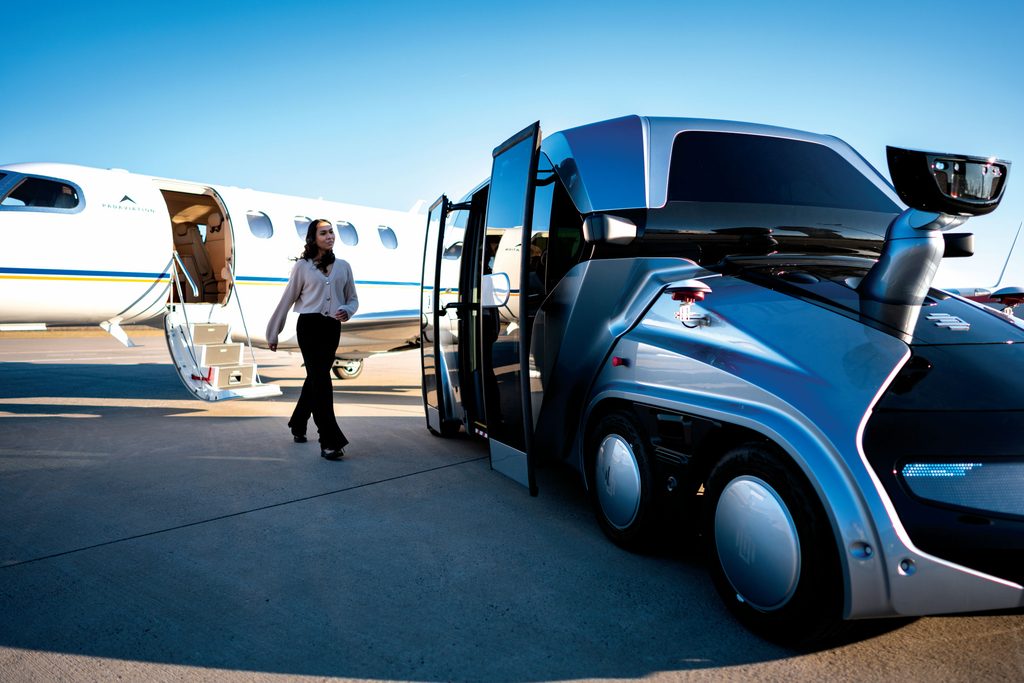
With more programs such as these in its pipeline, and much public support behind its steady progress, the EDAG CityBot should no doubt be expected to lend its helping hands – and show a friendly face – far and wide in the years ahead.
Key specifications
EDAG CityBot
AV
Battery-electric
4WD
Kerb weight (without modules): 910 kg
Nominal operating time: 6–8 hours (backpack configuration)
Maximum operating speed: 25 kph
Peak speed: 50 kph
Turning radius: 112 cm maximum with forward motion; 0 cm when spot turning
System operating voltage: 56 V
Hauling capacity: TBD (exceeds 1600 kg when integrating PeopleMover module and transporting six typical adult passengers)
Some key suppliers
3D stereo camera: Stereolabs
5G Router: Sierra Wireless
Actuators (avatar): LINAK
Actuators (avatar): IGUS
By-wire actuators and controller: SPINEA
RTK-GNSS: Septentrio
Vehicle ADCU: Ecotron
UPCOMING EVENTS