








Avilus Grille
(All images: Avilus GmbH)
Rescue ranger
Rory Jackson investigates this unique high-power multi-rotor, born in direct response to a call from the German military for a flying paramedic
Modern defence forces are built upon concentrations of professional soldiers, and their effectiveness depends not on hitting recruitment quotas, but upon keeping highly trained personnel at fighting fitness.
Before the fight, it means maintaining logistics, provisions, rest and morale; after the fight, it means triage – the ability to rapidly evacuate injured troops from battlefields and into medical care is paramount not only for avoiding fatalities, but also for mitigating lasting bodily and psychological harm.
Small wonder then that many new defence solutions innovated over the past several years focus on medevac, such as BAE Systems’ multi-terrain Armored Multi-Purpose Vehicle or Bell’s MV-75 (the tilt-rotor formerly known as the V-280 Valor).
But for those militaries determined to get wounded soldiers to operating tables at life-saving speeds, something more rapid and specialised than such crewed solutions is needed.
Avilus, based in Bavaria (Germany), saw such determination firsthand in the early 2020s, through its discussions with the German armed forces (the Bundeswehr).
As Avilus’ CTO, Max Söpper recounts to us: “Even before the war in Ukraine started, the German army strongly felt that its rescue chain wasn’t efficient or high-capacity enough, and it wasn’t possible to build enough new Boxer AFVs [Armoured Fighting Vehicles] at sufficient quantities or speeds to that end.
“They needed new solutions, and so they said: ‘We need a flying stretcher’ to Ernst Rittinghaus who, back then, was working with the German army on ground-based evacuation systems, and today is our principal investor and CEO.”
A proven developer and supplier of ground vehicles, Rittinghaus began searching Germany for an ideal team to add the required aerospace expertise to deliver such a project. With no interest in sinking tens of millions of euros into a large, established OEM, just to wait five to 10 years before ever seeing a live demo, they knew that one small startup would be agile enough to make something real and get it flying within a year or two.
Rittinghaus was soon led to the Technical University of Munich (TUM), where Söpper and other future co-founders of Avilus were PhD students under Professor Florian Holzapfel, head of the Institute of Flight System Dynamics. Söpper and Niclas Bähr (today COO of Avilus) were the first ones whom Prof Holzapfel directed to begin work on Ernst’s concept; Daniel Dollinger, today Avilus’ head of design (with whom we also speak), joined two days later.
Within a week, the team had an aircraft concept. So close was its resemblance to a cricket that they named it ‘Grille’, the German word for Grylloidea-family insects.
“Ernst was very convinced by the project, so much so that he immediately wanted to invest and order our first components,” Söpper says. “The first project was contracted from TUM and developed through Ernst’s vehicle company, Binz Ambulance – Und Umwelttechnik GmbH, but as we categorically wanted our own company to develop and produce Grille, Avilus was founded shortly afterwards, acquiring the necessary assets from Binz within about a year to begin operations properly in 2021.”
A few core principles have governed Grille’s design. One was a determination to avoid what would be the industry-standard approach of building a multirole UAV and slinging a stretcher under it. Instead, Avilus focused on designing the UAV around the medevac use-case (although cargo can be carried as an alternative use-case), going so far as to largely design Grille around its medical bay payload, ensuring the primacy of the Bundeswehr’s ‘flying stretcher’ request across design, componentry and CONOPS decisions.
“And the CONOPS is based on the concept of ‘Load and Fly’: simply getting the patient into the drone and then to the surgeon as fast as possible,” Söpper notes.
Second, safety by redundancy was critical, meaning conventional quadrotor or helicopter designs, prone to crashing upon the loss of a single prop or motor, were unsuitable. And third, the military requested the solution be highly mobile; thus, the aircraft and all its equipment had to fit a 20 ft container and be very easy to operate.
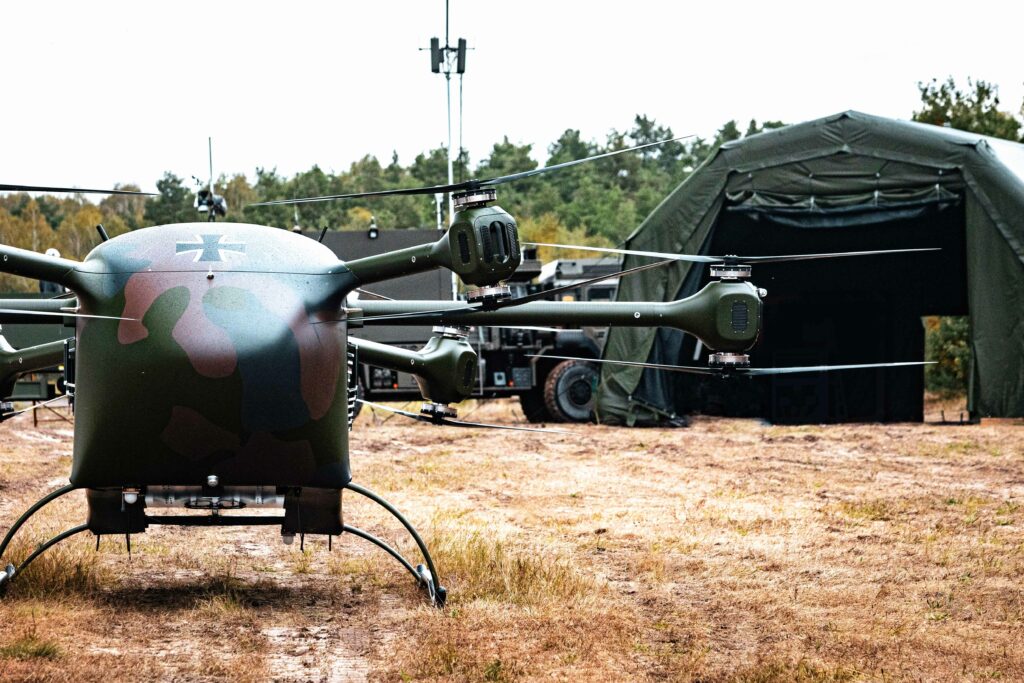
Grille’s appearance today is, hence, a logical and inevitable outcome of these principles. Six pairs of coaxial rotors – meaning 12 propellers and electric motors in total – ensure that the 750 kg MTOW craft will continue flying safely even if multiple propellers or e-motors are lost.
In standard operations, the 12 rotors together give 86 kph cruising speeds (47 knots). They also enable estimated flight ranges of 51 km: around 25 km from the first launch point to the patient, then roughly 25 km back again, with 30–45 minutes’ flight time at 86 kph.
“There’s no single point of failure across the avionics, powertrain or elsewhere: if anything fails, something else will step up and keep Grille flying,” Söpper says. “And all arms and components are disassembled within a couple of minutes without needing tools, meaning no mechanics or toolboxes in the field – and that’s also why we made it fully electric.
“It’s not a push for eliminating ICEs or just trying to be flashy. Fuel engines have more moving parts, multiple fluids to manage and change, and need specialists to troubleshoot faults, as well as lengthy stores of replacement parts on hand.”

Hence, the Grille has a multiple-redundant battery pack architecture powering its 51 km range and 240 kW (321.8 hp) top power output. Engines, by contrast, are hard to make redundant – and packing multiple engines would mean more noise from combustion, and doubling the number of mechanical failure points that ICEs entail, thereby comparing poorly with the all-electric approach. Additionally, each pack can be swapped within 30 seconds through a quick snap-fit, whereas refuelling could take several minutes with no option for quick-swapping.
“Electric also means availability: press one button and the powertrain is operational, without waiting five minutes for the oil to heat up before you can start your rescue chain,” Dollinger adds.
“Frankly, we’ll never do a hybridised version of Grille. It would jeopardise this design that we’ve optimised, and we’ve proven we can achieve the ranges the German armed forces need of us on battery power alone. Any range increases we might need can be added through periodic cell updates and other optimisations.”
Firing up the Grille
Today’s Grille is the third – and likely final – generation of the platform, all three having exhibited the same essential concept of six rotor pairs about a body designed for carrying a patient.
“Grille 2 featured an upgraded powertrain over the first prototype, which enabled a very good, closed-loop control bandwidth as well as a little more airspeed, gust tolerance and fault tolerance; it also made the UAV a bit lighter overall, giving more payload capacity,” Söpper recalls.
Grille 3, or X-03, brought in a complete structural redesign, going from a skid-based landing structure to four legs. The previous generations had also been built on a frame structure, connecting all thruster arms through the body, meaning that the body was largely fairings with minimal load-bearing capacity, and composed of a combination of carbon and different metals.
“Now, we have a full carbon monocoque, where the aircraft itself bears and distributes loads,” Söpper says. “The third generation additionally brought in a distributed multi-parachute system, which is effective from 30 m altitude rather than the 100 m that the preceding generations’ single-parachute design required for minimum effectiveness in softening landings.”
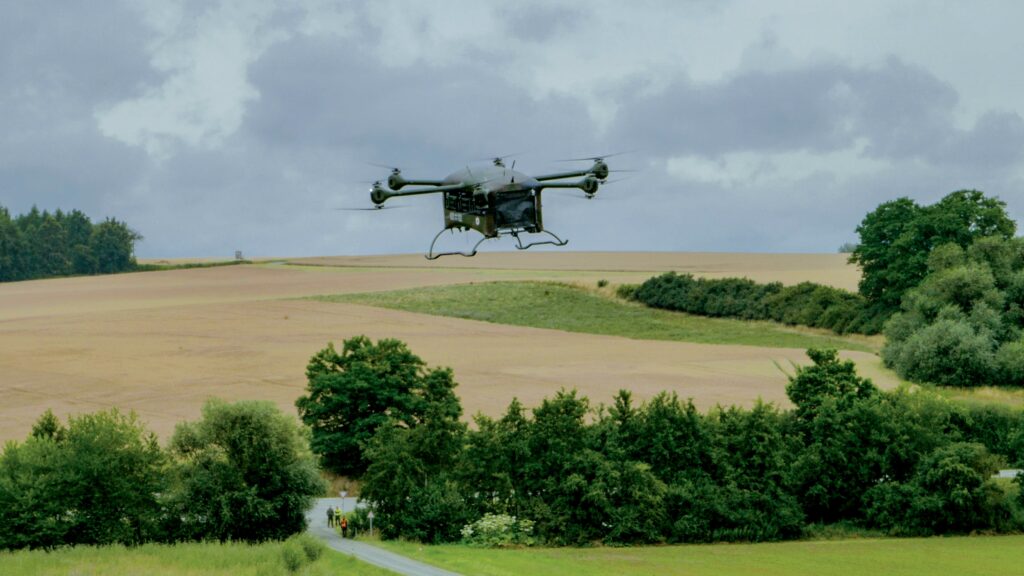
With the third generation also came the fast-swapping, click-fit battery approach, as well as a modernised medical cabin with numerous design qualities and functions vital to both the patient and the surgeon (explored below).
The X-03 completed its first secured flight testing in the first week of November 2025 (although the aerodynamic concept and flight control logic had been extensively proven in the first and second generations), before achieving its maiden flight at Manching in the following week.
Some minimal optimisations followed, and five units are now under construction to begin trial services with the Bundeswehr in 2026.

“Right now, if we hire no additional people, we can easily build and deliver 20–30 units of Grille per year; if we hire more people – which we very much plan to – we can easily increase that figure,” Söpper muses.
“We plan to bring up capacity to the point that we can build 50 units per type, per year – that’s Grille, plus our newly revealed other UAVs: Wespe and Bussard – so, 150 units per year by 2027–2028.”
In addition to supplying the German armed forces, Avilus is also participating in the European Defence Fund (EDF) Integrated Medical Capability (iMEDCAP) project. There, multiple actors, including the Bundeswehr and other uncrewed systems companies such as Milrem (documented in Issue 23), are collaborating to explore varying CONOPS, technologies and vehicle configurations for autonomous battlefield medevac in CBRN (Chemical, Biological, Radiological and Nuclear) scenarios.
And as a final key asset in its testings and demonstrations, Avilus has been granted a Light UAS Operator Certificate (LUC) for obtaining the privilege to self-authorise drone flights, a permission granted only to highly trusted platform makers and operators – others include Schiebel (Issue 57), Primoco (Issue 51) and Flying Basket (Issue 40).
Central hospital
Grille’s subsystems are distributed around the central medical cabin as is practical, with the six rotor arms integrating motors, motor controllers and inverters.
The roof contains key avionics such as GNSS-aided-inertial navigation systems, BVLOS radios comms, parachutes and Avilus’ proprietary RasCore (Robotic Autonomous Systems Core) Air – the central avionics stack.
At ground level, one typically finds the company’s RasCore Ground (the Ground Control Station; GCS), as well as the Patient Evacuation Coordination Cell (PECC), which comprises the 20 ft container into which Grille, its components and its supporting infrastructure disassemble. PECC can henceforth be transported by way of a range of suitable trucks, among other vehicles.
Given its reasonably simple structure, so heavily defined by the medical cabin, we queried of Dollinger what defined Grille’s cabin.
“We started with a very basic concept for the medical cabin that we could show at exhibitions, but then we talked with a lot of experts for designing a proper medical cabin that would meet both civil and defence medevac standards,” he recounts.
“That’s why the Grille has a slight backwards-tilting angle when standing on ground: it’s better for the patient’s comfort, and for shock resilience when the cabin is being loaded or unloaded. We also spoke with military chief surgeons to understand their standard procedures, and how soldier groups and the rescue chains would accommodate the loading or unloading; that gave us the physical dimensions and thus how much space we needed to leave in the aircraft.”
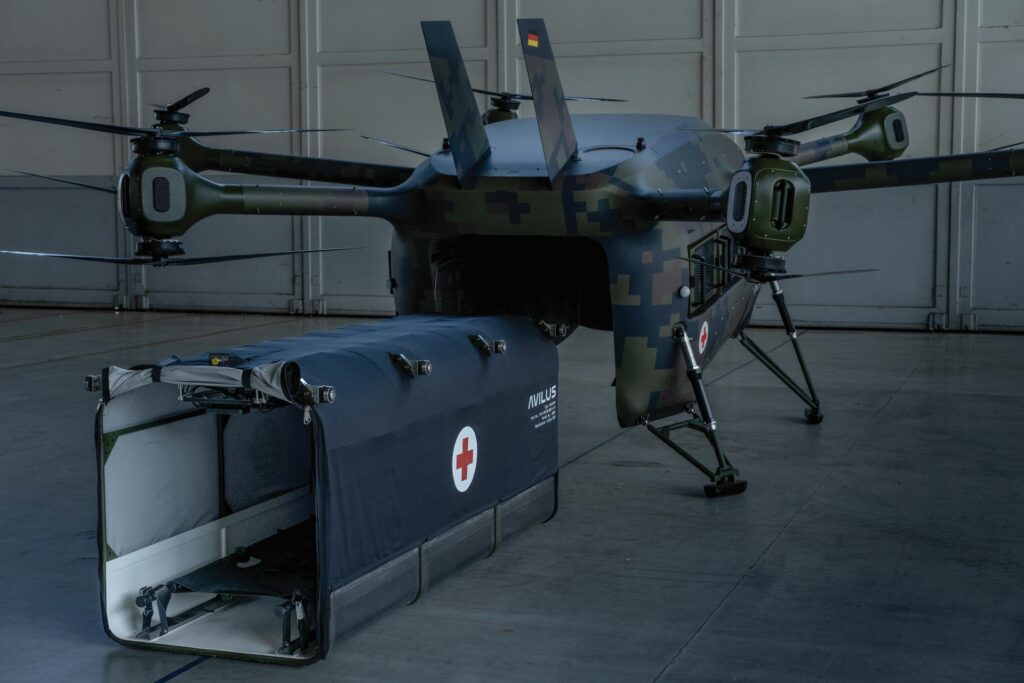
The cabin is approximately 2.2 m long, and weighs 40 kg empty, its inner dimensions and straps accommodating and securing a standard medical stretcher, so that patients need not be moved from one stretcher to another, either before or after transport via Grille.
“Inside, the space is about 60 cm diameter in height and width, giving the patient enough freedom of movement such that there should be no claustrophobia; and we’ve generally chosen bright, white, soft materials inside to give positive feelings to any patient still able to sense their surrounding environment,” Dollinger continues.
An adaptable lighting system provides either white or tactical red illumination (the latter used as standard by the military to protect personnel’s night vision) to the patient and those moving their stretcher.
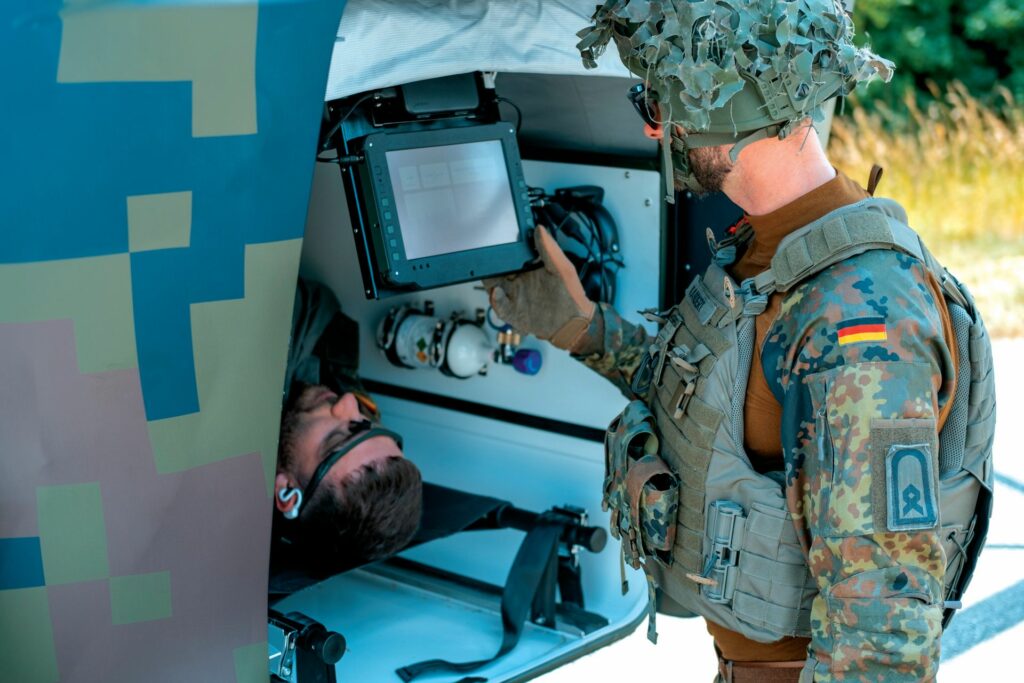
A bidirectional audio-video system is also installed for real-time communications between the patient and physician: a ruggedised tablet (of the customer’s preference) in the cabin connects to Grille’s multi-redundant data links, enabling the patient to reach the physician at Avilus’ GCS or their own preferred interface. The tablet also displays a concise introductory and instructional message, in case the receiving team is unfamiliar with the vehicle.
“People are always surprised by how comfortable the overall experience in Grille’s medical cabin is,” Dollinger muses. “I did a demonstration for a German army general before, who lost track of the 10 minutes he was inside the cabin, and was really surprised when it was over; he’d expected it to feel far longer.”
The medical cabin slides in and out of Grille on simple, standardised rollers and flanges, as widely used across automotive designs. A single connection wire with a bayonet latch provides the cabin its power and signal interfacing with Grille, and can also be used for any logistics pallets that end-users may wish to install for transporting rations, radios, medkits and so on to forward operating bases or frontline squads.
As a final key point, a vitals-monitoring device is stowed in the cabin and worn on the patient’s ear during transport. Through this, physicians can track the patient’s heart rate, oxygen saturation, body temperature and other stats in real time.
“The medical wearable is made by Cosinuss, also based in Germany, and is one already used by helicopter rescue organisations in the Alps,” Dollinger notes.
Monocoque structure
With the UAV’s design locked-in around the six rotor-arms and central medical cabin, Avilus’ heritage from TUM’s Institute of Flight Dynamics made further modelling and optimisation of the aircraft’s aerodynamics a straightforward process.
“The concept had been heavily analysed both in simulations and on paper before we’d built the first prototype; we closely understood all points of efficiency, attitude and loading needed to achieve the performance we wanted – so the rest of the work was just structure and hull,” Dollinger says.
The monocoque structure improves strength-to-weight and load distribution, but also makes the craft more series production-ready, and reduces the use of structural metals to mainly titanium screws (which Dollinger praises as a most helpful low-weight means of structural strengthening).
Söpper adds, “In the earlier generations, the aircraft’s disassembled parts were held together with standard bolts, which would sometimes take a bit of hammering due to an imperfect fit. But now, we’re switching to a more sophisticated, proprietary solution in which the locking mechanism is fixed to the aircraft, even when unmated. That will make assembly and disassembly even faster and free of possible mistakes.”
The composite materials and production techniques differ between different sections of the aircraft because not everything can be done on a single mould, and Avilus has toiled extensively to account for the load differentials between sections.
“The arms especially must be built differently to the monocoque, fairings and so on, predominantly due to a crossflow phenomenon that VTOL multi-rotors with fixed-pitch propeller blades experience; as they move forwards, air passes across their prop blades and interacts with them very differently than when props are used as per fixed-wing aeroplanes,” Dollinger explains.
“Helicopters use joints to allow some degree of blade flexibility that compensates for these crossflow effects, but when multi-rotors use hard props, it can cause additional loads and moments onto the propeller and, hence, onto the motor and the structure.
“I would say we’re among the first companies to really delve deep in research, exercises and tests into this subject, so we’ve had several years to start understanding what’s going on in these crossflow interactions, and that’s enabled us to design proprietary improvements into those affected components.”
Cricket grounds
The original concept drawings of Grille featured six unusually J-shaped landing legs, the future Avilus founders having been adamant about ensuring controllable landings in any terrain, and preventing the aircraft getting impeded or stuck in snow, mud or other hazardous ground conditions.
“Imagine six umbrella handles and you’ve got it,” Söpper muses. “We replaced those legs with a set of skids at a certain point for feasibility of production, load distribution and simplicity – but now, with generation three, we’re actually going back that way, towards different forms of legs with different kinds of dampers on them.”
The dampers enable greater space for load routing, mechanical play and adjustability between mission and environmental profiles to prevent damage shivering up into Grille when landing, as well as helping the craft free itself from earth or ice it may have embedded itself in. More importantly, they improve shock absorption when landing a patient, protecting their wellbeing and preventing a potential source of further harm.

“For especially complex terrain, we have landing feet shaped like semi-spherical, vertically disposed plates, which distribute weight but are much harder to get stuck in mud or rocks,” Söpper adds. “And for snowy terrain, we might introduce something mechanically akin to snowshoes – we can adjust and be modular for various conditions.”
Thorough field testing has been key to Avilus accruing vital qualitative data on potential faults or failures that cannot be seen in virtual simulations, not only in different landing strut designs, but of other systems: for instance, the severe effects on antennas or trialled sensors when wet autumn leaves coagulate in Grille’s undercarriage.
Such issues can then be translated into the simulations, both to focus on running more scenarios for conditions where software is more accurate, and for updating areas of weakness such as predicting outcomes of landing in challenging terrain.
Six parachute enclosures also integrate into Grille’s roof – as its last line of defence – near the arms. Avilus deliberately selected multiple small parachutes in Grille 3 over the previous approach of one big parachute because smaller parachutes deploy quicker and so start slowing Grille’s descent after 2–3 seconds. Pyrotechnic launch devices in the enclosures further speed the parachutes’ unfurling and activation.
Visible six packs
The battery layout comprises six small packs responsible for delivering 120 V, high DC power to the powertrain and electronics. By and large, Avilus opts for pouch cells with the highest energy densities commercially available, such as NMC- and NCA-types, which helps keep each pack’s weight down to 37 kg.
This distributed approach, compared with concentrating energy into one large pack, means each pack can be quickly swapped in and out of the left and right sides of the fuselage, given that 37 kg is easy enough for one soldier to hoist and move – a single
222 kg pack, by contrast, would be a challenging lift, not to mention harder to access and remove from the airframe.
Lastly, if one battery should suffer a severe fault, or penetration from weaponry or shrapnel, keeping the six packs separate minimises the routes via which any subsequent outgassing, thermal runaway, short-circuiting or fires could spread from one pack to another.
An additional 28 V battery supply is also installed onboard to guarantee stable, continued DC power for the flight control systems, in case either the redundant supplies from the main batteries should all fail or, more likely, so that the main batteries may be shut off for swapping without the mission-critical avionics (particularly data links) going offline.
“The main bus is nominally 120 to 135 V at peak because this can be handled without the detailed safety measures of a 350 V – or higher – architecture, and for this small aircraft, it’s the best choice for balancing weight optimisation, current flow, cable diameters and so on,” Dollinger says.
Grille’s early prototypes used fan-cooled batteries, but as series production and dedicated service approach, Avilus has opted away from these and other thermal management architectures that could be vulnerable to dust, rainfall and other contaminants.
“We ran some very detailed analyses, with both simulated and real-world testing, to model how our passive cooling components had to be shaped to dissipate enough heat for Grille’s mission,” Dollinger recounts. “So, we can definitely calculate very closely how many amps we pull in normal mission profiles, using behaviours at cell levels to extrapolate performance at the pack level, with a very sophisticated thermal simulation outputting exactly how much heat we need to dissipate.”

The bulk of this work went into lengthy studies of battery cells and modules (Avilus having numerous pack manufacturing partners with battery testing laboratories for verifying cell performances), to understand for dissipation purposes precisely where in the cells or their interconnections heat is most likely to arise, concentrate or conduct. Once real-world data on heat generation and routing were sufficient, thermal transfers through heat sink materials and geometries could be 3D-simulated.
Optimising sinks and conductive material this way ensures thermal dissipation is maximised without adding any more aluminium or weight than necessary; hence, no fans are needed and the packs are completely enclosed, without the weight or mechanisms of liquid cooling either.
“Outside the pack enclosures, we have cooling based on free airflow, calculated using CFD analyses in accordance with the shape of the aircraft, typical flight speeds and so on – with all flight tests so far indicating that everything cools as predicted in our final simulation rounds,” Dollinger adds.
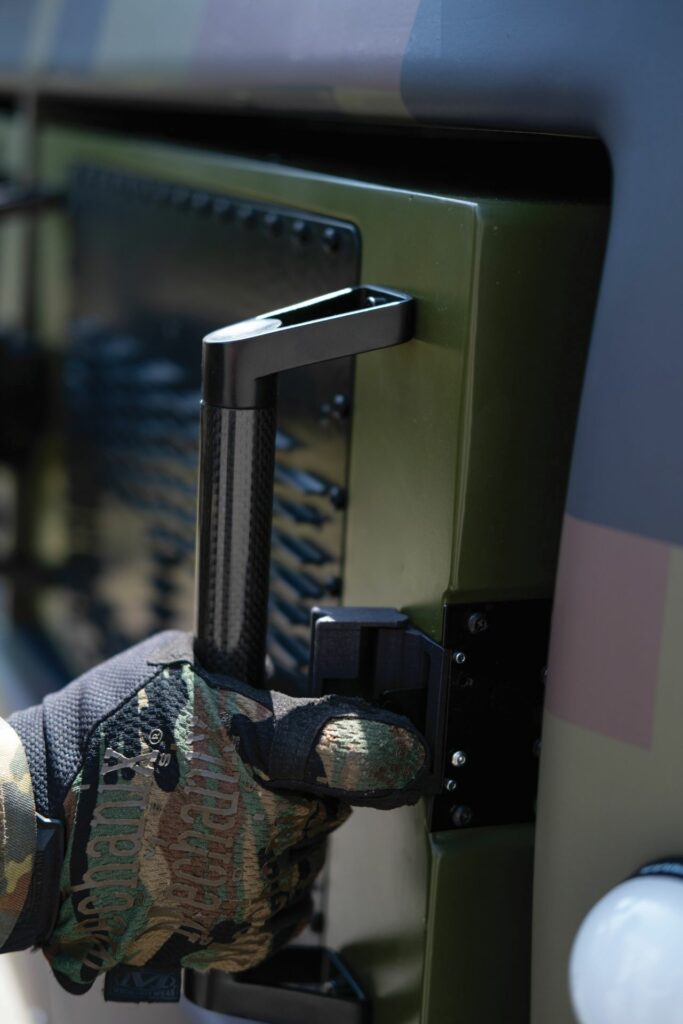
Air passes naturally around Grille’s nose in flight, hugging the outer fuselage walls to which the battery packs conform and extracting heat directly from their enclosures.
“Overall development of the battery packs was shared 50/50 with MGM Compro; we designed many particular elements, especially with respect to the enclosure and its integration, while several key inner subsystems like the BMS, the cell bonding and the solid-state relays were done by them,” Dollinger notes.
Motor control
While COTS electric motors and motor controllers were used for early prototyping and concept validations, real-world testing (iMEDCAP trials in particular) has informed Grille’s present-day exact electric drive components more optimally.
“It’s given us various small adjustments, like going to 120–135 V and to passively cooled ESCs [electronic speed controllers] to meet IP-resistance requirements; as with the batteries, we can’t have open fans or ducts if we want the UAV to work in rain and other difficult environmental conditions,” Dollinger says.
“The propeller downwash contributes little to motor and ESC cooling, but we’ve got optimised heat sinks at the rotor pods, and you get close to 90 kph of air streaming onto them in cruise, which is more than enough.”
Data-focused modifications such as judicious selection of shaft-mounted rpm sensors have also been performed to maximise reliability and robustness across all 12 of the 20 kW motors.
“Changing the motors and putting some work into the motor inverters was also key to enhancing our control bandwidth over the UAV,” Söpper notes. “We’d been conservative with that in the first generation, but now that we’ve spent time pushing Grille to the last 0.1% of its performance in flight tests, we understand all physical limits of how Grille can fly and so can really push how we exploit its motor drive power.”
Moreover, aggregation of motor stats such as accumulated rpms or revolutions has enabled Avilus to establish a predictive maintenance system for the drives, tracking lifespans via rpms, and other notable performance degradations triggering alerts for flight crews to check one specified motor or another on demand.
“It’s 100% deterministic, with no neural network or AI training used to make it function,” Dollinger says. “After flight tests, our engineers look at data for indicators that systems are operating well. By asking engineers which data they looked at specifically, and which bits of them seemed out-of-range, or otherwise indicative of bad performance, we could make automated test cases out of them.
“Now, after flight tests, the data get uploaded into a pipeline, which processes all the signals and runs tests automatically, counting for instance if a given red-flag-type event happened five times, and marking a red bubble as a warning around such potentially troublesome points.”
Propeller optimisations
A vital tool for Avilus’ propeller r&d (including for crossflow conditions) has been an ambulance vehicle, modified in-house to mount rotor-propeller configurations atop its roof. That serves as a mobile equivalent to a wind tunnel, much as US-based Aergility has done with a pickup truck for optimising its ATLIS UAV (see Issue 47).
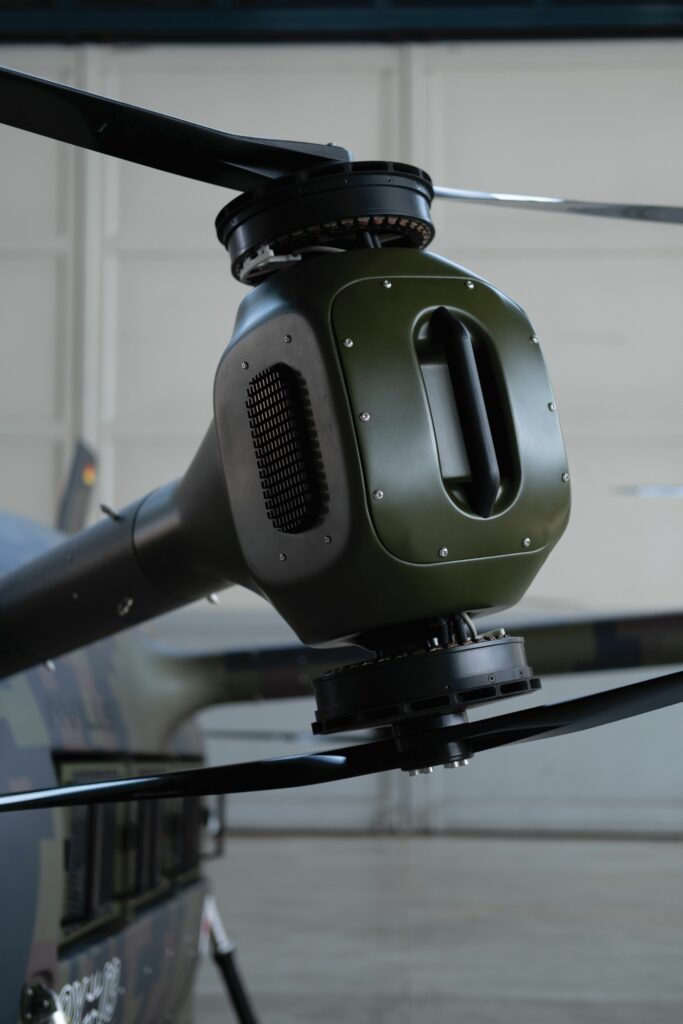
“We put one-third of the Grille powertrain atop the ambulance, allowing us to completely measure one left-right rotor pod pairing at a time, in terms of forces and moments via load cells,” Dollinger muses.
“Then, we contacted a lot of propeller suppliers, got a lot of samples and tested all of them to find the best COTS solution.”
Each propeller measures 2.25 m in diameter, and in addition to using carbon prepreg for high strength-to-weight and repeatable manufacturing quality, Avilus anticipates running every unit received in its propeller testbenches. That includes trialling them in crossflow conditions akin to those the ambulance reenacts, owing to the expense and space limitations of wind tunnel tests.
By running the truck in all environmental states, its plethora of sensors can track air data, temperatures, moisture and so on from summer to below-freezing conditions. This helps Avilus monitor for potential icing or damage depending on flight conditions and rotor angles of attack (the latter of which can be varied by adjusting the mount atop the ambulance), and to choose ideal leading edge protection systems.
Runtime assurance
TUM’s Institute of Flight Dynamics’ specialisations in flight control software, flight dynamics analysis, system architecture development and other disciplines were key to creating RasCore Air – the airborne brain of Avilus’ uncrewed systems – from a blank sheet when Söpper, Dollinger and the other Avilus co-founders were still PhD students.
“There’s nothing we could buy off-the-shelf that could replace RasCore Air; it’s built using components from crewed aviation – supplied from partners all over Europe – to physically guarantee equivalent levels of safety to crewed aviation,” Dollinger explains.

“If we’re going to put a human life inside our UAV, we must ensure the same level of safety as, say, a pilot getting into a Eurofighter. Some of RasCore Air’s components are used in the Airbus A400M military air transport or the NH90 helicopter, for instance.
“But we control the architecture very closely; we know each and every cable, every bit and byte of software, with the entire flight control software developed by ourselves, and the institute where we created it still helps us to optimise and enhance it.”
RasCore Air is designed with a duplex architecture, composed of two fully independent flight control systems installed, ensuring no single point-of-failure that could lead to a catastrophic loss of control for Grille, following certain specific guidelines for crewed aviation controller development.
“Conventionally, in crewed aviation, you have a certifiable flight control system, with limited performance; but it flies,” Dollinger muses.
“We’re instead doing something that some groups call ‘runtime assurance’: we make one flight control system with outstanding performance and high specs compared with classical flight controllers, but you’d have difficulties getting a formal certification with it. So, we have multiple backup flight controllers, which are certifiable, and could certainly operate the aircraft if needed – albeit with slightly reduced performance.
“Nobody’s ever done something like this, as far as we know, although there’re now standards talks revolving around runtime assurance. You have to make sure your high-end, fancy functions are contained safely – which we do – and that allows Grille really great performance, with really high resilience to any outer disturbances like gusts, sensor noise or vibrations, and still equivalent safety levels to classical aviation.”
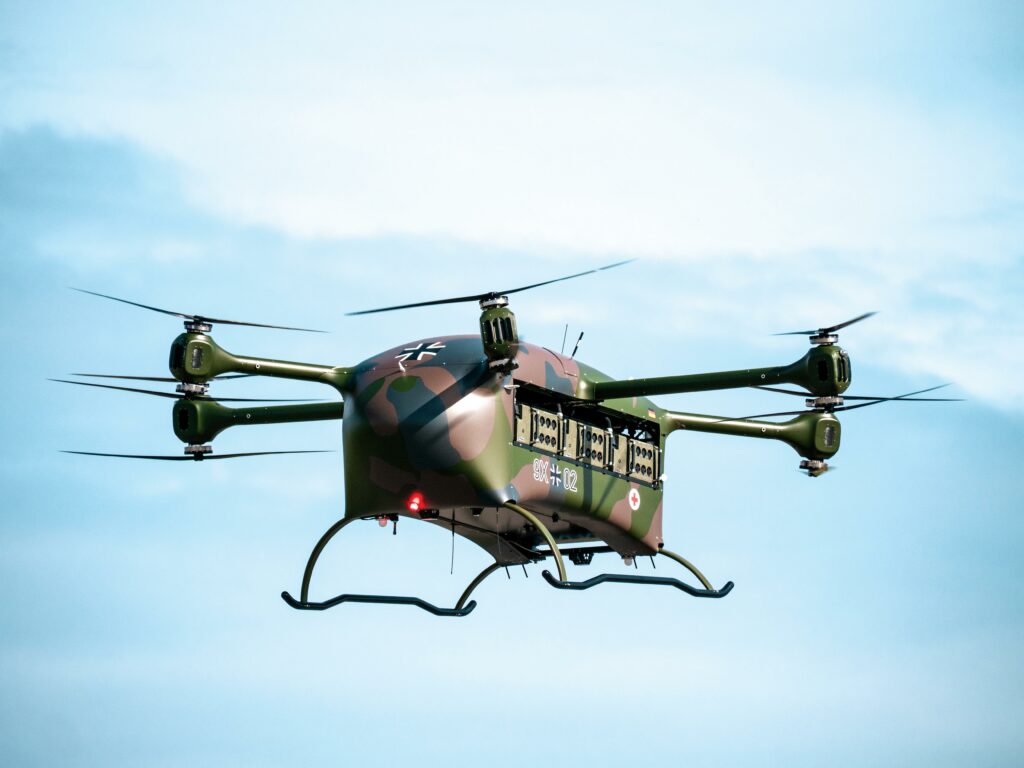
Here, Söpper adds: “For resilience against more aggressive disturbances like cyber-warfare, we do have controlled reception pattern antennas for nulling specific jamming and spoofing attacks, but the most important system to Grille’s uninterrupted navigation is an inertial reference unit [IRU], which is completely independent of external signals and cannot be disturbed.”
The IRU is a tactical-grade system taken from crewed, military applications. As Avilus describes it, it is significantly larger and heavier than UAV-typical MEMS IMUs, but also considerably more powerful in its precision, accuracy and integrity levels (as needed for human-carrying platforms).
The position, orientation and velocity information derived from the IRU’s advanced filtering and robust estimation algorithms are critical inputs to RasCore Air’s flight performance, and the minimal drift in these data outputs enables their use alone as navigation references, if the IRU’s integrated, multiband GNSS shows signs of being jammed or spoofed.
“MEMS devices work perfectly for small UAVs with small flight controllers; meanwhile, we’re at a size and weight where it’s fine to integrate components that are also used in crewed aviation,” Dollinger says.
“The IRU weighs more than 4 kg, and we’d certainly shave off more than 3.5 kg switching to a MEMS IMU, but performance fits size.”
Going outwards from RasCore Air and the IRU is a distributed network of redundant network connections designed using ARINC standards and software (another inspiration taken from crewed aviation safety guidelines). Those links are predominantly carried over cable assemblies constructed with D38999-type circular connectors, Dollinger expressing a particular fondness for the tangible sense of security gained from the feel of such plugs when mated and fastened.
Tight control
While reference architectures and COTS solutions for multi-rotor control are widely available, the uniqueness of Grille’s primary application merited significant ground-up work for ensuring stable flight behaviours consonant with its mission standards.
“Adapting the control software logic is important between each version and any changes in weight distribution, power outputs, aerodynamics and the like,” Söpper notes.
“But the very reason it has its slightly canted, asymmetrical rotor positions isn’t because it looks distinctive, but because it actually helps in flight control. It’s especially good for yaw controllability, but the nice thing with multi-copters is, if something helps in one channel or axis of rotation, it helps in all of them because they’re all coupled together in how multi-rotors move.”
In traditional control laws for small multi-copters, yaw moment is governed via the rotors’ torques. However, rotors’ torques scale imperfectly as multi-rotors get larger and heavier: if one imagines the yaw inertia of the 750 kg Grille, and then tries to imagine turning it left or right using torque differentials alone, one begins to understand the limitations of trying to do this in a precise or nimble manner.
“But if you tilt the thrust angles of the rotors a bit, for instance turning the side arms a bit forwards, it produces a slightly different yaw moment that you can then use for your yaw authority,” Söpper explains.
“Naturally, there’re other things we’ve done to ensure high-fidelity control; minimising latencies between onboard devices is one of the most important measures, given that the UAV has to fly autonomously and stably without inputs from the GCS. Using high-end aerospace components and programming our buses carefully are key.”
Mission planning and connectivity
To avoid time-consuming route planning that could belabour casualty evacuations, Grille’s waypoints are plotted through an automatic flight planning capability, which Avilus has gained by integrating with SitaWare, the NATO Standard battle management system, developed and supplied by Systematic Inc.
“We basically wrote a plugin that takes this automatic flight planning functionality in SitaWare and sends it into our GCS; the main computer runs all the feasibility checks, before sending the plan up to Grille and the aircraft flies it,” Söpper says.
To ensure persistent live data links, LOS antennas are logically integrated in Grille’s underbelly so that comms are sustained amid the aircraft’s pitches, rotations and bankings, while receivers and antennas for GNSS and SATCOM mount centrally atop the UAV, clear of possible occlusions or interference from propellers. As another safety measure, dissimilar radios are paired together to avoid the possibility of doubling-up fault modes.

“We have multiple antennas and comms links – usually two LOS links, as well as two satellite links for BVLOS – to be fit for purpose; we usually restrict ourselves to omnidirectional antennas to ensure a uniform pattern of radiation about the aircraft,” Dollinger says.
He adds that Avilus’ strategic prioritisation of proximate component suppliers is one factor that has made PIDSO a preferred antenna partner; the bigger reasons have been PIDSO’s dedication to closely understanding Grille’s application, and its extensive and enthusiastic participation in r&d collaborations.
“We very much like it when someone like PIDSO gives us highly pragmatic feedback and specific consulting on mission-critical topics, and we’ve been working with them on testing new antennas in the aircraft for a while now,” Dollinger says.
“So, we’ve been installing those in Grille to perform analyses for range and radiation, and directly compare them against prior implementations. We don’t want to do huge, time-consuming studies, we just want to evaluate things in a practical, actionable way – but we also know you cannot treat antennas as an afterthought.
“The majority of a UAS’s resilience comes down to finding the right antenna, especially for long-range comms; and our UAS deals with very unusual flight situations for drones, by landing right where the patient must be picked up. Most UAVs don’t land anywhere other than where they took off, so we must engineer our comms to deal with much more challenging environments.”
To comply with EASA air traffic regulations, Grille also integrates transponders for FLARM and Mode-S, as well as new, UAS-specific devices for Remote ID, although any of these can be deactivated at the discretion of defence operators.
“We use known manufacturers of these systems, but we’re potentially interested in adopting Aerobits’ transponders into our aircraft because their technology looks to hold good promise for performance,” Dollinger adds.
Ground systems
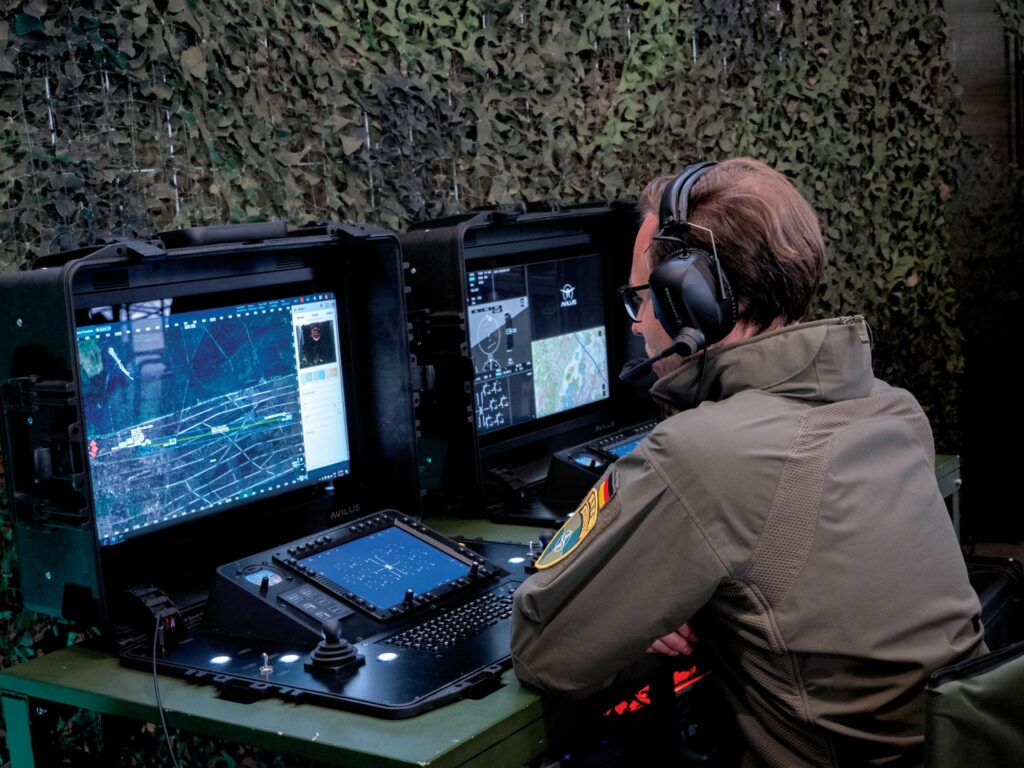
Down at ground level, Avilus’ RasCore Ground GCS was developed around the same time as RasCore Air, featuring a similar architecture prioritising reliability, redundancy and MTBF. While it integrates less computing power than its Air sibling, given the lower-duty tasks to be handled, all connections, processes and modems are again doubled-up.
“From the beginning, our overall design philosophy prioritised eliminating single points of failure that could induce a loss of control,” Dollinger says.
“We have two computers: one is a safety-critical computer listing all important systems needed to perform everything mission-centric in a safe manner, which the customer cannot modify, except customising its appearance in some ways to sort between things like system maps, mission information and flight data.
“Then, a second computer, built much like a regular consumer-grade PC, is connected to the safety-critical computer but based behind a partitioning system. So, that can host the customer’s preferred mission platforms like modular avionics, battle management systems or analytics software –all kinds of different tasks – via a dedicated interface that allows the connection.”
The complete RasCore Ground system presents as four ruggedised containers: two containing the actual hardware for the two duplex computers, and the other two boxes being laptop-like containers for the human–machine interfaces, each with a monitor, keyboard, joysticks and toggles.
Hence, the screens and computers can be stacked or laid-out as makes sense for each mission location. Altogether, the system fits into a pair of logistics cases occupying a 2.3 m x 0.8 m x 1 m space within the 20 ft container, including whatever directional antenna the mission case requires.
“In addition to Grille, RasCore Ground and other parts coming in a 20 ft container, our partners at Leidel und Kracht specialise in customising internal logistics for all those components, and were super motivated to ensure every part had its place ergonomically, with dedicated boxes they design throughout the container,” Söpper notes.
“For instance, every rotor arm and its corresponding battery sits securely in foam in its own box, and those six boxes fit nicely atop each other at one end of the container, with the Grille monocoque getting pushed inside afterwards for a comfortable, smart fit.”
The Avilus air group
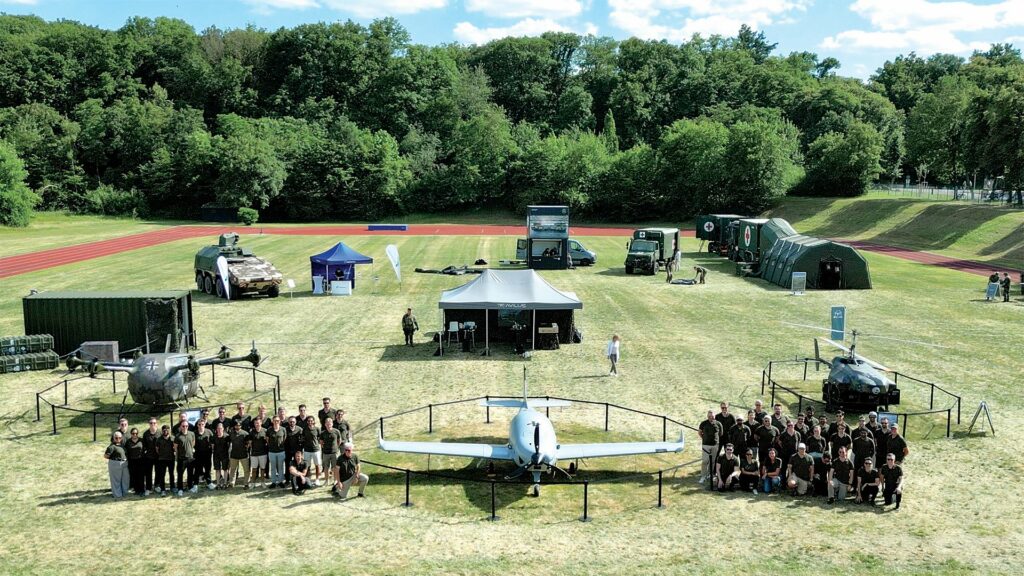
While Grille arose purely from a specified demand, Avilus unveiled two new UAVs in June 2025, previously mentioned as the Wespe helicopter and fixed-wing Bussard drones, which came from a mixture of customer demand and the company’s own initiative to supply a mixture of UAV systems that could serve to “rescue, protect and provide” for the defence market “We realised that 70–80% of our work on Grille went into optimising RasCore Air and Ground, providing many synergies for quickly developing new, high-end aircraft,” Söpper says.
“All the C2 links, safety monitoring, voting between different components and ways we do hardware-in-the-loop simulations can be translated to other aircraft configurations, with just some adjustments of the inner-loop control functions to go from governing 12 rotors to, say, the actuators Bussard has across its engine throttle, flaps, ailerons, elevators and rudders.

“Maybe the powertrain is different, but in the end, functions like mission uploads, navigation, system monitoring and so on are all basically the same.”
Rather than following a standard configuration, Wespe is a coaxial rotor helicopter with no tail rotor (the tail integrating a rudder instead) designed for tactical airlift, close air support and medevac. Its MTOW is 650 kg, operating on a 180 kW (245 hp) reciprocating engine to achieve 120 kph speed, 300 km range and a 200 kg payload capacity.
Bussard can carry up to 142 kg of payload across various hardpoints for close air support and ISTAR missions. It is designed to run on either a regenerative turbine or turbocharged, spark-ignition reciprocating engine, for a top airspeed of 290 kph (156 kts) and a 14 hour endurance (or 2500 km range).
Wespe’s last tethered cage flight tests and maiden flights were performed roughly the same time as those of the third-generation Grille.
“And on top of expanding the mission sets our UAVs can offer through Wespe and Bussard, Grille will not be limited to just being ‘the German rescue drone’. It’s very much set to become the European rescue drone, and we feel it makes sense for all of NATO to use it,” Söpper says.
“So, we’re working on internationalising it, including international business development and more planned. For any nation where human lives in the military are cherished, Grille is something needed in their rescue chains.”
Key specifications
Grille
Twelve-rotor multi-copter
Fully electric
120 V
MTOW: 750 kg
Total length: 7.8 m
Total payload capacity: 175 kg
(40 kg medical cabin, 135 kg patient)
Maximum power output: 240 kW (326 hp)
Cruising speed: 86 kph
Range: 51 km
Q. Flight endurance: 20–45 min
Operating ceiling: 2100 m (6890 ft)
Some key suppliers
Battery components: MGM Compro
ESCs: MGM Compro
Propellers: Helix-Carbon GmbH
Landing systems: Heggemann
Sensor systems: Hensoldt
Antennas: PIDSO
Control software: TUM Institute of Flight Dynamics
Automatic flight planning capability: Systematic
Logistics boxes: Leidel und Kracht
Manufacturing support: Breezer Aircraft
Medical sensors: Cosinuss
Simulations: MathWorks
UPCOMING EVENTS