





AUVSI XPONENTIAL US 2026 part two
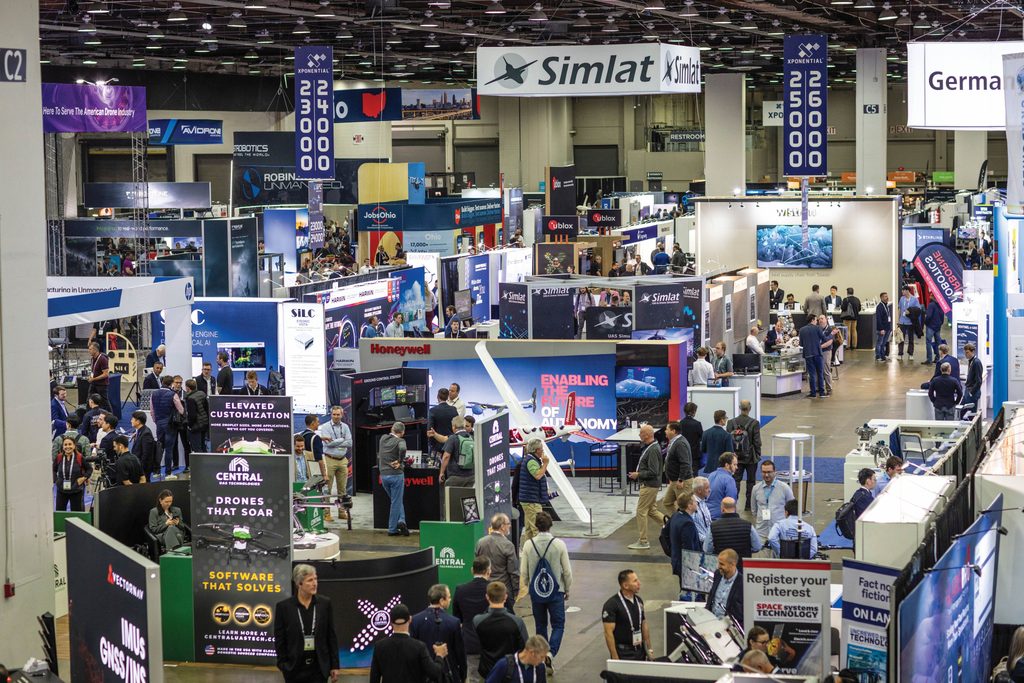
(Image: AUVSI)
Design City stories
Rory Jackson brings the second half of our review of product releases and other new highlights from the 2026 AUVSI Xponential in Detroit
Although the world is enriched with trade shows and exhibitions for countless industries and niches, AUVSI Xponential in the US remains the premiere event for springboarding innovations and new capabilities in autonomy to professionals from all over.
Whether releasing some new product, or unveiling something just for show-goers as a ‘soft launch’ before allowing the wider world to know, a plethora of companies were eager to discuss their latest offerings with us. Henceforth, our second wave of stories follows here, as they came to us from the exhibition hall, thick with technical creativity – as befitting the heritage of the great automotive centre (and UNESCO Design City) of Detroit.
Jaunt, a subsidiary of AIRO Group Holdings, displayed its 362 kg MTOW autonomous aircraft, the JX250. This is a VTOL-transitioning UAV combining helicopter and fixed-wing elements (along with a hybrid-electric powertrain) for numerous safety and efficiency benefits, including typical mission times of 15–18 hours (the company noting this as a rarity for VTOL systems).
“We have a single main rotor, based on our Slowed-Rotor Compound technology developed over the past two decades, meaning we can modulate its speed depending on flight mode,” explained Martin Peryea of Jaunt.
“In a ‘helicopter mode’ for low-speed manoeuvring, it can carry the full aircraft weight, and when we pick up airspeed, the wings can carry that weight via their natural lift and four forward-oriented propellers. In cruise, the main rotor becomes unloaded, sparing the UAV that excess energy consumption, noise and vibration that helicopters usually suffer from at high speeds.”
The parallel-hybrid powertrain utilises an internal combustion engine driving a motor-generator that charges a battery system. That system powers the wing-mounted propeller electric motors as well as boosting the main rotor during ascent.
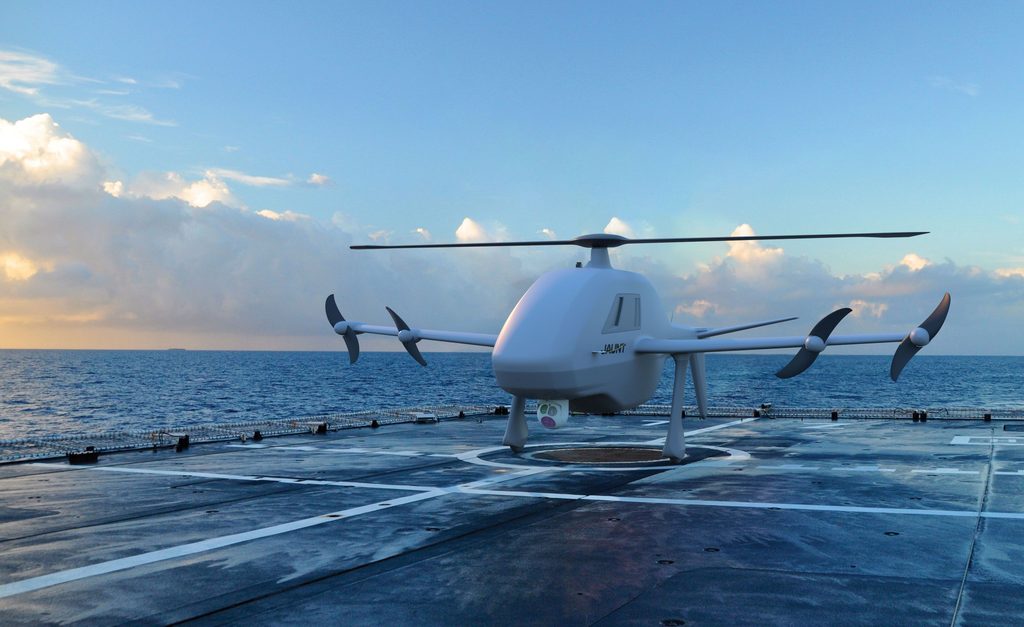
Additionally, should the aircraft need to autorotate for a safety landing, Peryea notes that the fixed wings enable more aerodynamically stable autorotation characteristics than those typical of wingless helicopters. In turn, the main rotor serves as a safety backup during wing-powered ascent by preventing the aircraft from stalling.
“The JX250 in particular is configured for tactical ISR missions and so comes with a sensor system and fuel increase in the underslung mission pod payload system that differentiate it from its JC250 commercial cargo sibling,” Peryea continued.
“And that pod can be configured and customised as needed for all kinds of use-cases, including water baskets for firefighting or stretchers for emergency medical services. We’re continuing optimisations up in northern Quebec, and there are a lot of First Nations communities living near there, in remote areas prone to severe weather. We could, as a definite example, use this UAV with a custom pod to deliver medical supplies or other vital cargo to them.”
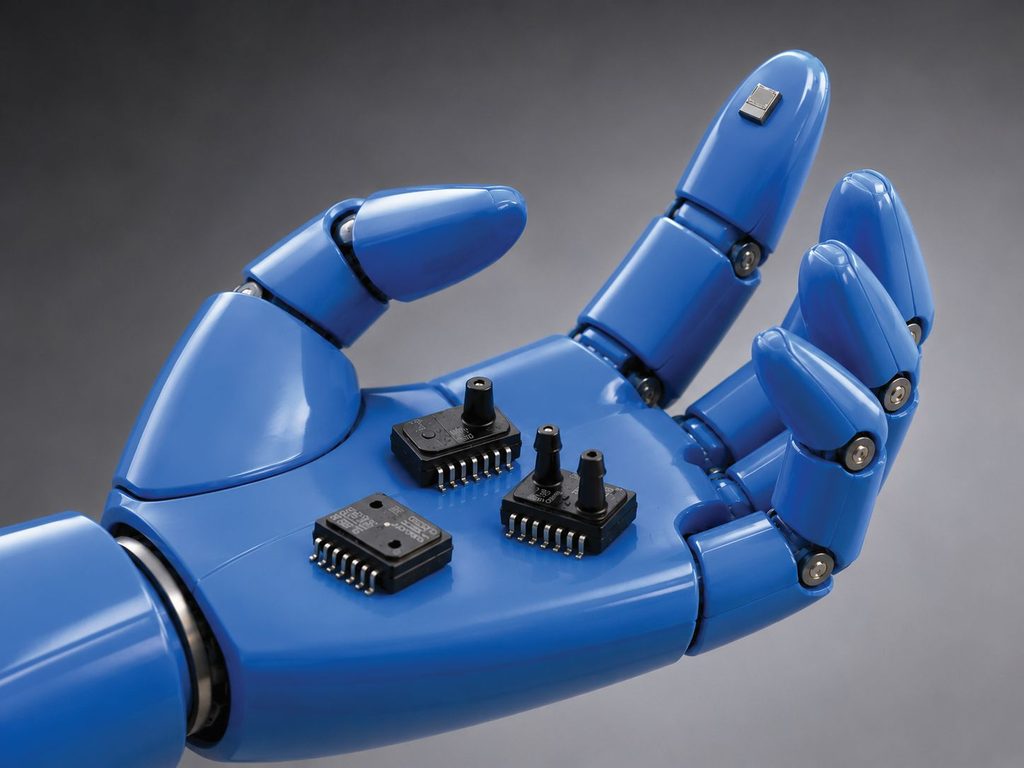
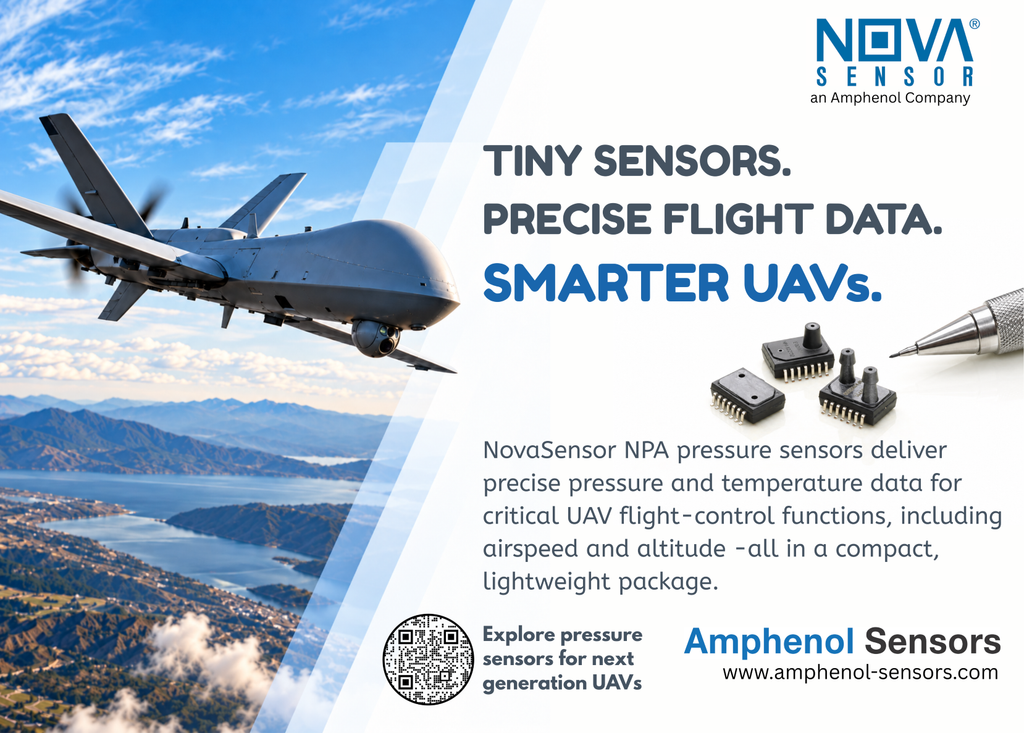
NovaSensor, an Amphenol Company, is supplying semiconductor-scale pressure and optional dual temperature sensing systems to uncrewed aircraft. The company’s MEMS manufacturing facilities in Silicon Valley (USA) and South Korea are currently producing millions of sensing elements annually, providing NovaSensor high-volume manufacturing capabilities with exceptionally small sensor technology.
Through that technology, the company is offering UAV manufacturers the ability to capture precise pressure and temperature data in small outline integrated circuit (SOIC) packaging for applications where size, weight and cost are critical for UAV design requirements. Its MEMS SOICs are additionally designed for automated pick-and-place manufacturing equipment, and designed in easily connected configurations for land, sea and air applications.
“Pressure sensing gives the UAVs critical information for mission success,” said Brian Wirth at NovaSensor. “Barometric pressure enables precise altitude measurement, while differential pressure can be used to determine airspeed. For applications that require additional environmental data, temperature sensing can be integrated alongside pressure measurement.
“As UAV platforms become smaller and more autonomous, delivering multiple sensing capabilities in a miniature, scalable package gives engineers greater flexibility without adding unnecessary size, weight or cost.”
Regarding miniaturisation, Wirth added: “Our sensors can be as small as 240 μm wide, which is near the size of a human hair follicle, giving engineers tremendous flexibility in how and where they integrate pressure sensing. And the sensors can be packaged and manufactured into all kinds of form factors and use-cases, opening up the capabilities of integrating multiple sensing points rather than relying on a single measurement.”
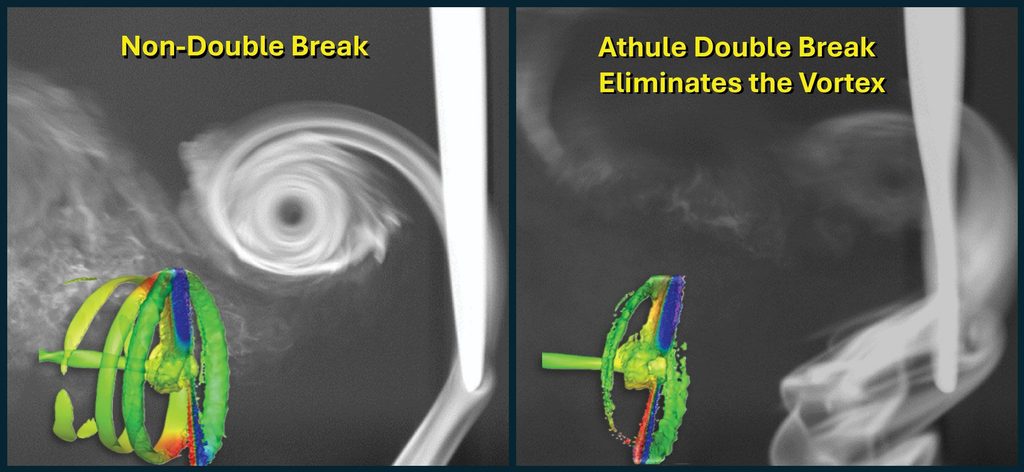
Athule Aero Technologies, Inc. unveiled its Double Break propeller technology, which it has designed to significantly higher efficiencies and lower noise outputs compared with conventional prop and blade designs.
“Our Double Break technology was founded by two PhDs: one from the US Air Force Academy and the other from Baylor. Essentially, it de-loads the prop tips, counterintuitive as that might seem to an aerospace engineer, but that greatly reduces tip vortices and the noise and inefficiency that would otherwise ensue,” explained Tony Bacarella at Athule Aero.
“That would ordinarily take thrust away, but to prevent that we have a machine learning-powered toolset called FAST [Fluid and Acoustic Simulation Technology], which designs and simulates the propeller to mitigate that thrust loss as comprehensively and rapidly as possible.
“That also means designing a new prop takes days, and full prototyping, including closed-loop testing, takes four to six weeks instead of the many months that conventional prop companies need.”
That rapid design and development capability can also be applied to other forms of propeller, for end users seeking quick design turnarounds with robust CFD optimisation. Rather than manufacturing propellers itself, Athule Aero prefers to license its technology to end users (typically aircraft manufacturers), with propellers designed to the customers’ specifications manufactured thereafter by Athule Aero’s production partners in the US, freeing the company to focus on its technological IP.
It typically claims up to 75% reduced noise and up to 15% more aerodynamic efficiency versus normal propellers, although it has also exceeded that in some projects, including a 25% efficiency gain for a prop made for solar UAV developer eFusionX.
I-PEX USA showcased the latest cabling and connector solutions in its CABLINE series of micro-coaxial products.
“These systems are particularly suited towards UAV camera and gimbal integrations, owing to their highly flexible and fully shielded design, and the versatility they enable owing to their high conductor count,” said Stephen Figuerado at I-PEX.
The company openly supplies its CABLINE harnesses for use with the cameras of Leopard Imaging and e-con Systems, the latter in turn being used in a variety of gimbals for UAVs and other autonomous vehicles.
“Additionally, our MHF Series RF connectors are intended to connect radio modules to antennas, running internally to devices and vehicles down to the board-mount level, and what especially sets apart our designs here is that we offer locking plug solutions,” Figuerado continued.
“Those can be critical for mission success in a high shock and vibration environment because they double the retention force over the basic snap-on connection.”
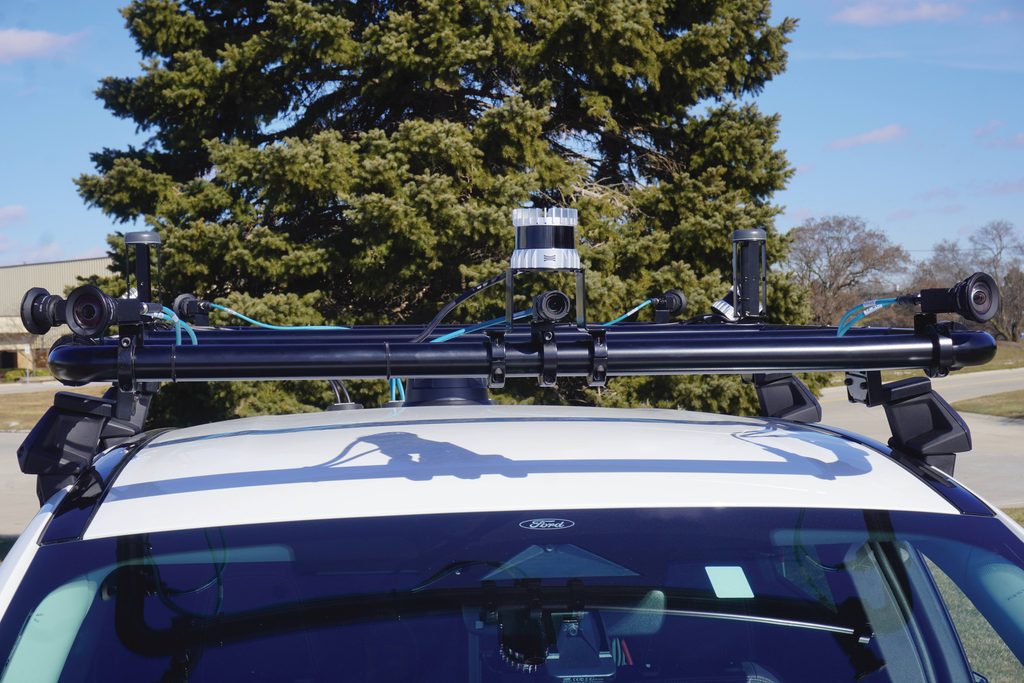
Dataspeed Inc. displayed a number of automotive and off-road vehicles equipped with its By-Wire Kits, through which conventionally driven vehicles had been modified into autonomous, self-driving systems.

“Our By-Wire Kits can control the braking, throttle, steering and shifting of virtually any on-road, off-road or military vehicle,” explained Madison McNamara at Dataspeed.
“Our website names 23 vehicle models we work with as turnkey platforms, including the Ford Mustang Mach-E, Ford F-150 Lightning, Jeep Grand Cherokee and Chevy Colorado, but if a customer comes to us with something else, in most cases we’ll be happy to retrofit our kit for that vehicle.”
The By-Wire Kits typically come with controller modules for each of the driving functions to be managed, a CAN interface module with four 1 Mb/s networks and configurable bit rates, a CAN breakout module for up to five additional nodes, a 12 channel intelligent power distribution along with an inverter module and a few further ancillaries.
“And where needed, we can add a sensor suite of cameras, Lidars, radars and sensor fusion computers to enable perception, path following and so on,” McNamara continued.
“We’ve been working on autonomy modifications since 2012, starting with the Ford MKZ and expanding to other vehicle models since then, learning through a lot of trial and error along the way as to what works or doesn’t work.
“We’re also now working on a Gen II of our kit, which will be a bit smaller, easier to manufacture and likely faster to produce for customers. And having broken into equipping military vehicles a year and a half ago, we’re now partnering with software companies to accelerate their development and deployment of uncrewed ground vehicles.”
Baker Engineering has launched its ICE3 (Inexpensive Combustion Engine Efficiency Enhancement, spoken as ‘Ice-cubed’) propulsion technology, which it has been developing since 2018 in pursuit of enhancing the weight, power and cost efficiencies of two-stroke engines.
“We can take practically any two-stroke, put our new and patent-pending cylinder head technology on it, which incorporates a carburettor along with a secondary air throttle device, which together provide EFI-like performance and functionality, but at far lower cost, weight and size footprints than conventional EFI systems,” said Levi Roodvoets at Baker Engineering.
“The main savings driver is that we eliminate the fuel pump, pressure regulator, injectors and related electronics because we can vary the fuel–air ratio using the secondary air throttle device.”
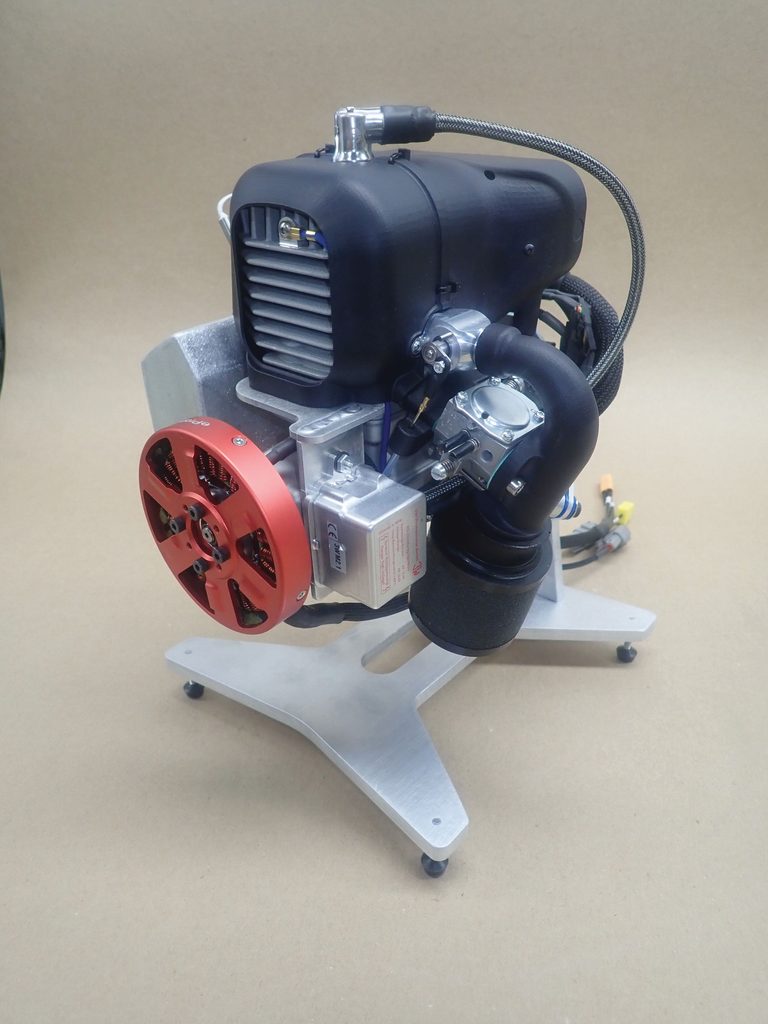
The company estimates that it can make ICE3-equipped engines up to 20% lighter and with a 50% lower purchase cost compared with their EFI-equipped equivalents, as well as 30% more fuel efficient than equivalent carburetted engines.
An 80 cc engine incorporating the technology – Baker’s BEI80 – has also been unveiled, with products of other sizes and cylinder counts to follow. Although as indicated, virtually any two-stroke ICE can be adapted to use the ICE3 technology, whether for primary propulsion, range extension, parallel hybrid or other purposes (Roodvoets confirming to us that making liquid-cooled versions of the cylinder head poses no issue).
The BEI80, meanwhile, is a 5.2 kg single-cylinder, spark-ignited two-stroke, air-cooled engine outputting 5.6 kW (7.5 hp) with a SFC of 395 g/kWh. It currently runs on gasoline, although a JP-8 version is in the works.
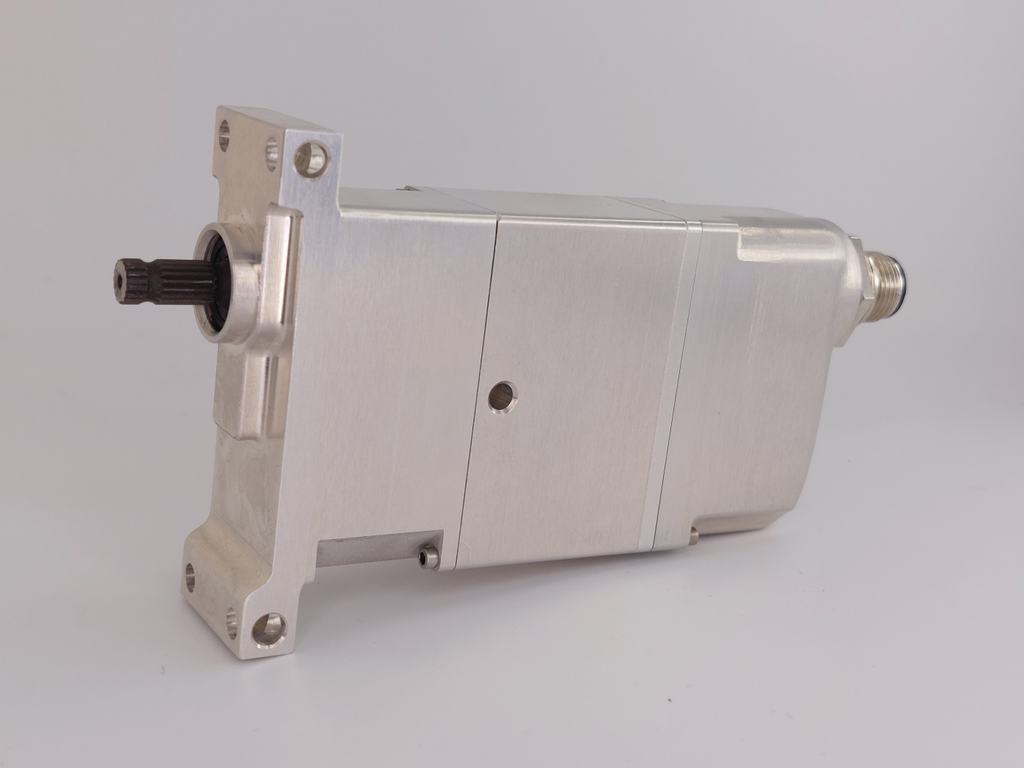
Acutronic showcased its ACUFLEX range of electromechanical servo actuators for UAVs.
“Depending on the mission, whether dealing with a UAV that’s launched and recovered from the ground or from the air, or different kinds of engines, we can adapt our aerospace components like our servos to suit the different environmental conditions that each user has to deal with,” said Sascha Revel at Acutronic.
The company’s AF-R0900 actuator is a 0.5 lb (0.226 kg) servo rated to 25 in-lb (28.8 kg-cm) of torque, consuming 0.75 A at that output level, and operating at 28 V DC. The product is tested to MIL-STD-810H standards on tolerance of salt, fog, sand, dust, water immersion, temperature exposure and vibration.
It is also validated to MIL-STD-461G for EMC, and to internal standards such as AF001-30005 for continuous stall performance and AF001-30006 on endurance.
The AF-R0900 and other Acutronic servos are sealed to IP67 as standard, as well as operating across a temperature range of -40 to +70 C, with a positional error of no more than 1.0° and backlash of no more than 0.5° in its typical operating behaviours.
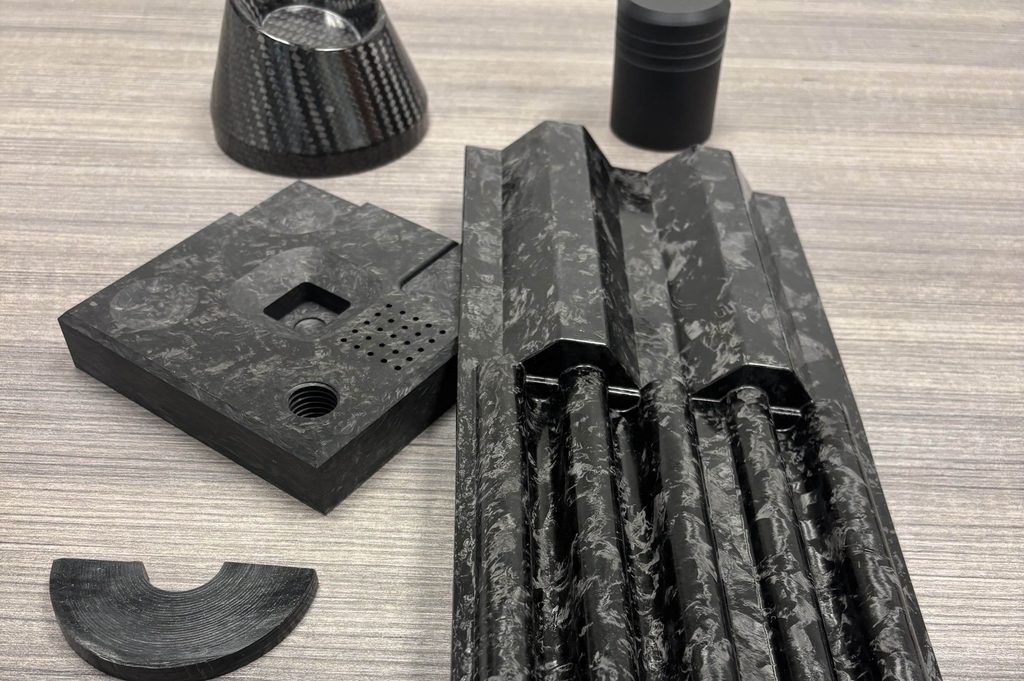
Lattice Composites discussed its capabilities in producing customised composite parts with high-volume output, fast throughput and low costs, which it attributes to its use of quasi-isotropic moulding compounds to co-mould or co-cure multiple products with prepregs.
“We work with many different and advanced chemistries, ranging from epoxies to cyanate esters, phenolics and beyond, and we’ll customise products for the end user at a scale and speed that are challenging for traditional prepreg methods,” said Ruchir Shanbhag of Lattice Composites.
“Traditionally, to make large components while trying to balance the prepreg’s anisotropic properties, you place many layers of prepreg ad nauseum into a set shape preform, you use all sorts of different lay-up schedules, and you cure it for hours in an autoclave or under a vacuum bag in a convection oven.
“But our materials are quasi-isotropic, so their strength is the same across every direction in a plane. So, you can place them in a mould together with the prepreg – the latter just going strategically where you need the continuous fibre – and co-cure it all together with the same resin matrix, with a curing cycle time of about 5–10 minutes.”
Developing the technology involved adapting key moulding compound technologies long used with polyesters and vinyl esters in automotive and other industrial settings, and combining them with new chemistries and advanced materials to achieve superior manufacturability properties while maintaining high material performance characteristics. Consequently, the Lattice Composites materials deliver high performance but also combine it with high throughput rates needed for part counts in the tens of thousands per year.
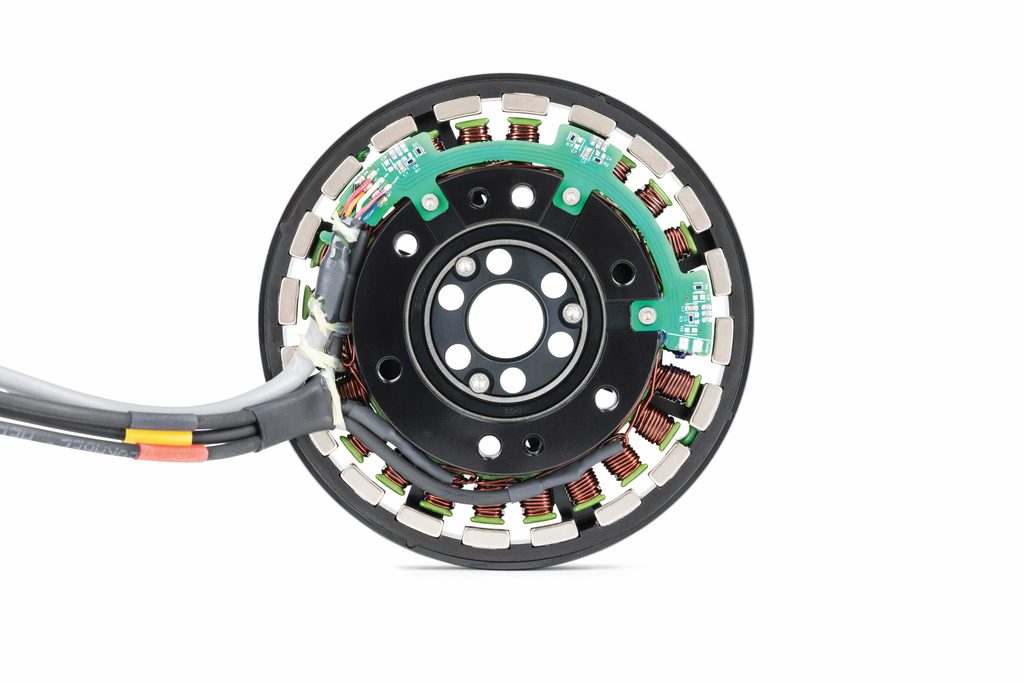
Plettenberg has released new ORBIT products – both ORBIT UAV propulsion motors and ORBIT SG (starter-generator/alternator) devices – as part of its portfolio expansion and revamp for 2026. Both groups of ORBIT products are brushless DC systems featuring outrunner (internal stator, external rotor) designs.
“The ORBIT motors are split into sub-families for integrating with either multi-copter, fixed-wing or VTOL-transitioning UAVs,” explained Bastian Greiner of Plettenberg.
“In total, there are eight different ORBIT motor product platforms, and they’re optimised for those customers needing lower, more entry-level pricing – being both lower-cost and -weight solutions – as well as higher scalability than, say, our more premium NOVA product lines.”
The smallest ORBIT motors are Plettenberg’s ORBIT MC 1 for multi-copters and FW 1 for fixed-wing drones, which produce peak thrust of 5 and 4 kg, respectively, or up to 1 kW of power each. The MC 1 weighs around 240 g, to the FW 1’s 230 g.
The largest, as of writing, is the VTOL 20, which weighs 3650 g and produces up to 20 kW of power and 80 kg of thrust. It is designed for UAVs of up to 160 kg in four motor-configurations or 270 kg UAVs of X-8 coaxial quad motor architectures.
The ORBIT SG alternator products, meanwhile, range from the smaller SG1 to the larger SG20. The former, weighing 425 g, is rated for 250–1000 W power, ideally integrating on 20–80 cc engines. The latter is rated to 5000–20,000 W, being a 5600 g starter-generator for hybrid powertrains, suited to 300– 1500 cc engines.
Aero Velocity was at Xponential to discuss its growing portfolio of drone-enabled services, technologies and manufacturing capabilities, built on more than a decade of UAS development and operational experience.
Although the company was originally focused on last-mile deliveries, it has expanded to provide a range of drone-enabled services and technologies across industrial, commercial and environmental applications. Aero Velocity also provides confined-space inspection capabilities using ScoutDI’s tethered drone system, which is designed to inspect tanks, vessels and other GPS-denied industrial environments. The system allows operators to capture detailed visual inspection data in areas that can be difficult or hazardous for personnel to access. The company’s broader capabilities include Lidar and photogrammetry mapping, exterior condition assessments, thermal inspections, aerial mapping and environmental monitoring.
“We’re well-versed in scanning missions, having flown over more than 16,000 acres in support of USDA NRCS projects, and we’ve also done a lot of asset inspections, including wind turbines, oil tanks, refineries and similar infrastructure where it’s much safer and more efficient to use drones versus standard human-led work,” said William Gilliland at Aero Velocity.
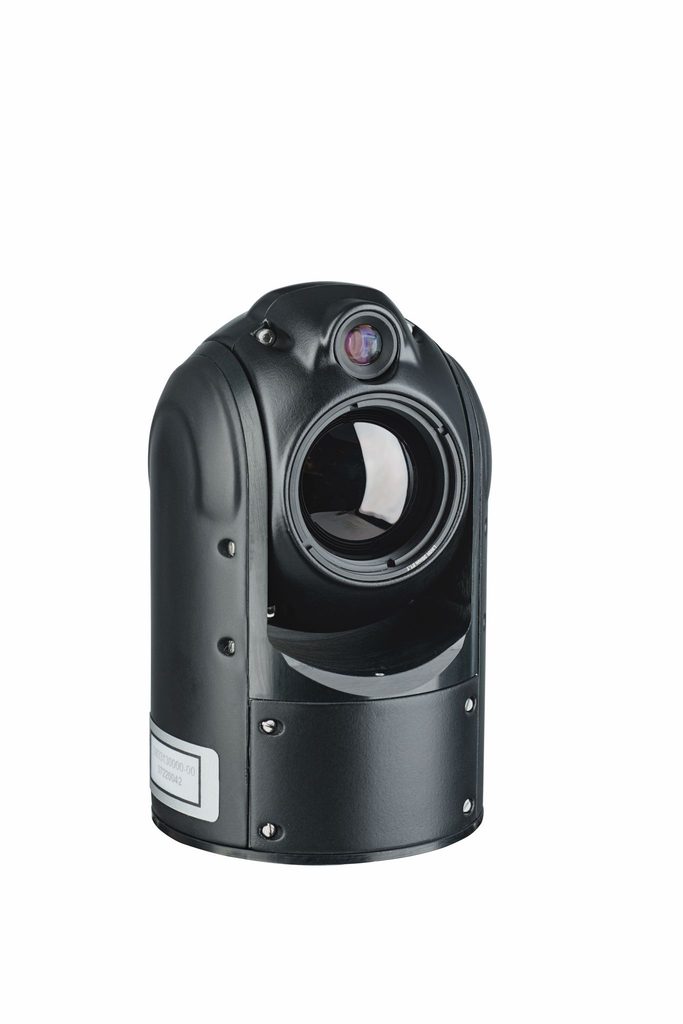
Velox, a Nanomotion brand, unveiled its eponymous EO/IR gimbal, along with an upcoming (and unnamed, as of writing) mini version, both of which are touted as being significantly lighter than similarly sized gimbals owing to the unique underlying motor technology. The Velox family of gimbals was developed to answer operational demands, combining a wide field of view for observation with stable position lock for terminal engagement, all in a small, lightweight footprint.
“At the heart is Nanomotion’s core ultrasonic piezo motor technology, which drives all of our motion systems in our other markets, and is now embedded inside and driving our Velox gimbals,” explained Alan Feinstein.
“The tech also provides our gimbals super-fast angular velocity – double that of the market average, at 230°/s.”
Two further performance features are granted to the Velox gimbals as consequences of that angular velocity. One is the ability to stabilise to roughly 40–50 μrad in-flight because the motor can react faster to respond to disturbances and vibration.
The other is the ability to generate panoramic imagery, capturing six full frames per second, building a user-definable matrix (be it a 1:3, 2:3 or 3:3 wide-area stitching of frames) for terrain dominance.
As a final point, the Velox gimbals are housed in IP54 sealed packaging, for dust and water resistance.
NanoFlowX supplies nanocoatings designed to conform to and protect board-level electronics – including flight controllers, electronic control units and handheld devices – from environmental degradation caused by water, salt spray, dust, humidity and other contaminants.
“Ideally, we collaborate with manufacturing companies responsible for assembling finished or near-finished circuit boards, with our coatings applied in liquid form before delivery,” said Timothy Ma of NanoFlowX.
“Our products are very versatile and can be applied to systems operating in a wide range of environments. Depending on the formulation and application, they can also offer processing and handling advantages compared with traditional conformal coatings such as polyurethanes.”
Whereas conventional conformal coatings may require several hours or an overnight period to cure, selected NanoFlowX products can be applied and cured within minutes. Exact curing times vary by formulation and application conditions.
“Because our coatings can be applied in layers ranging from a few hundred nanometres to several microns thick, certain formulations can be used without masking or extensive pretreatment,” Ma added.
“Dip coating is one available application method, although application and masking requirements depend on the product and the electronic assembly.
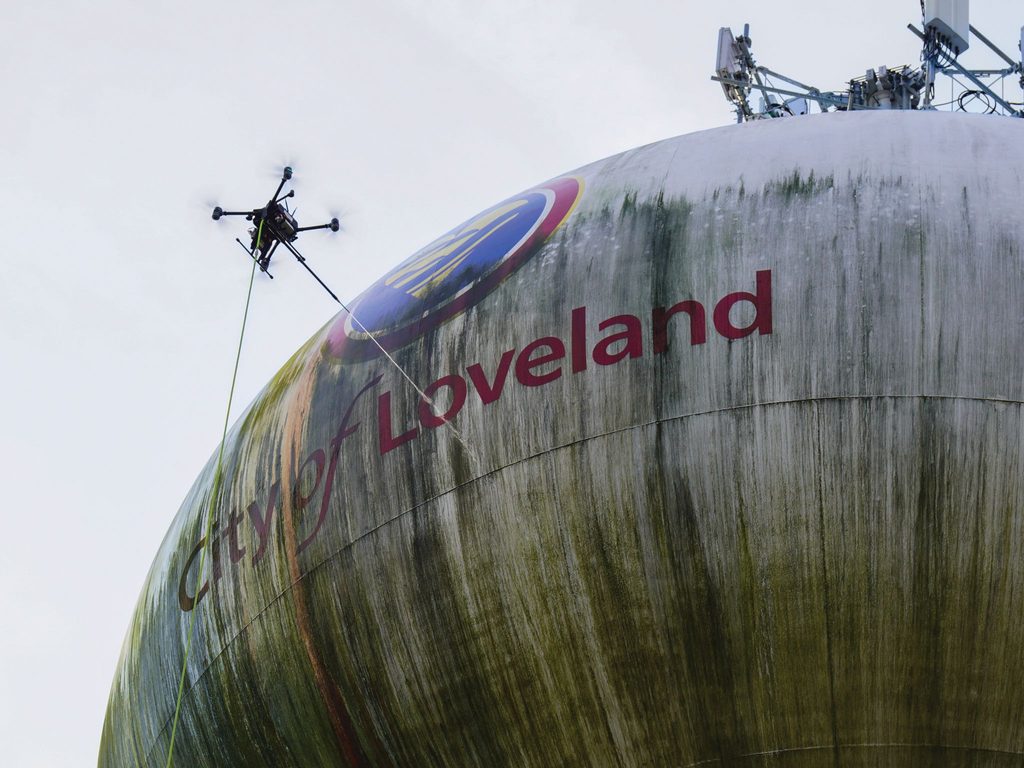
“We’ve also recently added drone-powered cleaning services to our portfolio as well, from commercial office complexes to universities, hospitals, stadiums and everything in between. Drone cleaning and aerial inspection often go hand in hand, allowing property managers to not only maintain their facilities, but also capture a more complete digital view of exterior conditions,” Gilliland continued.
“By combining inspection data with cleaning operations, we can help identify problem areas, document work performed and provide a clearer picture of a property’s condition over time. We recently completed a drone-assisted water tower cleaning project near our facilities in Cincinnati, Ohio, and we’ve partnered with manufacturers that design purpose-built drones for the lifting capability and manoeuvrability required for cleaning at height.”
The company also performs contract manufacturing of UAS platforms and related systems, with NDAA-aligned production capabilities, including integration and support for airframes, payloads and other subsystems for FPV, aerial delivery and other applications.
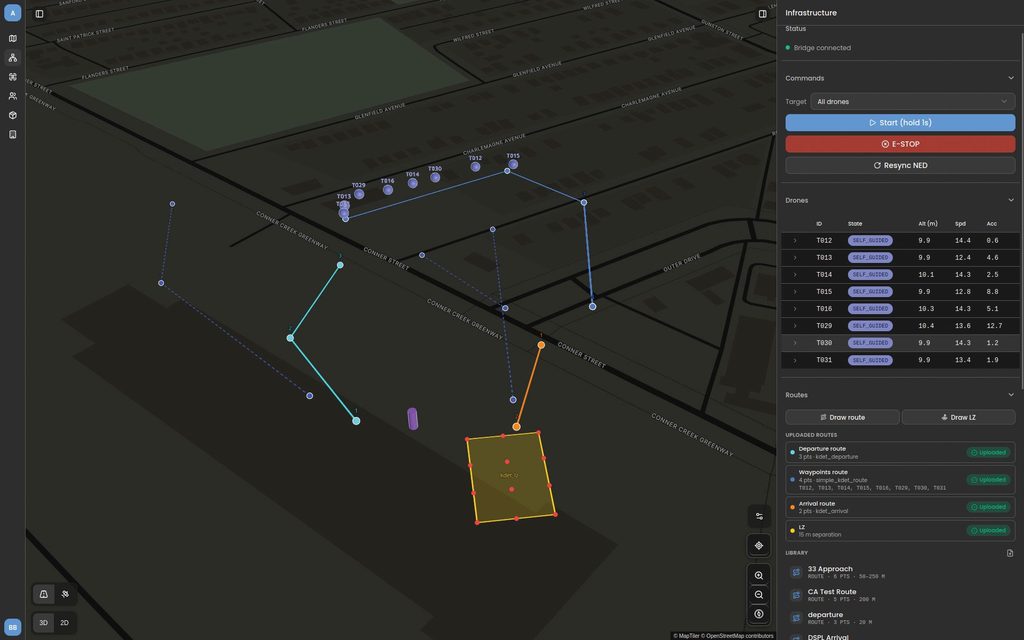
AeroNet UTM showcased its software and hardware solutions for comprehensive universal traffic management (UTM).
Facing the customer is a detailed, web-based UI and overview (accessible via smartphone and computers) designed to enable full vertiport management, including distributed assignment of waypoint routes from departures to arrivals, with integrated, autonomous collision avoidance and margins of separation between aircraft.
The UI displays a side-on, 3D view of tracked airborne assets relative to the vertiport, with GNSS location, altitude and other vital statistics for UTM authorities.

“Many UTM systems will have a web interface for flight scheduling and link authorisation, but we’re aiming to get one step ahead with our vehicle control and other features,” said Gary Gardella at AeroNet UTM.
The company also showcased its AeroNet EdgeNode On-Board Unit (OBU), which can integrate into UAVs via serial or USB interfaces to provide cellular vehicle-to-everything radio communications between UAVs, air taxis, vertiport infrastructure and other assets.
“EdgeNode uses the same radio technology as LTE, so there’s no dependency on cell towers, and it can plug into any MAVLink flight controller, to also link with our network-connected ground stations, to broadcast UTM-critical flight telemetry and enable control for UTM purposes,” Gardella continued.
The OBU can come with an integrated antenna, connectors for an external antenna, or in an OEM format without a housing or integrated GNSS. The integrated antenna version measures 80 x 64 x 20 mm and weighs just under 100 g, while the external antenna version weighs just under 120 g and the OEM version weighs just under 25 g.
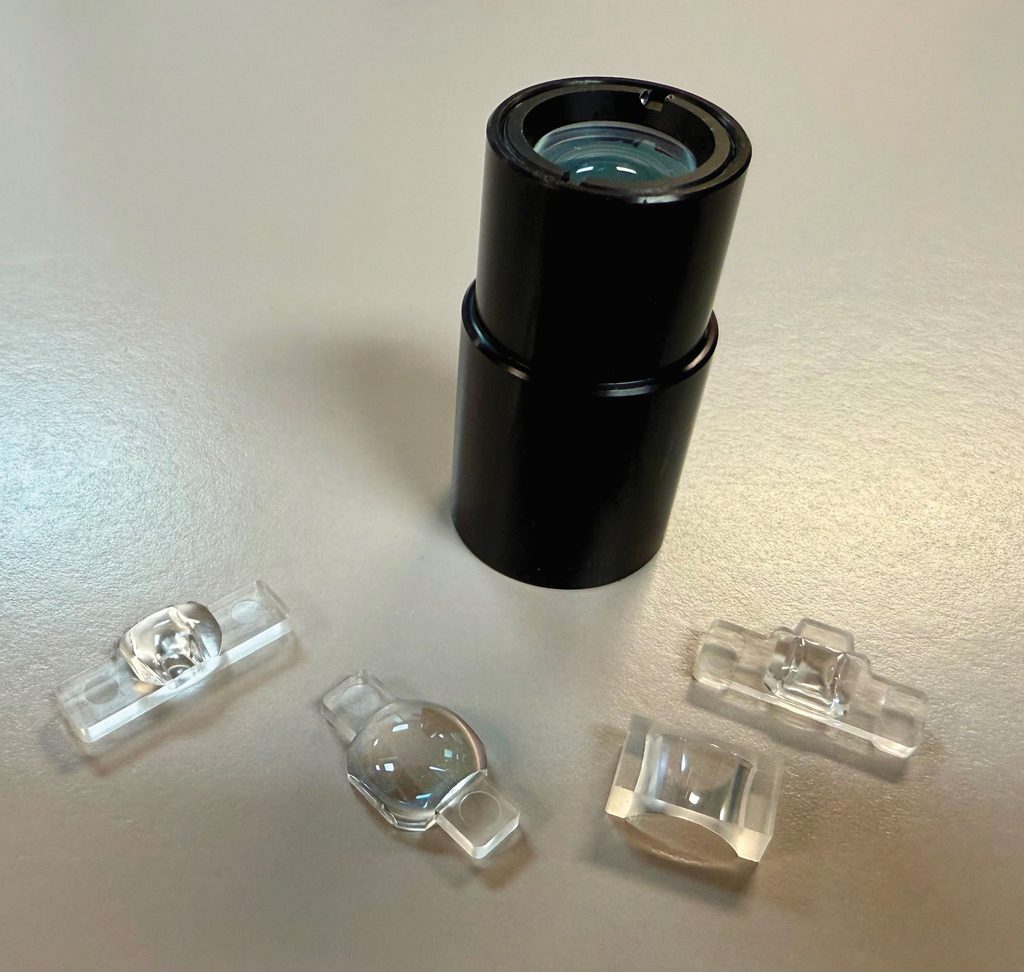
Greenlight Optics is a developer and manufacturer of custom lenses for imaging and projection systems (such as cameras or gimbals) that specialises in polymer optics, a key enabler for highly compact, SWaP-optimised packages.
“You can add aspheres, mounting features and freeform surfaces to polymer optics very easily, along with coatings and mirrors,” explained Michael O’Keefe at Greenlight Optics.
“Basically, when you need to get away from traditional glass, spherical lens assemblies and break the mould in terms of what can be done for lightweight, compact-sized micro-gimbals or FPV cameras, polymer optics are a great tool.”
The company can also customise full optical assemblies, and provide optics for sensors tracking in the UV, NIR and SWIR wavelengths besides just visible light cameras. O’Keefe additionally estimated to us that replacing a conventional glass lens with a polymer lens could remove around 30–50% of the mass of the original lens.
distinct benefits over traditional materials
SEPAC, Inc. displayed a range of aerospace– and defence-grade clutches and brakes, which it can supply either COTS or customised (with rapid prototyping available to the latter option).
The company particularly highlighted its new SEB-MAX series of spring-engaged, power-off brakes, which can be provided in a range of sizes, down to units a single inch in diameter. SEB-MAX series brakes can serve in a range of applications, including flight control actuation, missile fin actuation, weapons bay actuation, uncrewed combat aerial vehicles and more.
“We can design to any customer specification – environmental conditions, torque, speed, package size, and shock and vibration limits, and we’re glad to take on challenging or advanced requirements packages,” said SEPAC’s Hunter Kaysa.
For the brake to work, the SEB-MAX’s coil sits in a magnet body bolted to a fixed mounting surface, which reacts to shaft torque. A friction disc mounts to a hub secured to the shaft, so that it rotates with the shaft.
Energising the coil draws the armature plate inward, compressing the springs and opening an air gap at the friction disc – the shaft spins freely as long as power is applied. After approximately one second, drive voltage steps down from pull-in to a lower holding level, which is sufficient to keep the springs compressed and the brake released, while reducing power draw and heat generation relative to holding the coil continuously at pull-in voltage.
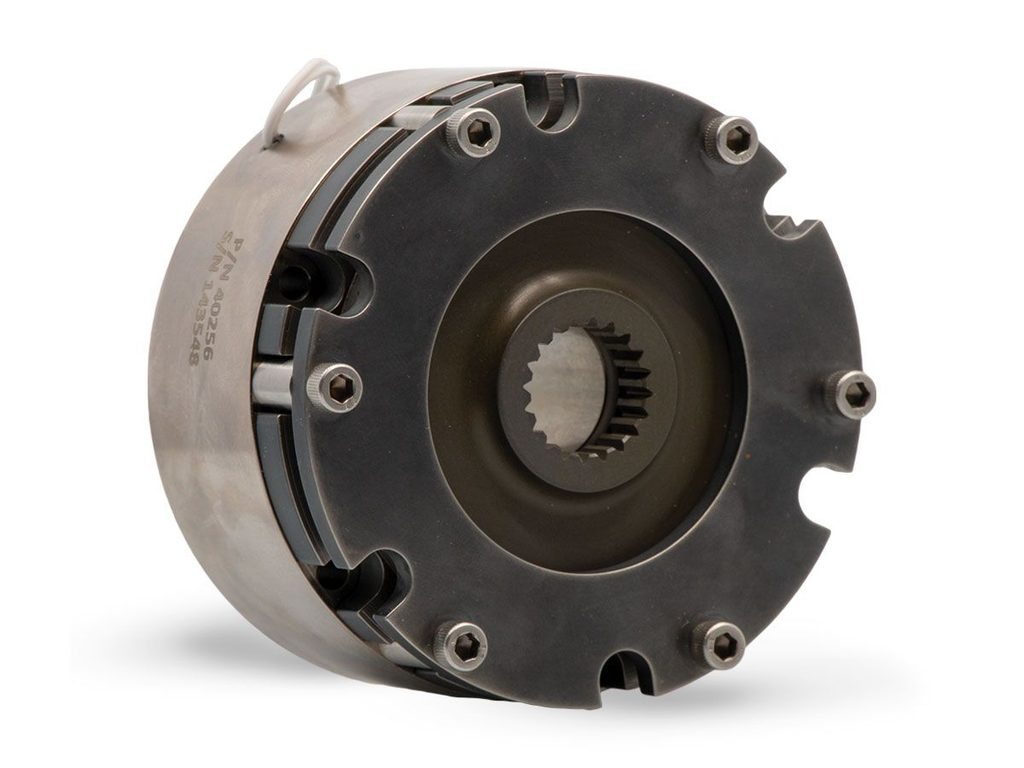
On power loss, the springs return the armature plate, clamping the friction disc between the armature and pressure plate to stop and hold the shaft.
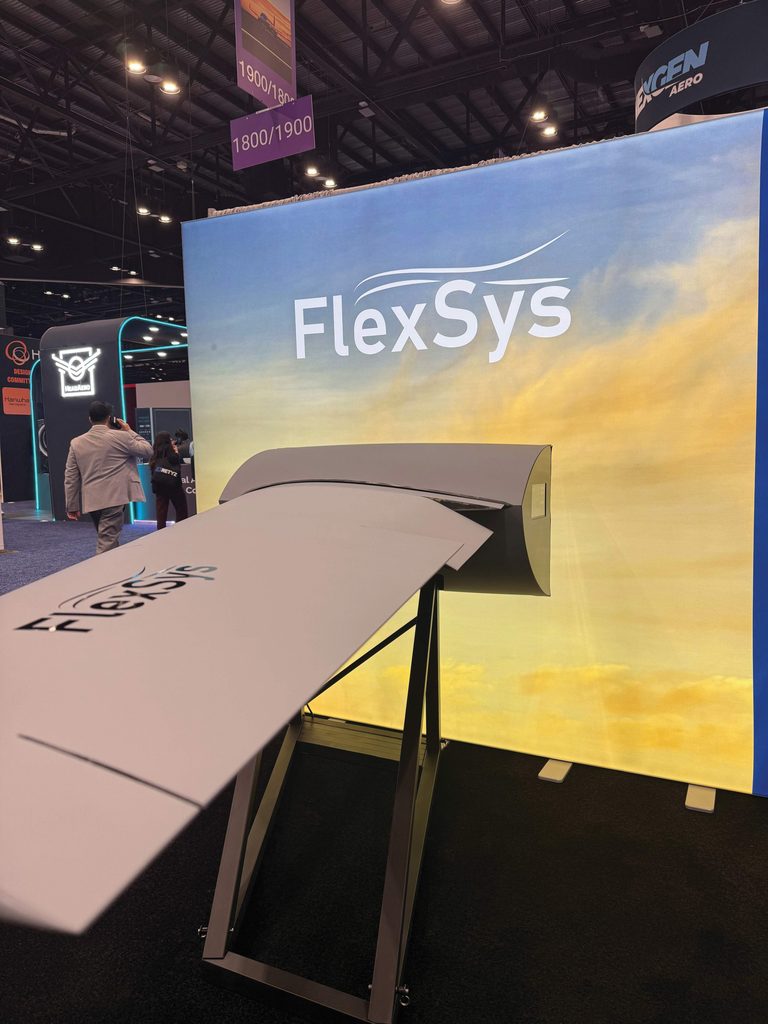
FlexSys showed a demonstrator of its morphing wing technology, which replaces hinged control surfaces on fixed-wing aircraft with seamless control surfaces, reducing drag and noise (and potentially improving lift-to-drag ratios by 15%).
“The underlying engineering paradigm behind how we morph the wing is called distributed compliance, and it revolves around taking advantage of the natural elastic properties in the wing material that houses the control surface mechanisms,” explained FlexSys’ Hal Chrisman.
“Our demonstrator here at the show is carbon fibre, but fibreglass, aluminium or titanium would work too.”
In partnership with NASA and AFRL, the company accumulated three years of flight tests for the technology on a Gulfstream III aircraft, along with considerable structural load testing and fatigue testing. FlexSys tested 500,000 high-lift cycles – more than 5 times the Gulfstream III’s lifespan of 80,000 cycles – to demonstrate safety for flights on a crewed aircraft.
Starting with SBIR funding from AFRL, FlexSys built and tested its patented wing morphing technology, including various structural tests, wind tunnel tests and flight tests to mature the technology to TRL 8.
“We’re now talking with around 30 different OEMs about how we can incorporate morphing control surfaces into their designs, although it works best as a clean-sheet vehicle design so you can really optimise the whole wing for the aerodynamic loads it’ll undertake in the real world,” Chrisman added.
“That means a better chance of a nice, smooth air flow surface, with no unnecessary angles and better lift out of the control surfaces. The technology is also actuation-agnostic, so the aircraft manufacturer can go on using whatever servos or control systems they’re used to.”
FlexSys has also found cost and weight advantages of its tech through a study (in partnership with AFRL) a few years ago, pitting its wing design against one with conventional flaps and ailerons: the morphing wing was 28% lighter and 50% less costly to manufacture than the standard wing.
coefficients by up to 15% over conventional control surfaces
“While that’ll vary between materials, the cost drop came because we made the whole wing in one lay-up or shot, from trailing to leading edge. So, there was technically no assembly: one tool, one lay-up, one cure, one piece, no fasteners, no hinges,” Chrisman said.

UPCOMING EVENTS