






ALBA Ride
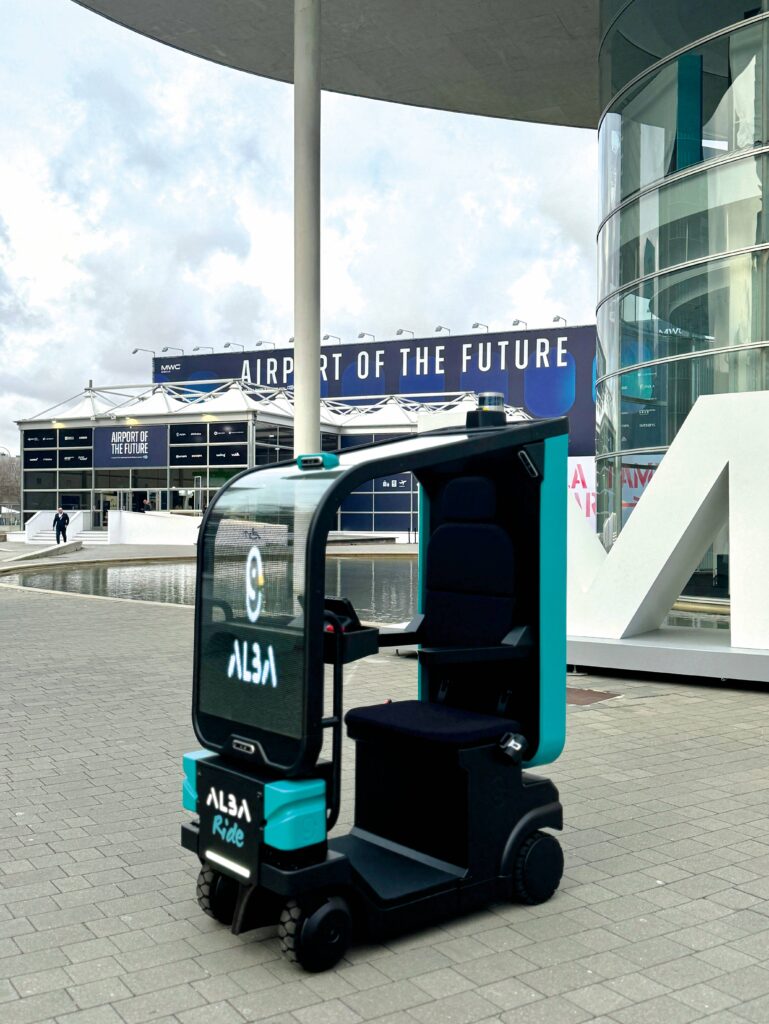
(All images: ALBA Robot)
Enjoy the ride
This autonomous personal transporter is successfully working throughout a number of airport terminals – including those at Dallas and Denver during the FIFA World Cup. Rory Jackson investigates
Much of the buzz about the autonomous transport of people focuses primarily on either self-driving robotaxis or, to a smaller but fast-growing extent, off-road military mules (particularly for CASEVAC applications). However, a fierce competition is now silently brewing across a third front: autonomous personal transportation in indoor spaces.
As unlikely as this might seem, given the crowded or accident-prone environments one might picture trying to squeeze a miniature robotaxi through, conference and capital activities indicate unmistakeably that there is a market for safe and autonomous mobility for assisting elderly, unwell or time-strapped individuals through highly complex and dynamic indoor places.
We were alerted to this need in 2024, when we briefly investigated Italian company ALBA Robot’s SEDIA (SEat Designed for Intelligent Autonomy – but now renamed ALBA One), which is essentially an autonomous wheelchair slated for helping persons through hospitals and airports.
Perhaps surprisingly, airports have since emerged as the far hungrier of the two markets for solutions such as ALBA One. The Turin-based company has, therefore, been hard at work developing a larger solution with more functions, which it has named ALBA Ride.
As Giulio Ranucci, executive at ALBA Robot tells us, “I was the former head of innovation at the airports of Rome, and I worked with ALBA before joining them, so I understand from both the developer and customer or operator perspective how the concept for ALBA Ride has been formulated.
“The first objective in engineering ALBA Ride has been to make a well-rounded mobility platform that should work across general indoor spaces. But helping PRM [persons with reduced mobility] in airports is a really good stress test for this kind of technology because they’re a customer with clear needs and heavy regulations that you can use to design your operational and service concept to comply with.”
Lastly, given that airports are invariably crowded with stressed and busy people, the company felt compelled to design the system for public and commercial acceptability. Thus, they have fitted advertising screens and a tablet for infotainment onboard, giving it the feel of a smart device suited to the environment and experience of a modern airport, and have also sought to shape ALBA Ride’s appearance into something nice to look at.
The company’s solutions have, as of writing, been deployed successfully in 11 pilot projects around the world, including at Milan Airport, Dubai International Airport, London Gatwick and Paris Charles de Gaulle, with three already converted into full commercial services.
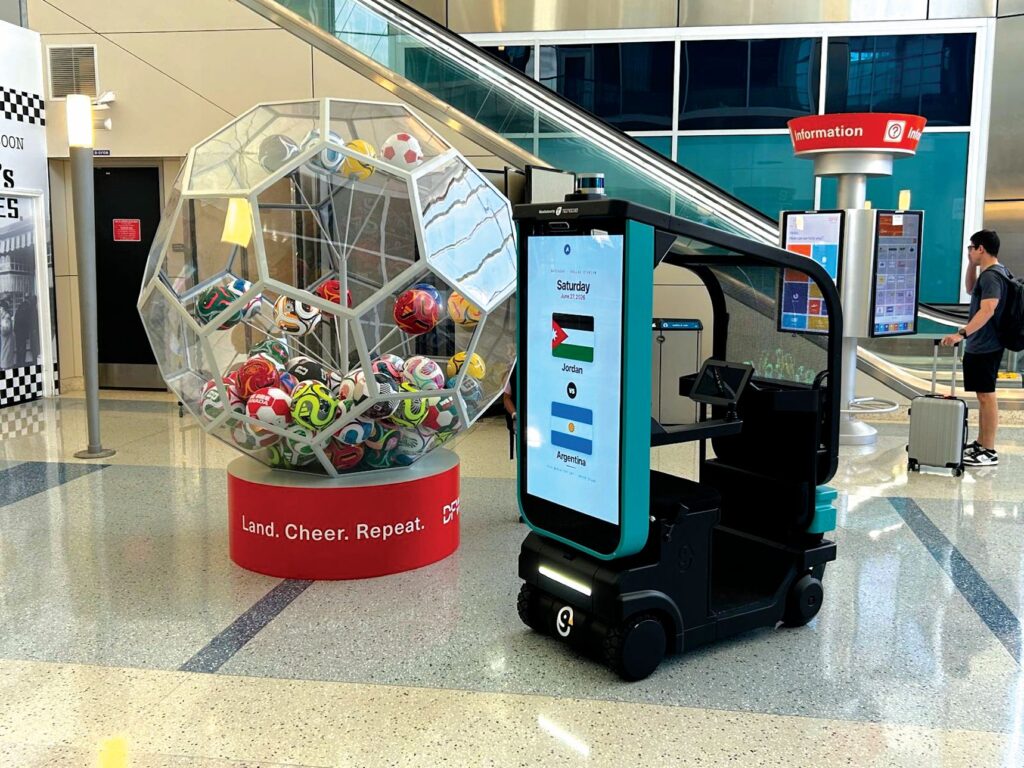
“And we’ve just used ALBA Ride in Dallas’ and Denver’s international airports for the FIFA World Cup, although our future plans include scaling its use to other indoor locations, like hospitals, shopping malls and parking lots,” Ranucci says.
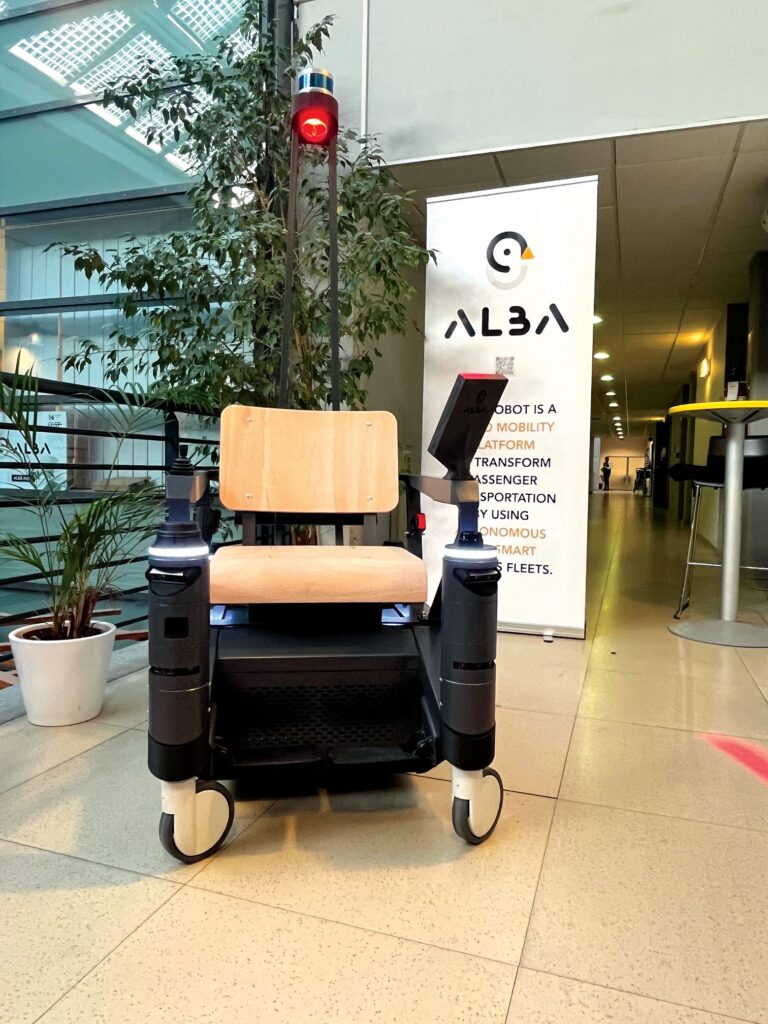
“That said, we have other indoor autonomous solutions that are optimised for other applications, like ALBA Caddie which carries luggage or small items, and we’re able to work closely with the Politecnico di Torino to rapidly iterate new technical concepts or R&D projects, so RIDE isn’t the full extent of our capabilities.”
Starting from One
While significant lessons (and a few components) have carried over from ALBA One into ALBA Ride, the newer vehicle comes with a vastly different concept and paradigm, as product manager Lorenzo Sabaini explains.
“From ALBA’s point of view, we’re in a totally different position with Ride versus One because we’ve chosen considerably more reliable components across the board, in many cases consolidating down to singular connections and cables between subsystems, and concentrating on compliance with automotive or machine safety regulations, to keep a step ahead of our competitors on reliability. So, 90% of hardware parts are new, from mechanics to electronics.”
Software, meanwhile, is more rooted to ALBA One, with the various autonomy and safety modules (along with the ALBA Vision fleet management platform for operators, and the ALBA Connect robot-booking app for passengers or other end users) having been entirely developed in-house – although, naturally, the software systems now develop independently of that prior platform.
Most importantly, ALBA’s developers gained tangible understanding of perception dynamics specific to the context of airports. Great importance is placed, for instance, on the primacy of Lidar in indoor navigation, thanks to its resolution, density and speed of data acquisition.
Such qualities enable intelligent identification of persons, queues, disembarking passengers and other persons (and thus, safe navigation around or away from these). Additionally, unlike cameras, Lidars cannot record significant personal identification features, thereby maintaining a healthy degree of anonymity for those around the Ride, even if authorities still want to gain useful analytics on activity inside their airports.
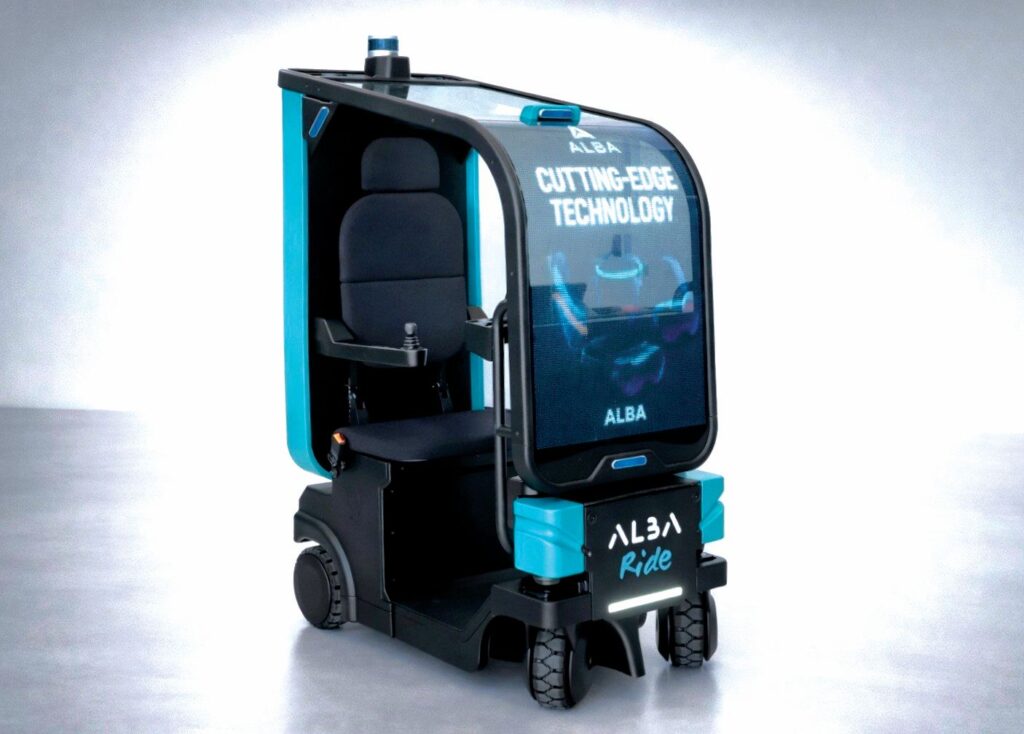
Among the most prominent changes from the One include the front and rear screens that form a canopy over the passenger. In addition to providing space for saleable advertising, or subtitling flight-related or security announcements, these give a sense of privacy, safety and comfort by putting a visual shield between the passenger and surrounding people.
“There may also be times in future where ALBA Ride is used outdoors, so protection from weather is something we want to proof against now,” Sabaini says.
The larger size is similarly noteworthy because the vehicle had to still fit into elevators, and leave enough space for pedestrians to get by, without cramping the seated passenger within (comfort, in fact, was a critical engineering requirement for the ever-difficult goal of public acceptance).
“We also chose and optimised Ride’s dimensions to ensure smooth driving and precise manoeuvring through other narrow spaces, so it was important not to make it too long,” Sabaini adds.
Thus, the vehicle measures around 188 cm tall, 115 cm long, and 70 cm wide. These dimensions, and their consequent volume, were also critical to defining the available space for the platform’s drivetrain.
Wheels for days
The ALBA Ride runs on two driven rear wheels and two front caster wheels. Caster wheels, as seen on shopping trolleys, can spin and rotate freely, while the rear wheels are powered independently and thus enable differential steering (another factor constraining the design length of the vehicle because differential steering can induce great wear and instability on a vehicle with excess length over width).
“Each wheel uses an electric motor, each outputting 150 W, sized for a large automated guided vehicle [AGV], and running through a reduction gearbox,” Sabaini says. “Carrying passengers requires precision localisation, so each motor has a high-quality wheel position encoder.”
The caster wheels are customised by an unnamed Italian supplier, based on ALBA’s own studies on how best to integrate such wheels into its chassis (which the company notes as having been a non-trivial technical challenge at Ride’s dimensions).
“In general, balancing the mechanical structure and drivetrain within our strictly-defined dimensions was very difficult. The small vehicle length meant we needed wheels of exactly 250 mm diameter, which restricted us to the kinds of wheels used on industrial equipment, but we needed much better performance than that to deal with the NVH [noise, vibration, harshness] we get when running through airports,” Sabaini explains.
“So, we’re very satisfied with the custom wheels we’re receiving now, and with the tyres they use too for indoor and outdoor work – but we’re researching how best to acquire more specialised tyres, especially if we can have one set optimised for indoors and another for outdoors.”
On the given drivetrain, the vehicle can move at up to 6 kph, but never does so; instead, keeping between 3 and 3.5 kph during normal work, to match human movement speeds and prevent those surrounding the vehicle from feeling threatened.
The battery at the vehicle’s front (behind the word ‘Ride’) enables up to eight hours of operation normally – although this can vary depending on factors specific to each airport or country, like foot traffic or average passenger weight. Presently, opening a front hatch via a safety key and pulling out the pack enables quick-swapping in of a fresh pack, and thus fast returns to service for terminals open 24/7, if such urgency is needed. If not, around four hours allows for a full recharge on typical AC plug-in power.
Ride comfort
As mentioned, keeping riders or passengers comfortable while using ALBA Ride has been a critical requirement to ensure customer acceptance of being driven autonomously through busy indoor places. Achieving comfort has been hampered by the aforementioned issue of NVH, which stems not from the Ride’s drivetrain (being a light duty system) but from airport floors.
“Airports are collections of infrastructure that go decades between updates or renewals, so you can have floors that are far bumpier and more weathered than you’d think at first glance, as well as having metal features on the floors that make it quite challenging to achieve a smooth ride,” Ranucci says.
As Sabaini adds, “Every airport brings different kinds of ground surfaces. We’ve faced carpets of varying depths and many differently tiled floorings, but we wanted to make one solution that would more or less work on all kinds of surfaces. So, we worked a lot on shock absorbers, suspension systems and insulators between the cradle of the motors and the passenger’s seat to get a smooth ride no matter the condition of the terminal’s floors.”
The shock absorbers in particular were designed in-house from a blank sheet before being iterated and subsequently integrated into the chassis.
The seat was also a key area of focus for ALBA’s passenger-related engineering targets (especially given the vulnerability of PRMs). Because of this, the Italian company hired a safety engineer from Stellantis’ safety centre (an organisation responsible for defining Stellantis vehicles’ seats in terms of comfort and safety requirements) to work for them as a project manager and field engineer, and directly inform seat requirements for the indoor autonomous use-case.
“As well as integrating a safety belt as required by law, we have a level of electronics that tracks whether the passenger is seated or not, via a pressure sensor in the seat, and whether they’re opening the safety belt while Ride is in motion,” Sabaini says.
“Doing our own R&D and designs for a seat would have been incredibly time-intensive, but since we’re experienced engineers native to Turin, Italy’s automotive city, we were able to quickly determine and choose a local manufacturer who could guarantee a very comfortable seat: one compliant with automotive safety standards and dimensioned for the 98th percentile of human body sizes.”
Lidar-based localisation
Although some aspects of Ride’s sensor architecture remain undisclosed, the company notes a 3D spinning mirror Lidar atop the cabin, with two 2D Lidars – one at the front and one pointing rearward – and five stereo cameras distributed around the body. Four of those are mounted at high positions and inclined slightly downwards, at Ride’s front, left, right and rear, while the fifth is an additional frontal camera mounted just above the battery hatch.
The camera systems incorporate computer vision to define objects and obstacles around the vehicle, and may in future form part of the localisation or navigation stack (but do not yet, as of writing).
The 3D Lidars meanwhile are key to ALBA’s feature-based localisation methods, GNSS being unreliable in the average concrete- and metal-laden terminal building. However, localising this way merits some preliminary mapping work on ALBA’s part so that Ride and its engineers can get the lay of the land.
As Ranucci adds, “95% of airports don’t have pre-existing 3D maps or models that our Lidars can use as reference information. Some have entirely new infrastructure, designed from scratch with building information modelling or BIM, which we can leverage, but as far as we’ve seen, there’s only one European airport, the Central Transport Hub being built in Poland, along with a few in the Middle East and two in China that have used digital twinning across the board, which might enable Lidar-based localisation to rapidly deploy.
“The algorithms for localisation also have to be robust to changes in the reference models because airports are constantly changing environments. Businesses inside the airports get walled-up for renovations, new shops pop up in the middle of walkways, gates and border control areas get rebuilt or redesigned. So, even if we’d get a digital map from when the terminal was built, that doesn’t mean that map will stay 100% accurate for very long. So, it’s a very unique stress test for autonomous driving because terminal interiors change much more than streets.”
Hence, ALBA typically engages in closely supervised mapping drives before autonomous deployment to collect high-density 3D information from all driveable areas in each terminal, so that Ride can localise with confidence by cross-referencing multiple indisputable landmarks in the face of a few among them being different than previously determined.
Deployments can also be restricted to specific zones during initial rollout to prove the vehicle’s ability to handle the dynamic terminal environments with an element of damage control for reassuring authorities. For longer-term partnerships, ALBA can define algorithmically which landmarks may be subject to change and which are less so, to further refine localisation confidence indices.
Control safety
One centralised computer, connected to a lower-level network of microcontrollers pertaining to the various subsystems, is responsible for processing perception data and service-related data, as well as outputting control commands.
“While we can’t go too deeply into our software architecture, I can tell you that we have a different, dedicated layer of calculation when it comes to safety-critical software commands,” Sabaini says.
“Given how important safety is to our use-case, that aspect of our architecture ensures that, if there is a problem with the processing for the autonomous driving in terms of path planning or navigation, for instance, we are not affecting anything that directly relates to the safety of the passenger, such as the systems discussed in the seat, or perception avoidance for preventing a crash while keeping the passenger stable.”
Joysticks in the cabin do provide a manual control option. Depending on the site of operation, there may be situations where manual driving is easier, or serves as a useful form of control redundancy, or simply provides reassurance to authorities dubious of indoor autonomous systems.
Communication
ALBA’s vehicles and software are agnostic towards communications standards, with Ride typically integrating antennas for 5G, 4G and wi-fi atop the passenger cabin, as prescribed by the differing requirements of each airport.
“The 5G and 4G are important backups for fleet management and telemetry to seamlessly fall back on; most airports do have free wi-fi, but it’s almost always heavily congested,” Ranucci notes.
“And they often keep timestamps relating to each connection to make sure employees aren’t sapping bandwidth from passengers. In principle, airport IT should give Ride and other indoor autonomous systems their own specific IP addresses and protocols, but they tend to be slow at doing that – hence, the 5G and 4G. Some airports are even adopting Starlink as an additional backup, especially for extra variety of connectivity options inside planes, where other standards can get blocked by the Faraday cage-like effect of the cabins.”
The channels and layers of Ride telemetry sent to airport authorities and fleet managers can vary further still, depending on which data they need (versus those which ALBA is compelled to keep track of).
“For instance, from our end, we’re checking subsystem health in the software daily, for things like signs of ageing or degraded performance by the sensors, motors, battery and so on, and after we’ve done that to our satisfaction, we can translate it into a more report-style output for the airport fleet managers to take action with,” Sabaini comments.
The company is careful not to overload airports with the same level of information that its own personnel track from their offices in Turin. Much of this is driven by the knowledge that airport security and fleet managers continually track vast swathes of real-time camera footage and telemetry networks, and are prone to being easily spooked by unknowns, such as anonymised Lidar data or how it might (or, more accurately, might not) breach GDPR standards.
“Gradually, we can offer our clients options they’ve never had through using Ride’s Lidars for things like anonymised people counting, or tracking formations of crowds or other periodic obstructions. We’ve found in a few cases they progressively start to envision the different efficiency benefits they can get beyond just Ride’s secure, driverless transportation of PRMs,” Ranucci adds.
Infotainment and advertising
Digital signage is provided through the frontal transparent OLED and rear LED screens, with the front virtual screen having larger pixel pitch and lower resolution than the portrait-shaped 4K system at the back in order to enable the passenger to partially view what lies ahead of the vehicle.
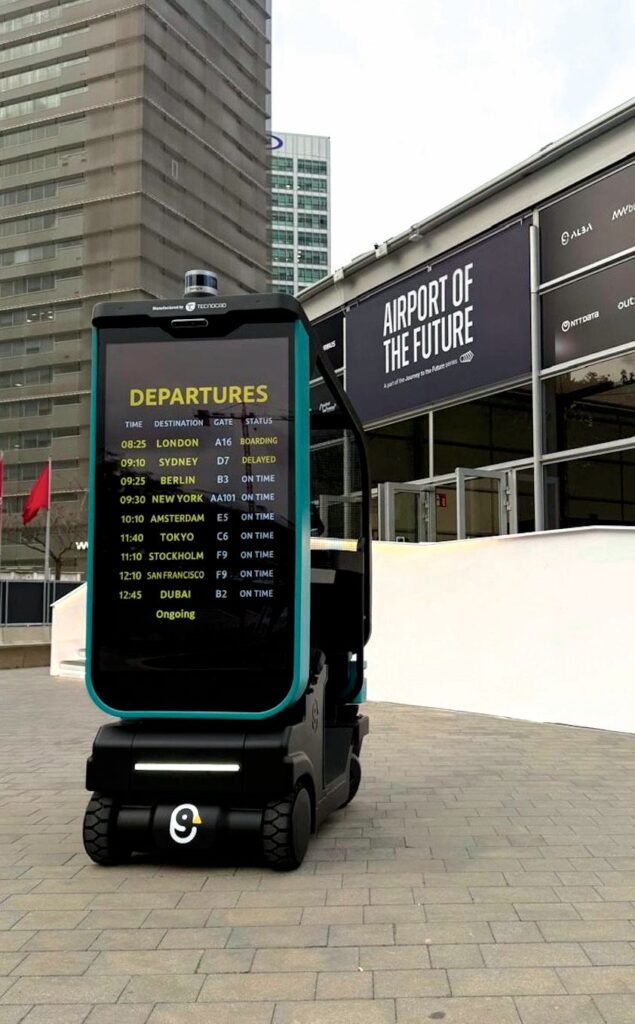
Thus, a medium is struck between maintaining their privacy, preventing them feeling claustrophobic, and imparting priority announcements or advertising to persons around the vehicle (as well as to the one inside). And while enabling advertising via the front or (more often) rear screens might not seem a technical or efficiency imperative, it naturally makes achieving a positive ROI through Ride considerably quicker and easier.
“While wayfinding or navigation information can be given to the passenger via the front transparent screen, the tablet on Ride’s dash is more explicitly for that. It can show a real-time map of the airport and Ride’s progress through it, including gate information and estimated times of arrival or remaining travel time so they feel taken care of,” Ranucci notes.
“But it too can be customised according to every need. So, if airports want to put in banner ads to show some new restaurant opening or a product being sold or cleared, and aren’t concerned about information overload, then that can be implemented.”
Maintenance
In line with the earlier comments on performance and health monitoring, ALBA has devised predictive maintenance algorithms, by which both its own engineers and technicians under the airports’ fleet managers can take appropriate action to prevent mid-operation subsystem failures, such as replacing motors before they reach an end-of-life condition.
“Most often, the most important and routine maintenance work is to clean the sensors. In some cases, we’ll program dust alarms into the system because you really can get very dusty environments in airports despite being an indoor space,” Sabaini says.
“So, measurements on the 2D Lidars typically can generate and transmit an alarm to the airport fleet managers, communicating that there’s mounting levels of dust that could pose a future problem and that cleaning is imperative.”
Additionally, component replacements often follow incidents such as hard bumps, for instance from luggage or trolleys being suddenly swung into Ride’s path, human beings lacking the 360° awareness of autonomous UGVs. Nonessential electronics connections and vehicle lights are the most prone to needing reconnection or replacements after such events.
That said, all critical connections are made using industrial-grade, rugged vehicle connectors, which remain secure amid these types of impacts. The tyres, additionally, have been found to rarely need replacement, handling well the NVH and slow speeds that Ride undertakes.
Future
In addition to further optimisations of its navigation systems, ALBA is also working on a wireless charging solution, which will use COTS emitter and receiver elements used in AGVs, and can be deployed as soon as a customer requests it, likely so that the company’s vehicles can recharge passively when parked and not in use.
“It’s something we’ll work on as a next step, and we’re still checking that it’s something fully compliant with airport regulations,” Ranucci says. “Airports can be perturbed by batteries in vehicles, even though they have passengers daily who board airplanes with several laptops in their suitcases. There are some that have had fires in the last 10–15 years, so those clients likely won’t want small vehicles charging, even outside of the terminals.
“But we’re heavily dedicated to problem-solving, and we always want to push for more innovation and efficiency, wherever we happen to be deploying. So that’s a path – among several others – that we’re passionate about pursuing however we can.”
UPCOMING EVENTS