




Improved transmission of camera data for large AUVs
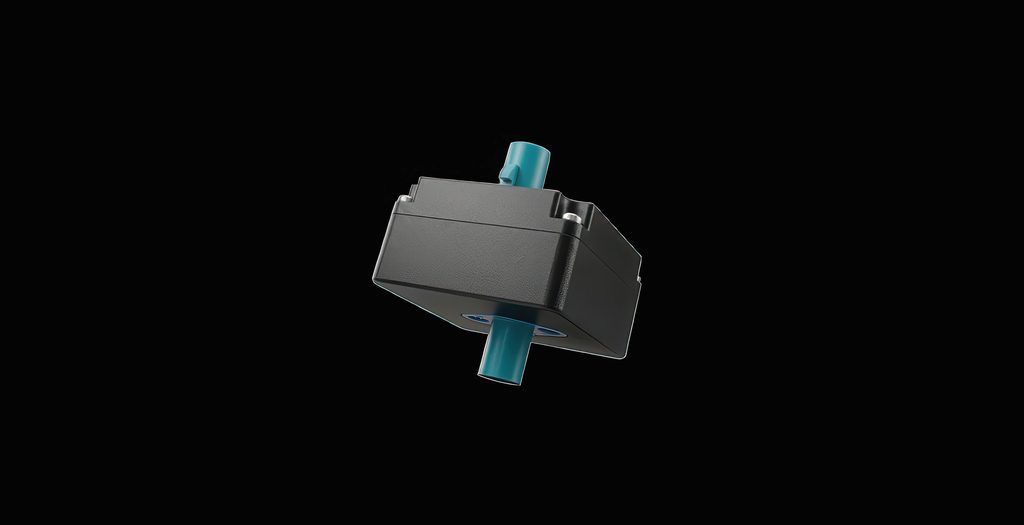
(Image: Octobrite)
Octobrite in Taiwan has developed a repeater to double the reach of GMSL2 camera links in large autonomous vehicles, writes Nick Flaherty.
The Gigabit Multimedia Serial Link (GMSL) is a specification developed by Analog Devices for camera links in vehicles. The first generation supports distances of 15 m with data rates up to 3 Gbit/s for video feeds with resolution of up to 1080 p. GMSL2 introduces an automatic repeat request error-control mechanism alongside a cyclic redundancy check to retransmit corrupted packets, greatly improving safety-critical reliability and boosting the data rate to 6 Gbit/s with the same 15 m reach. This newer version supports 4K resolution video from 8 MP camera sensors. GMSL2 also adds tunnelling for other protocols such as Ethernet and MIPI CSI.
The Octobrite GMSL2 Repeater regenerates the GMSL2 signal at the midpoint of the link, doubling the roughly 15 m reach of a standard GMSL2 connection without changing the camera architecture or the location of the compute unit.
This is key for large autonomous vehicles that place cameras far from the compute unit. Trailer-rear, boom-arm, harvesting-head and perimeter cameras routinely sit outside the reliable range of a standard GMSL2 link over automotive cabling. Reaching those positions has required either relocating the compute unit or redesigning the cable architecture – the GMSL2 Repeater removes both steps.
The Repeater, which measures 34.6 x 36 x 19 mm, installs between the camera and the host to recover the incoming GMSL2 signal in full. It then retransmits a clean copy across a second link. This full recovery, rather than analogue signal boosting, extends the link to a full 30 m and adds latency of under 1 μs. The device has one GMSL2 input and one GMSL2 output on FAKRA Type Z connectors, runs at 6 Gbps and draws 1.3 W of power over the same coax cable as the camera, requiring no separate power supply.
It carries an IP69K rating when its FAKRA connector is mated to a cable connector rated to the same standard, supporting high-pressure washdown, and it operates from -40 to +85 C, which is important for autonomous equipment operating in tough conditions.
Primary applications include heavy construction, mining, agricultural and forestry equipment, along with long-haul trucking, although outdoor autonomous mobile robots and uncrewed ground vehicles represent a further application as those platforms grow larger and move into harsher environments.
UPCOMING EVENTS