






Automatic fault fixing in space
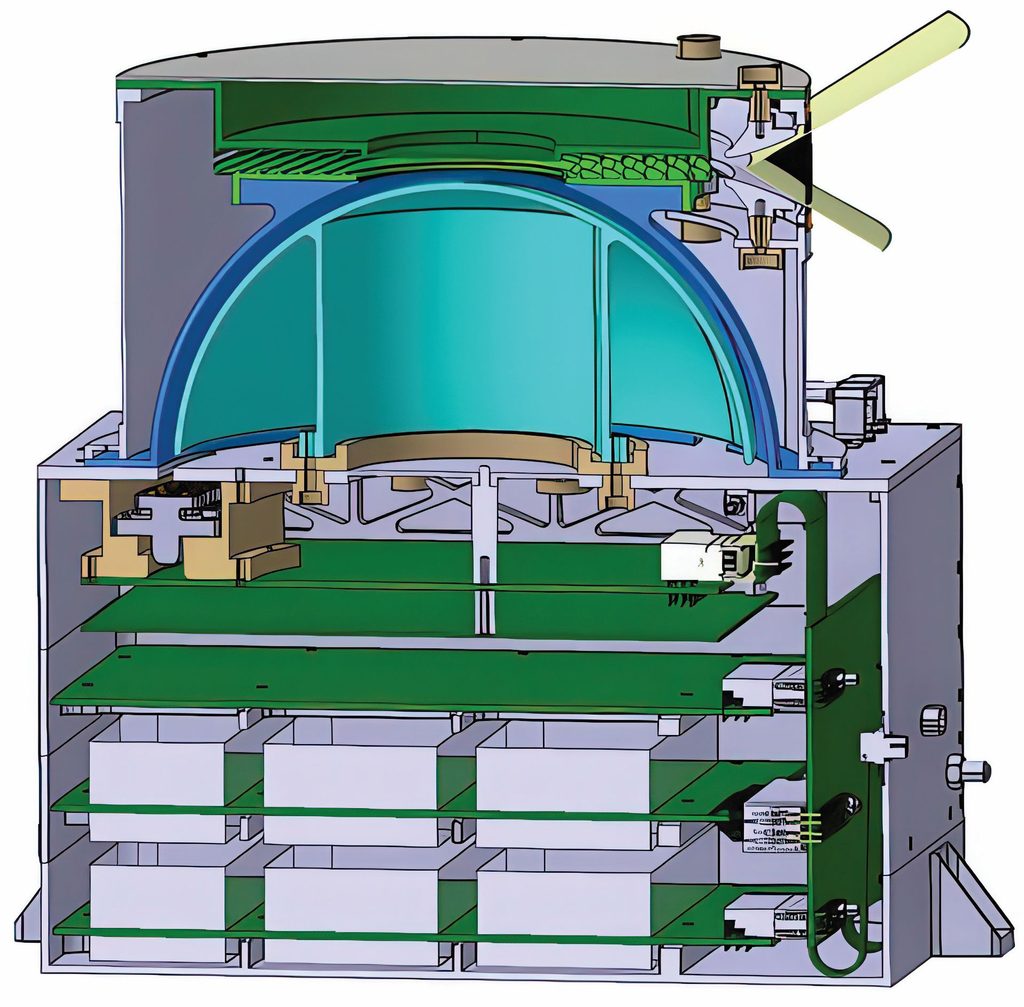
NASA is developing a fault management (FM) system to detect issues that occur in space so that they can be mitigated automatically without human intervention, writes Nick Flaherty.
Designing autonomous missions requires a multidisciplinary approach that connects FM with the model-based systems engineering (MBSE) approach used in mission design to ensure that resilient, fault-tolerant systems are architected, modelled and integrated during the design phase.
Qualtech Systems Inc (QSI) is adding the development of FM capabilities and enhancements to its commercially available toolset, TEAMS, initially to support autonomous swarms of satellites in orbit.
In highly reliable autonomous systems, there must be some means to detect and respond to failure of function. Identifying and allocating the requirements and functions for these capabilities is the job of system engineering.
Combining system health management with FM can prevent failures from occurring, or detect and then mitigate them should they occur. The MBSE process coordinates, cross-checks and integrates system elements to achieve mission goals, and it is integral during the design, specification, and verification and validation of systems.
However, FM has historically been designed into the system only after the nominal system is designed, which essentially makes it a ‘band-aid’ for problems without consideration of how they might have been prevented or mitigated. This lends itself to a large technology and knowledge gap resulting in significant inefficiencies throughout the lifecycle.

The main deliverable is a set of modelling standards for the SysML v2 language for modelling concepts and artifacts, as well as a SysML v2 information exchange capability for performing FM analyses and studies.
This will be demonstrated with HelioSwarm – a constellation or ‘swarm’ with one hub and eight co-orbiting small satellites intended to make the first simultaneous, multiscale measurements of magnetic-field fluctuations and proton flows from the Sun.
Plasma turbulence transfers energy across many scales, from fluid-scale motions to kinetic-scale particle dynamics, so it cannot be fully understood from a single measurement point, or from measurements at only a single scale. HelioSwarm’s spacecraft will fly with separations ranging from tens to thousands of kilometres, allowing scientists to reconstruct the 3D structure and dynamics of turbulent space plasma. These observations will reveal how energy moves through the solar wind.
The QSI team created a SysML v2 design model of HelioSwarm subsystems and top-level mission requirements, capturing the flow from mission goals to the design. The team then used its enhanced toolset to translate the SysML v2 model into an FM model. The models consist of key subsystems of the hub spacecraft and eight node satellites, including subsystems for command and data handling; electric power; attitude control; propulsion, thermal and separation hardware payload sensors; and ground and space communications.
This process will support the design of small spacecraft swarms with inherent redundancy to enhance science observations and other NASA goals, such as providing mission support for lunar surface operations.
This technology may also have applications outside of NASA. Comprehensive and efficient fault management analyses and architecture trade studies are of critical importance to complex autonomous systems from aircraft, surface ships and submarines to uncrewed ground vehicles.
UPCOMING EVENTS