








AUVSI XPONENTIAL US 2026 part one

made their way to Detroit Huntington Place for the 2026 AUVSI Xponential conference and exhibition (Image AUVSI)
Motown hits
The world’s largest exhibition of uncrewed solutions and innovations moved to the Motor City for its 2026 edition, bringing with it a host of new products to see. Rory Jackson reports
Every year, the Association for Uncrewed Vehicle Systems International (AUVSI) Xponential US event brings together record numbers of professionals and companies zeroed-in on all things concerning autonomous mobility, and 2026’s iteration at the Detroit Huntington Place convention centre was no exception. Close to 10,000 attendees from more than 50 countries as well as over 600 exhibitors could be found across the show’s many featured happenings, foremost of which was the expo floor.
There, a vast wave of new solutions was launched that stands to advance the myriad critical operations now being executed autonomously on land, at sea and in the air – a selection of which are presented henceforth, in the first of our two-part report on the innovations introduced at this crucial exhibition.
Hargrave Technologies has unveiled its first ever range of electric motors, the HT8 series. These motors are offered in either a semi-enclosed housing for 280 g unit weight (including cables), or a fully open housing for 255 g, and notably come with permanent magnets free from heavy rare earth elements.
For the unfamiliar, heavy rare earth elements include metals such as dysprosium and terbium, which are considerably more polluting than, say, lighter rare earth elements like neodymium, owing to the intensive chemical leaching processes needed to extract small quantities of the former, and the more complex production methods needed to utilise them in magnets. Heavy rare earth suppliers are also mainly present in China alone, whereas lighter rare earths can be sourced from other countries such as Australia, India or Brazil, making the latter group’s supply chains more resilient, on top of their established comparative green-ness.
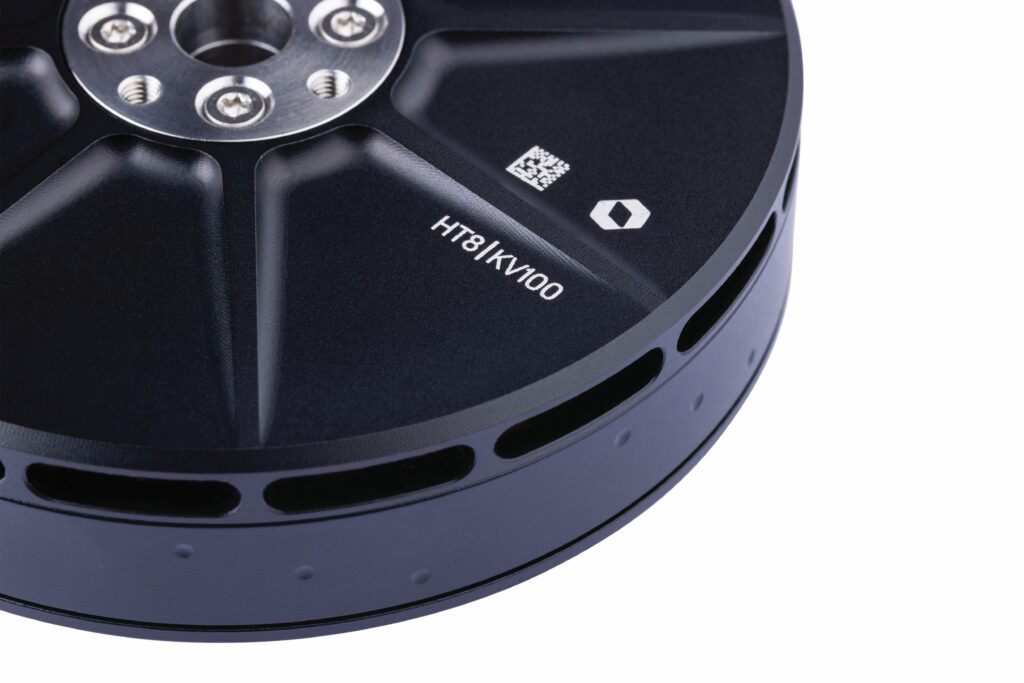
“As well as optimising the HT8 motor design for performance and efficiency without heavy rare earths, we’ve been working one-and-a-half years to optimise it for reliability, long life and reduced weight,” said Hargrave’s Giuseppe Volpe.
“That meant a lot of laboratory testing to push its limits, maximise its acceleration factors and so offer something that lasts at least 2000 hours of continuous operation, including amid arduous operating conditions per lab tests.”
The HT8 motors generate 7 kg of continuous thrust, up to 10.6 kg peak, and pull 23 A of continuous current, functioning with 12S and 14S batteries. While engineered for broad third-party compatibility, the HT8 range is natively optimised for Hargrave’s own ecosystem, offering plug-and-play integration with GateKEEPER ESC cores and proprietary FOCAL commutation topology.
The first HT8 product has been released with a standard Kv rating of 100 rpm/V, and it will soon be possible to order it in two additional configurations with Kv ratings of 85 and 125 rpm/V.
UAV Navigation-Grupo Oesía unveiled its VECTOR-300 autopilot, which has been designed as a more production-efficient and industrially scalable version of the Spanish company’s VECTOR-600 solution, while still integrating many of the same capabilities demonstrated by the latter autopilot.
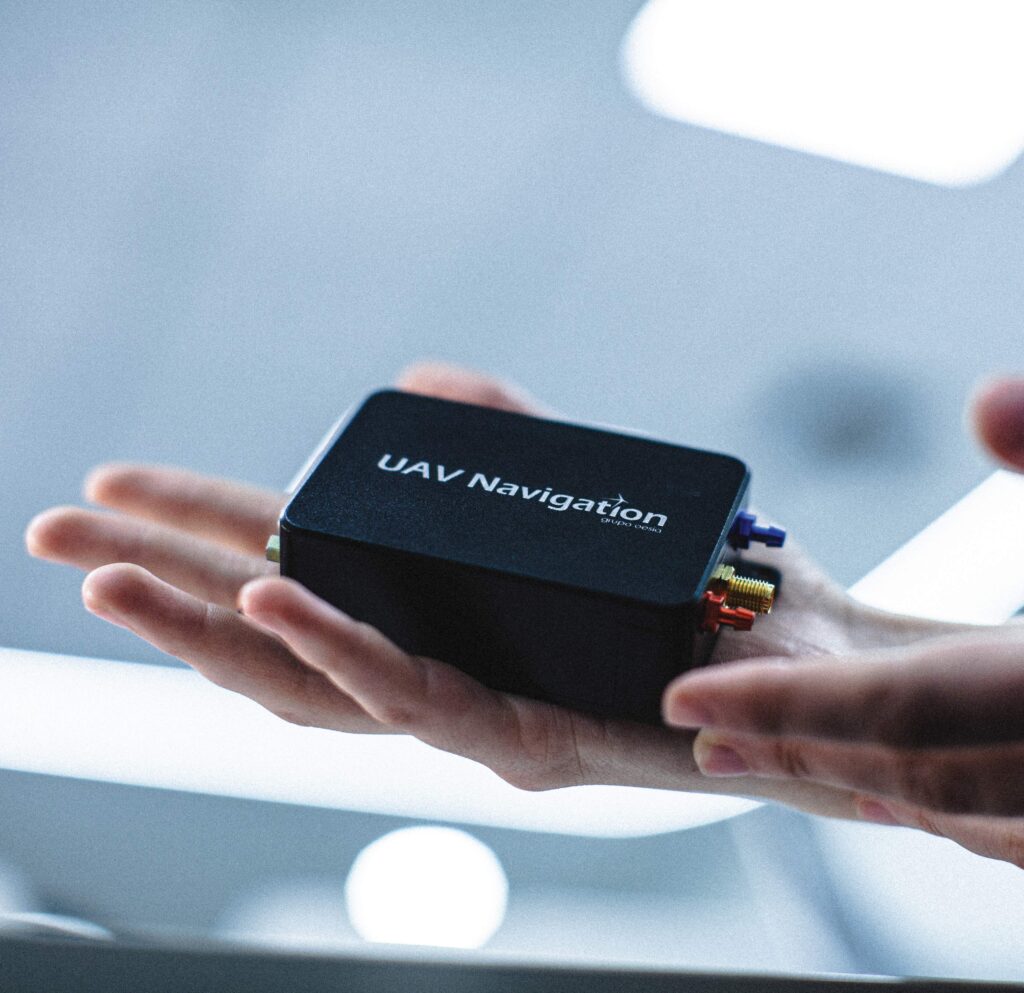
As Patricia Porras at UAV Navigation-Grupo Oesía explained, “We’ve optimised the VECTOR-600’s base architecture to formulate the VECTOR-300 for attritable or fungible UAVs. For example, interface availability has been tailored to mission needs, with four serial ports and a CAN port still available, while other connectivity has been adapted to align with platform requirements”
While the vast majority of navigation performance specifications remain identical between the VECTOR-300 and VECTOR-600, the newer, SWaP-optimised solution notably comes with a 184 channel GNSS receiver (improving over the 600’s 72 channels) and tighter horizontal position accuracy (1.5 m circular error probable, to the 600’s 2.5 m).
The VECTOR-300 has also been designed with an architecture optimised for easier sourcing and more streamlined, cost-efficient manufacturing. For platforms that require higher levels of redundancy, robustness or connectivity, however, the VECTOR-600 remains better suited to address those needs.

“With the VECTOR-300’s designed-for-volume manufacturability, we know we can easily output 10,000 units per month, but – theoretically – the sky’s the limit, so we can raise supply to match demand very seamlessly,” Porras added.
Falcon Propeller highlighted its C2UD Series propellers, which the China-based company has developed specifically for engine-powered UAV platforms and continuously refined over the past several years.
“The C2UD has earned strong market recognition for its reliability and durability in demanding operating environments,” said Han Li at Falcon Propeller.
“Designed for gasoline- and hybrid-powered UAVs, where vibration levels and impact loads are significantly higher than in electric systems, the C2UD Series is additionally optimised and suited towards integrations meant for long-endurance missions, heavy-duty operations and applications where dependable performance over extended service life is a key requirement.”
To withstand the intense, challenging forces imparted on propellers by engine-powered aircraft, the C2UD propellers incorporate a carbon-fibre laminate structure optimised to enhance parameters such as their strength, stiffness and vibration resistance.
“Additionally, its standard-issue aerodynamic profile is based on a proven geometry with extensive operational history, providing a balanced combination of stable performance, durability and efficiency,” Li continued.
For integrators seeking custom designs for optimised aero efficiency, noise efficiency or other parameters, Falcon Propeller added that it can perform a complete aerodynamic and structural re-matching based on a customer’s specific powertrain characteristics and mission requirements – rather than merely adjusting diameter or pitch.
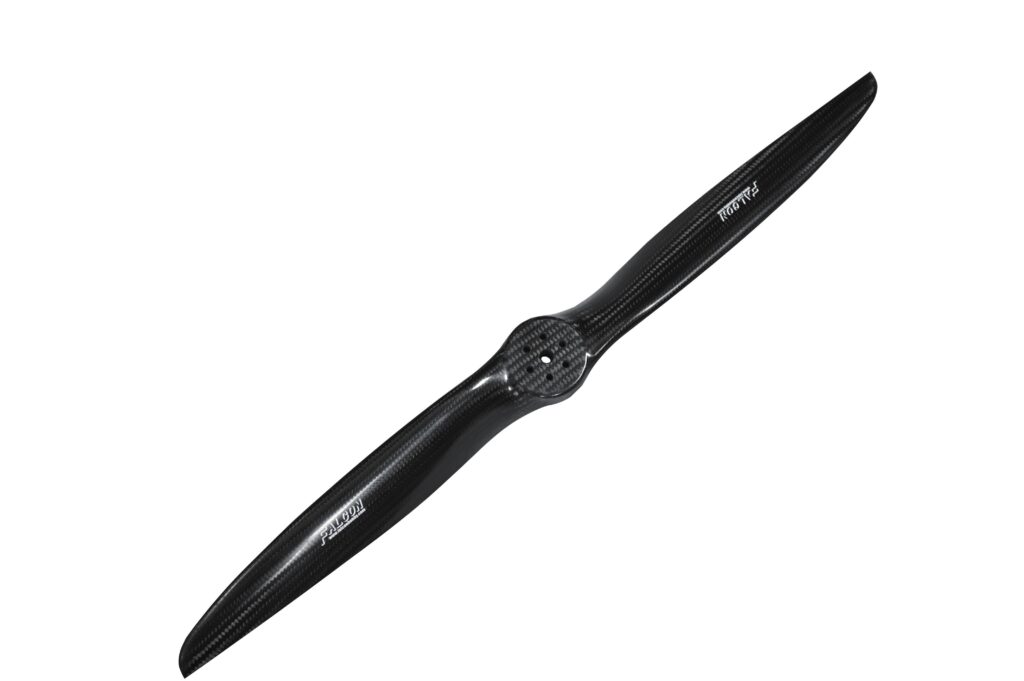
Samples of such custom designs can typically be delivered within 3–6 weeks, depending on project complexity and validation requirements.
CubePilot has released the fourth version of its CubeNode micro-sized flight controller, which measures approximately 13 mm x 9 mm, and is produced in Australia without the use of any Chinese components or packaging (making it compliant with NDAA requirements).
“Like the system’s Version 3, it’s been designed with all the key things you might need in a flight controller,” said Philip Rowse of CubePilot. “That includes dual CAN bus transceivers, an Ethernet PHY, an IMU, a barometer, a compass, an RGB LED system, and a plug for integrating an upcoming GNSS module that we’re working on and will release in the future.”

Notably, while CubeNode V4 can be used to reliably power intelligent flight autonomy, it has also been designed with low enough SWaP-C – and is to be manufactured at high enough volumes – to suit large new military orders of attritable or one-way UAVs, such as FPV drones or interceptors.
However, the new system’s nature as an open development platform with high computing power also gives it considerable versatility towards other applications. CubePilot alluded to this by suspending a K1000ULE UAS from Kraus Hamdani Aerospace – a long-endurance glider-type aircraft capable of several days’ flight per mission, which Rowse described as “full of CubeNodes.”
In that embodiment, the CubeNode devices serve as intelligent I/O switches (including being able to run Ardupilot’s AP_Periph to define and simplify the vehicle set-up), greatly reducing weight compared with adding more cable harnesses and larger computer systems, while allowing data communications redundancies in the form of, say, triple CAN bus or Ethernet. They also allow UAVs carrying multiple sensors to interface their sensors to an edge computer located close by, which can then interface with the autopilot in turn, again reducing cable lengths and mass.
As Rowse explained, “Beyond flight control, they can be used for connecting to other accessories and performing a host of other processes. The original intention wasn’t even to use CubeNode as a flight controller – they essentially just evolved in that direction.
“So, we’ll have different versions of it, with different features to come with them, signified by each variation’s part number. There’ll be versions that are CAN-to-CAN adaptors, CAN-to-Ethernet adaptors, some that are fully dedicated flight controllers, and the pricing will also change to match the feature sets.”
Each version of the new CubeNode is anticipated to come in a form factor resembling a quad flat no-leads chip, and in a tape and reel configuration compatible with standard pick-and-place machines.
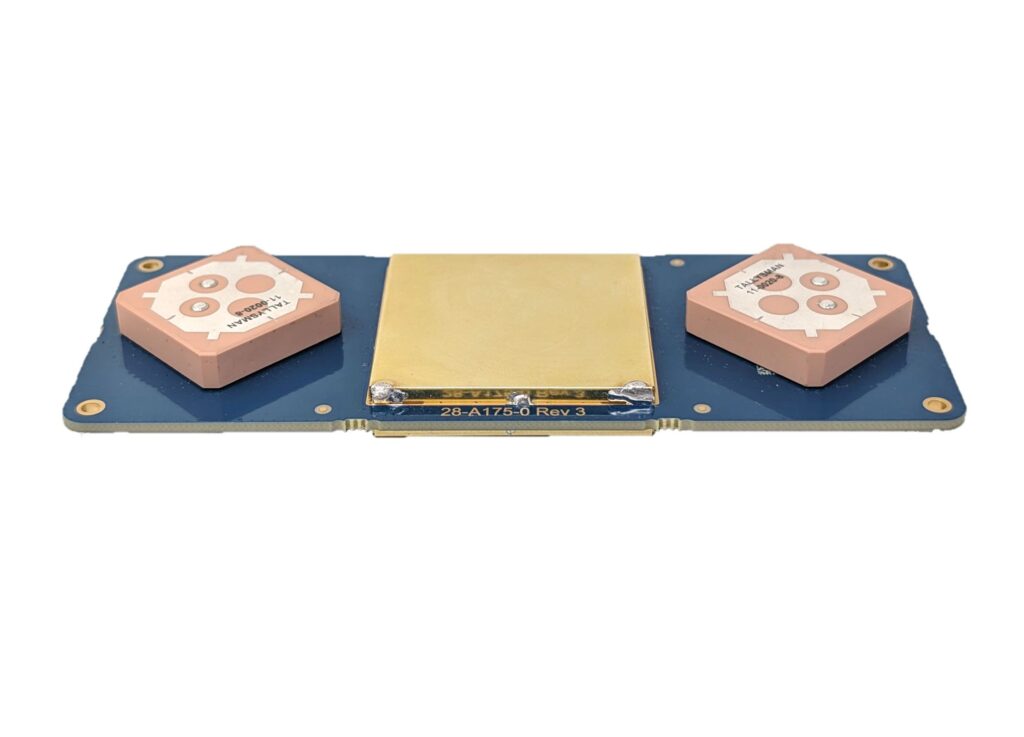
NavtechGPS attended AUVSI Xponential 2026 to showcase its broad portfolio of modern navigation technologies, highlighted by the debut of Calian’s new embedded, single-band CR7712EXF controlled reception pattern antenna (CRPA), which supports GPS, QZSS (L1) and Galileo (E1) signals.
“The CR7712EXF is a dual element, single null CRPA that uses the same analogue architecture as the previously released four element, dual band, six null CR8894SXF+; however, it is more affordable, dramatically smaller and significantly lighter,” explained Franck Boynton of NavtechGPS.
According to Boynton, the antenna is ideal for manufacturers or operators who expect to mitigate only a single jammer at a time. Optimised for SWaP-C, the CR7712EXF measures 126 mm x 50 mm, weighs 72 g and draws 60 mA at 5 V.
A key differentiator is that all signal processing occurs onboard the CR7712EXF – another trait shared with the CR8894SXF+ – eliminating the need for an external processing module. Through its built-in serial interface, the antenna outputs continuous state information, enabling users to determine whether jamming is present and to assess the real-time condition of the GNSS signal.
“That means if you already have a GNSS receiver integrated into your aircraft or uncrewed vehicle, you don’t need to replace it with a more advanced – and more expensive – receiver to achieve the required interference resilience. You simply integrate the CR7712EXF to null the jammer and it delivers a usable GNSS signal to your receiver through a standard RF connection,” Boynton added.
(Image: Calian)
Sky Power has optimised its entire portfolio of engines by implementing a series of updates to their electrical components.
“Outwardly, the performance will look the same, but we’ve changed to a lighter set of generators for more efficient current output with several tens of grams less weight – the exact figures for weight reduction will naturally depend on the engine,” said Sky Power’s Karsten Schudt.

Other modifications comprise software and firmware updates, which include refinement of the engine start procedures. These are being included in new engines produced and upgraded for current customers.
The company has also upgraded its engines’ cable harnesses, switching to connection solutions that are designed for enhanced safety, particularly a reduced tendency for both the cable jackets and the connectors to break or shear under bending (or other forms of stress).
Sky Power has also successfully integrated Volz servos into its throttle and EFI systems, and can thus supply any of its engines with the Volz actuation (and their reputation for longevity and reliability) upon request.
Maxtena has introduced the M11HCT-A-SMA, which is a compact full-band GNSS antenna developed for UAVs, autonomous systems, robotics and other SWaP-constrained applications.
“The M10 became a popular solution for high-precision GNSS applications, but many of our customers, particularly in the UAV market, were looking for a more compact and lightweight option,” explained Arturo Proskauer of Maxtena.
“With the M11, we were able to reduce weight by nearly 60% and significantly reduce overall size while expanding frequency coverage and improving mechanical integration.”
A key feature of the new design is the addition of dual M2.5 threaded mounting points integrated into the antenna base. Unlike traditional connector-mounted GNSS antennas, the M11 can be mechanically secured directly to the host platform, reducing stress on the RF connector and improving robustness in high-vibration environments.
“This was one of the most requested features from our UAV customers,” Proskauer added. “The dual mounting system provides a much more secure installation for drones and autonomous platforms operating in demanding real-world conditions.”
The M11 supports GPS, Galileo, GLONASS, BeiDou and L-Band correction services, with Galileo E6 and BeiDou B3 signals included among those. It is built on Maxtena’s proprietary Helicore technology, which the company cites as making the antenna ground-plane independent and providing reliable multiband GNSS reception across challenging operating environments.
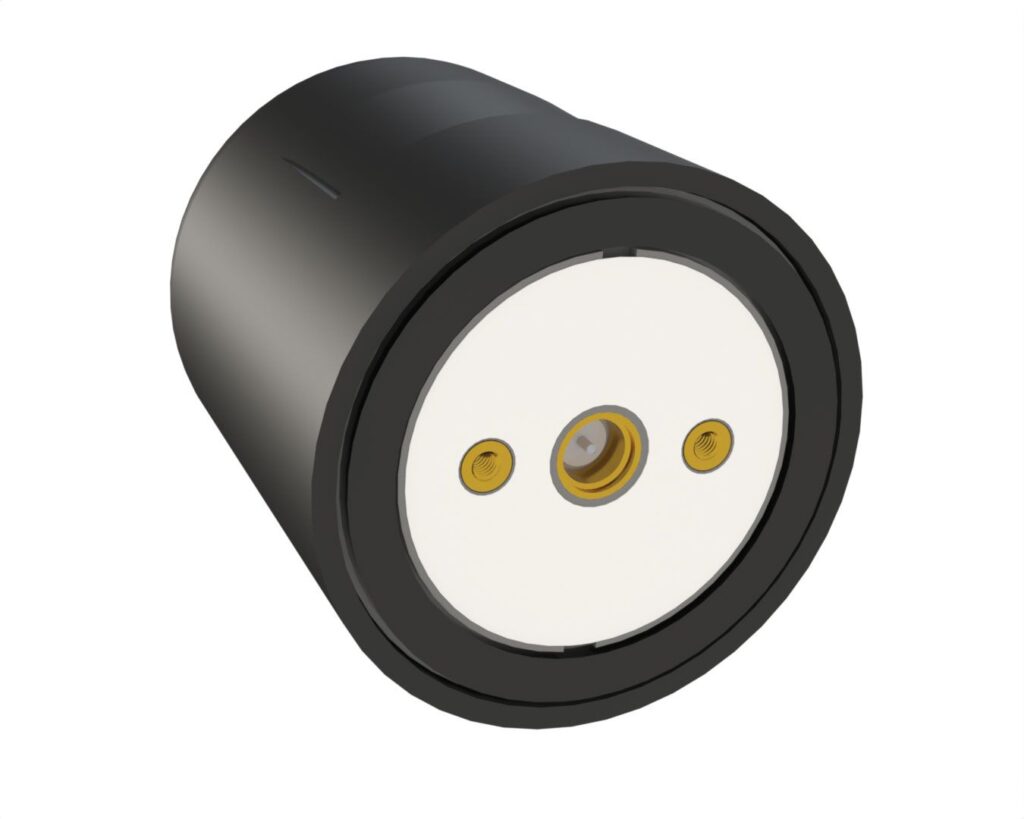
Measuring 50 mm in diameter and weighing 48 g, the IP67-rated M11 occupies roughly half the volume of Maxtena’s M10 series, which – combined with the aforementioned weight improvement – unlocks considerable SWaP benefits for uncrewed systems integrators.
Futaba showed us one of its upcoming solutions, the BLA21-28K-GZ1, a 100 g rotary servo capable of 2.2 Nm of max torque with a 28 V DC power input.
“This is our first servo to come with CAN as its principal communication interface as standard for its design,” said Futaba’s Tomohiro Komiyama.
“We’ve had DroneCAN support in previous solutions, but as far as actual SAE-J1939 CAN 2.0b is concerned, the BLA21-28K-GZ1 is the first. That said, it carries over other aspects of prior servo products, like its IP67-rated enclosure and its position feedback data.”
The BLA21-28K-GZ1 measures 1.59 x 0.83 x 1.47 in (4.0 x 2.1 x 3.7 cm) in size and has been successfully tested in-house in conditions equivalent to those in the Mil-Std-810H vibration standard. Further specifications and compliance information will be published as development proceeds.
“We’re also now developing a new version of our BL34 Series actuator, which will come with a sideways-oriented connector instead of the original downwards-pointing connector, as well as enabling the series to come with some additional interfacing protocols, like RS-485 and our proprietary CM.Bus standard, all with a view towards serving different kinds of integrators,” Komiyama added.
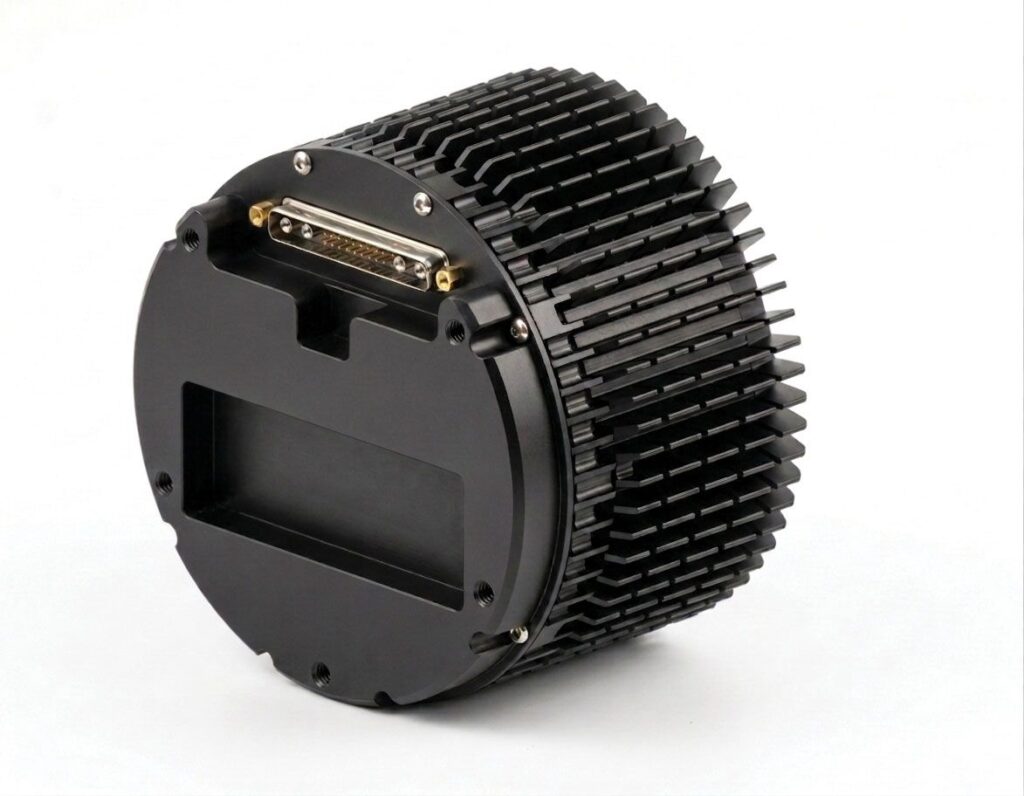
Plettenberg in Germany and Allocortech in the US have partnered to produce the new NOVA iESC Series of electric motors featuring integrated motor controllers, which both companies unveiled at the Xponential show in Detroit.
The new product range combines the base designs of Plettenberg’s premium NOVA Series of electric motors with Allocortech’s Taurus series of ESCs – the latter enclosed inside the former’s motor housing – to form a line-replaceable unit.
“We’re really aiming these products at larger aircraft applications, and so three different sizes are currently available, by which NOVA iESC can support UAVs of MTOWs ranging from 80 kg up to 150 kg, assuming X4 design,” said Bastian Greiner of Plettenberg.
The smaller solution in the series is the NOVA 15-30, which produces up to 9 kW of peak power, 40 kg of peak thrust or up to 20 Nm of peak torque, and measures 138 mm in diameter while weighing 2.35 kg. The NOVA 15-30 also comes in two versions for battery compatibility: a NOVA 15-30-B6 for 14S or 16S packs (with a speed constant of 111 rpm/V), and a NOVA 15-30-B10 for 24S or 28S batteries (its speed constant being 65 rpm/V).
Additionally, the NOVA 15-40-B8 is a 2.75 kg device outputting 50 kg of peak thrust, 12 kW of max power and 25 Nm of peak torque, while the NOVA 15-50-A4 weighs 3.15 kg and produces 60 kg of thrust, 15 kW of power and 32 Nm of torque at peak. Both larger systems are also designed to work with 24S and 28S battery configurations.
All three models provide significantly improved SWaP compared to a separate motor and ESC solution, with an approximate weight reduction of 15%.
“It’s a big technical challenge to integrate the Taurus ESCs into these motor designs, partly because they’re all 100 V systems, but there are only one or two companies worldwide that produce really reliable, effective 100 V ESCs, and Allocortech is one of them. So, we’re very happy to have them as part of our portfolio, which now covers UAVs from 10 kg up to 260 kg MTOWs,” Greiner added.
Amphenol All Sensors showed us its upcoming All Sensors Angle of Attack (AAoA) air data sensor, which is an evolution of its prior AUAV sensor and combines two speed sensors and one altitude sensor into a SWaP-optimised package.
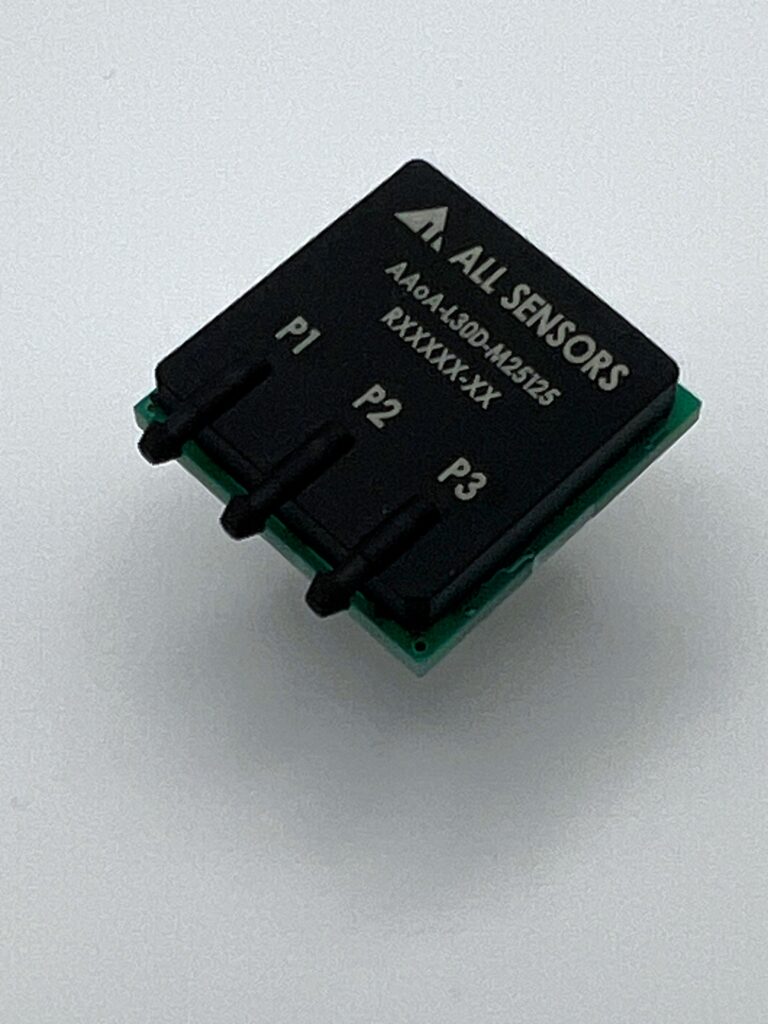
“The AUAV was our first dual sensor, released a couple of years ago, and that combined a speed and an altitude sensor into a single package – but by having two speed inputs, the AAoA not only brings redundancy but also allows users to check their UAV’s angle of attack,” said Derek Bowers of Amphenol All Sensors.
Rather than needing three separate sensors and enclosures, plus three sets of mounts with considerable wiring and tubing between, the AAoA integrates the sensors into a single housing measuring just under a square inch (2.28 x 2.28 cm) wide and roughly 6 mm tall, meaning that it can be used in SWaP-constrained aerospace platforms.
Factory calibration of all sensing elements is performed to ensure optimal sensor-to-sensor synchronisation and aligned data outputs. This is also done to reduce integration complexity and enhance overall system performance.

“Enabling that ability in this kind of package is entirely new to this industry. It’s a patent-pending technology, and we’re now getting feedback on what customers want with regards to the final packaging, with a view towards full commercial release by the close of summer,” Bowers added.
“Additionally, each of our speed sensors is a dual-die device, with two differential sensors cross-coupled for pressure to cancel out some of the offset and increase stability versus single die designs. So, technically, there’s really five sensors inside the AAoA.
“As well as taking lessons from the AUAV, a customer showed us a project where they’d tried integrating the three sensors into a block of about 3 in [7.62 cm] each side, and per their request, we got that down into a 0.9 in x 0.9 in surface mount device.”
MKS Servos showed us the latest version of its Zeus Z2200 rotary servo actuator, which has been released following customer requests for a number of specifications to better suit larger UAVs.
“We offer it in both PWM and DroneCAN versions and in both 12 and 24 V too,” said Thomas Cooke at MKS Servos.
The Z2200’s 12 V version functions on power supplies from 8.4 to 14.8 V DC, and operates with a peak current of 13.4 A, a stall current of 10.5 A and a rated current (at 25 C) of 1.2 A, along with a no-load speed of 61.3 rpm.
Both versions have a total weight per unit of 95 g, and operate with a rated torque of 2.45 Nm, plus a stall torque of 9.31 Nm. They also come as standard in a CNC-machined casing made from anodised 6061 aluminium alloy, which is rated to IP67 protection and measures 48.9 x 43 x 22.5 mm.
“And while the Zeus servos are our industrial line of actuators, we’re still finding a lot of customers are integrating our MKS lines into their systems purely for their quality and reliability, especially with a number of our MKS servos now being offered in DroneCAN,” Thomas added.
We first explored DeltaHawk’s DHK4A180 (formerly called the DHK180) – a twin-charged V4 heavy fuel engine – in UNC-54 (Feb/Mar 2024). Since then, the company has continued maturing the DHK4A180 and its larger variants, as well as expanding its product range, with its two newest power units exhibited at AUVSI Xponential 2026.
The first of these was the DHK2H, a horizontally opposed two-cylinder engine. The solution has been designed principally to power defence UAVs of MTOWs within range of 600 kg (that is, heavier Group 3 and lighter Group 4 UAS), although the company notes interest from other markets such as light sport aviation under the currently anticipated MOSAIC structure.
“The DHK2H is derived from our DHK4A, a legacy engine we still offer for GA and defence customers, and we’ll offer it in three versions running 80, 100 and 120 hp, respectively,” said John Stephansky at DeltaHawk Engines.
“Although it’s a new design configuration, it shares 80% component commonality with our other legacy engines – the housing and turbo are a little different than designs used in the past, and the fuel injector is a bit scaled down – but thanks to all the other parts being well-proven, we know it’ll work well.”
A horizontally-opposed design has been chosen to balance the impulses yielded in two-cylinder operation (versus, say, a twin-V design). Per the DHK4A180’s philosophy, the DHK2H requires no ECU to function, being entirely mechanically governed, nearly all systems are externally located on the engine and maintenance can be performed without any special tools.
Testing of the DHK2H is slated to begin before the end of 2026, with the company anticipating a similar TBO to the 3000 hours of its V4 engines and good performance at high altitudes.
The company also showed us the DHK2L50, a low-cost 50 hp heavy fuel engine optimised for attritable or even one-way UAVs, as well as cruise missiles and similar applications.
“While it’s still a two-stroke heavy fuel engine, it departs from our usual design philosophy in other ways. For instance, it has indirect injection with a prechamber, allowing much more multi-fuel leeway and efficiency, it’s naturally aspirated and crankcase-scavenged for reliability, and it uses as many commercially available parts as possible to bring its price down,” Stephansky explained.
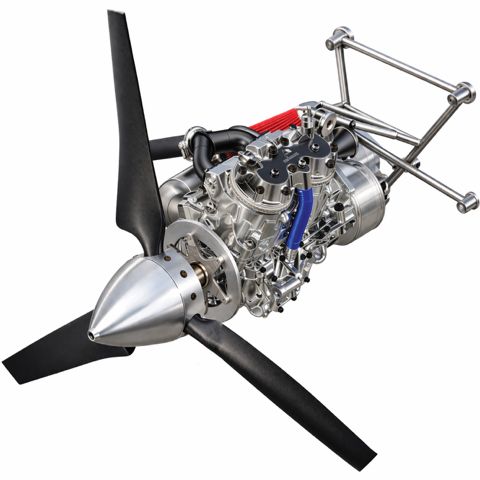
“We expect it to cost nearly half the price of the next competing engine in its power class; but some customers have asked for a long-life version of it for autonomous applications and we are working on that right now.”
Decavo showcased its range of carbon composite parts and manufacturing processes, notable among which were its developing capabilities in snap-cured components.
“Snap-curing means reducing the cure time to an advantageous minimum. That helps increase throughput and, in turn, that helps reach the quantities that the autonomous market is really pushing for at the moment,” explained Brian Fallow at Decavo.
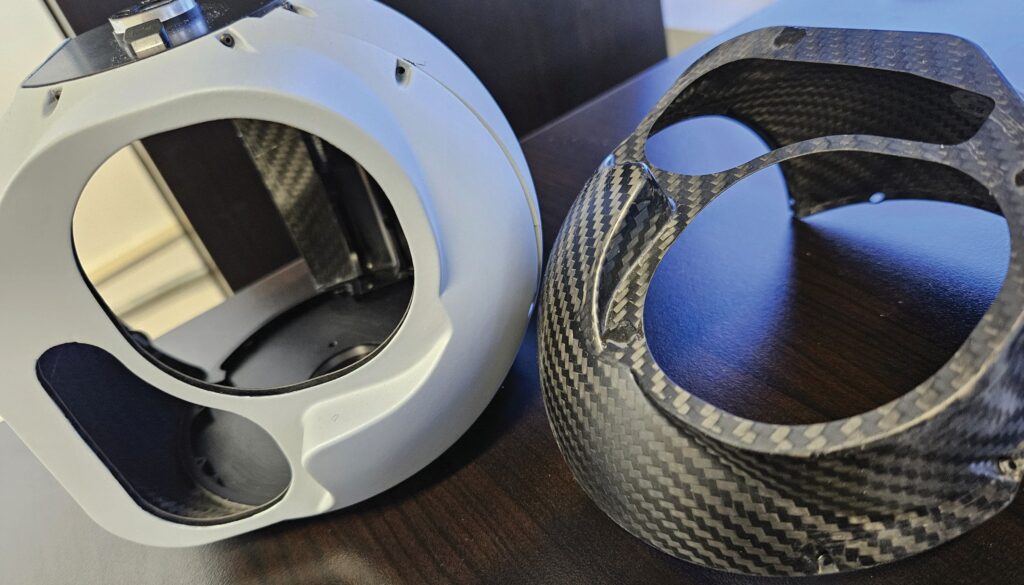
“Everyone – especially UAV makers – is really trying to get more and more parts to enable more vehicle units to get out into field operations. So, the more parts we can cure in a given tool and the better our capacity to cycle something through that tool in five minutes versus an hour, the better we get at meeting their demand.”
Snap-curing comes with numerous technical challenges, however. Among these are achieving a satisfactory surface finish (including how best to ensure sufficient resin flow and compaction across a part within in a limited time window), and making sure the part’s glass transition temperature (Tg) is high enough for it to function effectively in its anticipated operating environment without softening (increasing the Tg often correlates with the duration of its cure time or the addition of a post-cure cycle).
“We’re working with a lot of different distributors right now to try different materials and see which ones fit our snap-curing processes best,” Fallow added.
“And as there’re a lot more autonomous boats coming into play, we’re increasingly diversifying into supplying parts for the marine market, beyond our usual aerospace focus, which is bringing interesting new material and structural understandings for both us and our customers there.”
In addition to its line of tactical grade micro turbines, actuation systems and power systems, Acutronic also showcased its capabilities in the design, development and supply of motion testing solutions, by which UAV manufacturers and integrators can prove-out their aircrafts’ durability and longevity amid high dynamics and harsh environments.
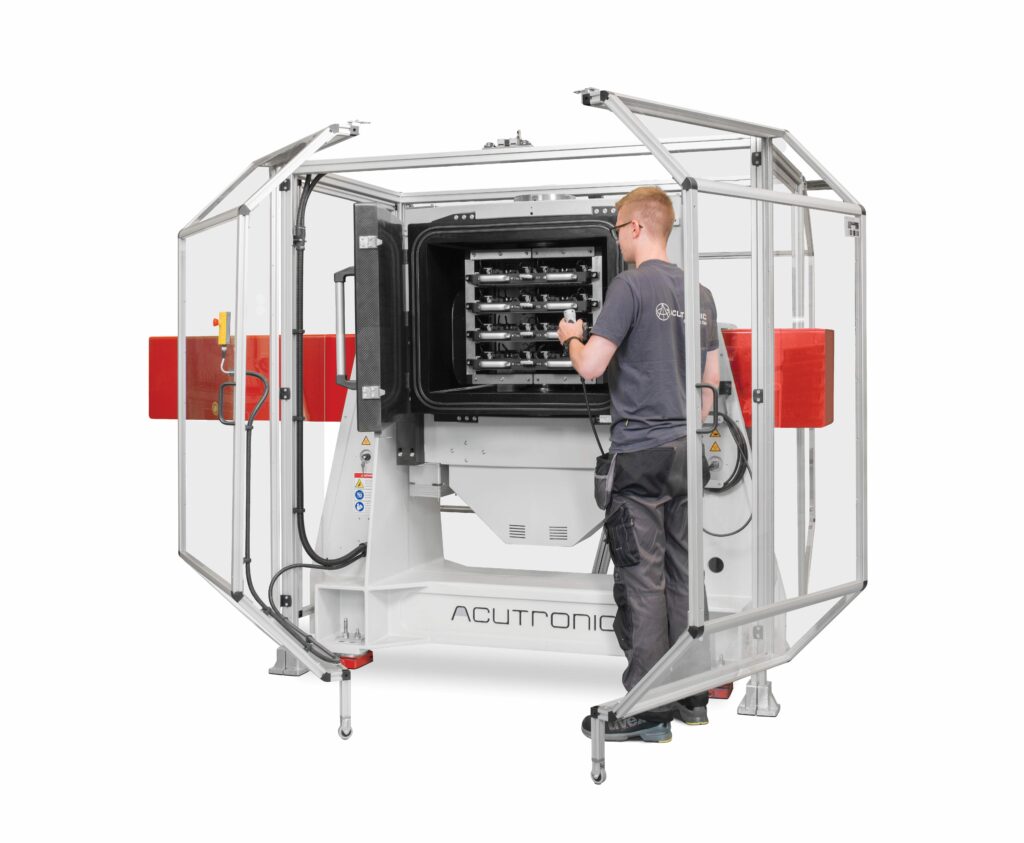
“Among those, we produce shakers – vibration test systems – that satisfy different testing standards like Mil-Std 810 G and DO-160, as well as inertial guidance test systems and hardware-in-the-loop motion simulators,” said Sascha Revel at Acutronic.
“Our shaker range includes systems dedicated to the aerospace and defence industries, ranging from 40 kN (8990 lbf) to 300 kN (67,440 lbf) of possible force imparted, the latter end enabling testing of fully built spacecraft like satellites, while the lower end (air-cooled shakers) would be more suited to testing smaller, sub-assemblies weighing up to 600 kg.
“We’ve also designed them with energy efficiency in mind, and each equipment comes with IoT-ready health and usage monitoring systems for predictive maintenance, securing our users’ test programs in the long term.”
Also, among the range of shakers are single-, dual- and triple-axis rate tables. Acutronic additionally supplies 3- and 5-axis motion simulators, laboratory and geotechnical centrifuges.

Through these systems, end users can calibrate accelerometers, gyroscopes, complete inertial navigation systems, electro-optical payloads, and guidance and navigation systems (including how UAVs or one-way effectors will behave during engagement with targets) and simulate various environments.
Some testing solutions are modular and thus customisable for different requirements, and the company also offers certain testing services via its inertial testing lab in Pittsburgh, Pennsylvania (USA).
Trimble launched a new smart antenna housing option for the Trimble PX-1 RTX solution, integrating the positioning and heading system along with a Calian jam-resilient antenna element in a SWaP-optimised enclosure.
By packaging both systems together, the two companies anticipate saving engineers lengthy and complex integration work. As Dr Mohamed Mostafa of Trimble Applanix explained to us, “Integrating a jam-resilient Calian antenna element and Trimble PX-1 RTX hardware into a single compact, drop-in enclosure effectively eliminates complex board-level RF interference while slashing drone development and testing times from months to weeks.”
He added that by feeding directly into UAVs’ flight control algorithms, and by pairing the new integration with Trimble RTX, the overall solution can provide centimetre-level accuracy, precise true heading data and positioning redundancy. It thereby improves drones’ flight control safety, particularly during take-offs and landings in obstructed spaces (a critical enabler in applications such as autonomous aerial logistics).
The company’s inertial navigation algorithm also helps drones navigate through magnetic interference, with advanced filtering to also block external jamming and vibrational noise.
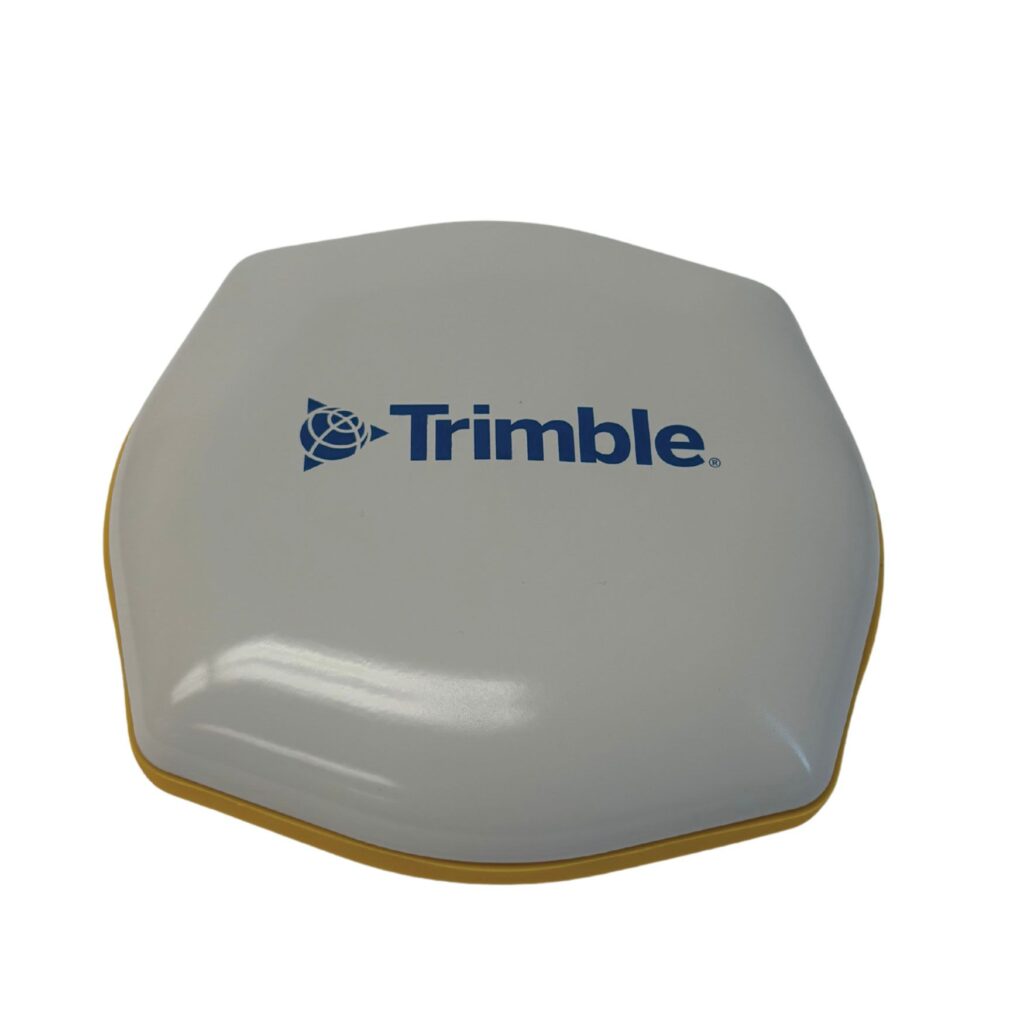
The 284 g Trimble PX-1 itself is a 336 channel smart antenna covering GPS, GLONASS, BeiDou and Galileo, as well as the supplemental constellations of QZSS and SBAS (along with the aforementioned Trimble RTX).
Meanwhile, the incorporated Calian system is the Canadian company’s AC4990ECF full- band Accutenna 4 antenna, which comes with Calian’s eXtended Filtering (XF+) technology for mitigating out-of-band signal interference (across LTE, WiFi, BT and Ligado) with optimised filtering around the GNSS bands (to -80 dB). XF+ also isolates the upper- and lower-band gain paths, which prevents jamming in any one path from saturating the antenna.
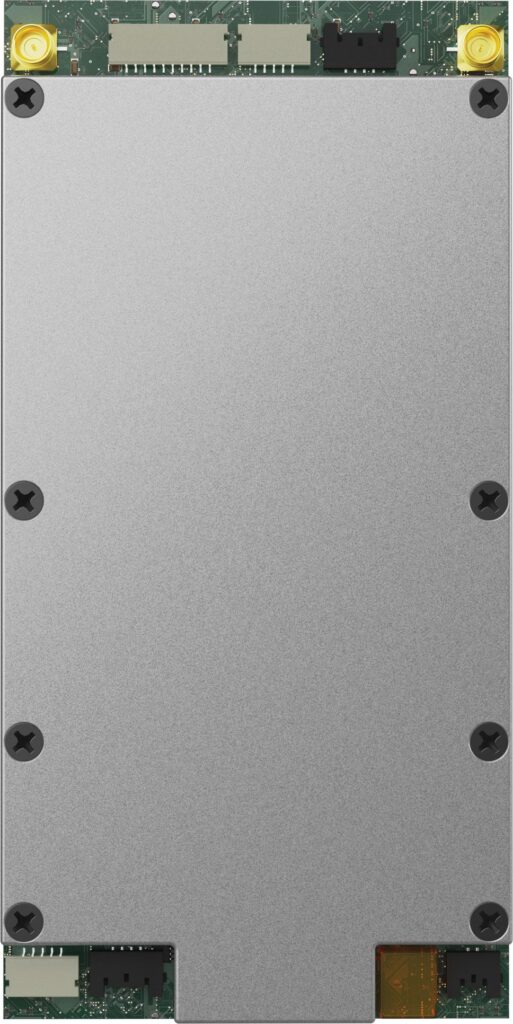
Following its soft launch at Xponential 2026, the new PX-1 RTX version has been deployed to a small number of customers for beta testing on their platforms, with commercial sales commencing shortly.
Silvus Technologies launched its FASST 6000 Spectrum Sensor, a solution designed to enable RF sensing and spectrum awareness capabilities alongside the company’s established innovations across mesh networking and StreamCaster MANET radio systems.
“The FASST 6000 incorporates our proprietary Filtering by Aliasing Spectrum Sensing Technology [FASST], which enables unprecedented scan speeds of 144.5 THz per second, making it by far the fastest spectrum scanner on the market,” said Ernest Grechanik at Silvus Technologies.
“For comparison, traditional, rack-mounted, SIGINT collection systems scan at about 250–350 GHz per second, and the fastest competing system we’ve seen scans at 3 THz per second. Faster scanning dramatically increases the probability of detecting, intercepting, exploiting and geolocating hostile RF emitters, particularly short-duration, low-duty-cycle transmissions and signals employing Low Probability of Intercept or Low Probability of Detection techniques.”
The FASST 6000 has also been SWaP-optimised into a 49.5 g, 110 x 54.6 x 10.48 mm module per its OEM version, to better enable its integration on small UAS, as well as GCSs or other hand-carried equipment for dismounted operators.
That module consumes around 13 W during active, intermittent usage, although 10 W power consumption is typical of its standby mode, while absolute peak operating power runs up to 17 W. In addition to a single power interface, which functions using power inputs from 6 to 36 V DC, two USB ports and an Ethernet port come available as standard (alongside three SMP ports for RF connections).
A ruggedised hand-held version of the FASST 6000 is additionally available, which weighs 464 g and measures 135.5 x 90 x 36.5 mm. That version also comes with three RF TNC ports and is designed for portable field operations.
“To achieve such fast scan speeds, the RF signal processing technique underpinning FASST uses periodic sequences of digital controls, rapidly adjusting passive RC components in the RF front end, essentially spreading the wideband spectrum prior to sampling at narrowband rates,” Grechanik explained.
“The ability to rapidly and precisely reconfigure the RF front end enables the creation of arbitrary receiver responses from 1 MHz to 6 GHz without requiring large, power-hungry devices. Conventional receivers rely on multiple tuning filters, high-speed digitisers, or clock tuning to separate and accurately sample signals across wide frequency ranges. Because FASST eliminates the need for clock tuning and filter switching, it can rapidly capture signals across an extremely broad frequency range with precise coherency between multiple antennas.”
UPCOMING EVENTS