










Additive manufacturing

(Image: Elementum 3D / NASA)
Limitless by design
Nick Flaherty examines how additive manufacturing has redefined uncrewed system production technology
Additive manufacturing (AM) and 3D printing are key technologies used in the construction of UAVs in particular. They allow customised structures to be created to reduce component weight without compromising structural integrity. A new generation of materials is taking this further, with stronger structures using carbon nanotubes (CNTs) and cost-effective alloys that bring AM to engine component production. Even batteries can be 3D printed, creating structural energy systems in custom shapes.
This emphasis on AM is also changing the way uncrewed systems are built and repaired. More localised 3D printing requires more rugged production systems, particularly for defence applications. These systems can be used to produce components in the field for repairs or modifications without relying on an extended supply chain, while complete factories are being set up closer to the front lines.
Historically, UAV makers have relied on a mix of aluminium, steel, titanium and plastics to balance the strength, weight and cost requirements. But as endurance, payload capacity and survivability requirements have increased, the limitations of these materials have been revealed.
Now, carbon fibre-reinforced thermoplastics offer high strength-to-weight ratios, excellent stiffness for vibration control and sensor accuracy, resistance to corrosion and fatigue and reduced maintenance demands in harsh environments.
In many applications, continuous fibre-reinforced composites can match or exceed the strength of aluminium at a fraction of the weight and cost, enabling longer flight times and greater payload capacity without sacrificing durability.
However, innovation in materials alone is not enough. The real shift comes from how those materials are manufactured and deployed.
(Image: QinetiQ)
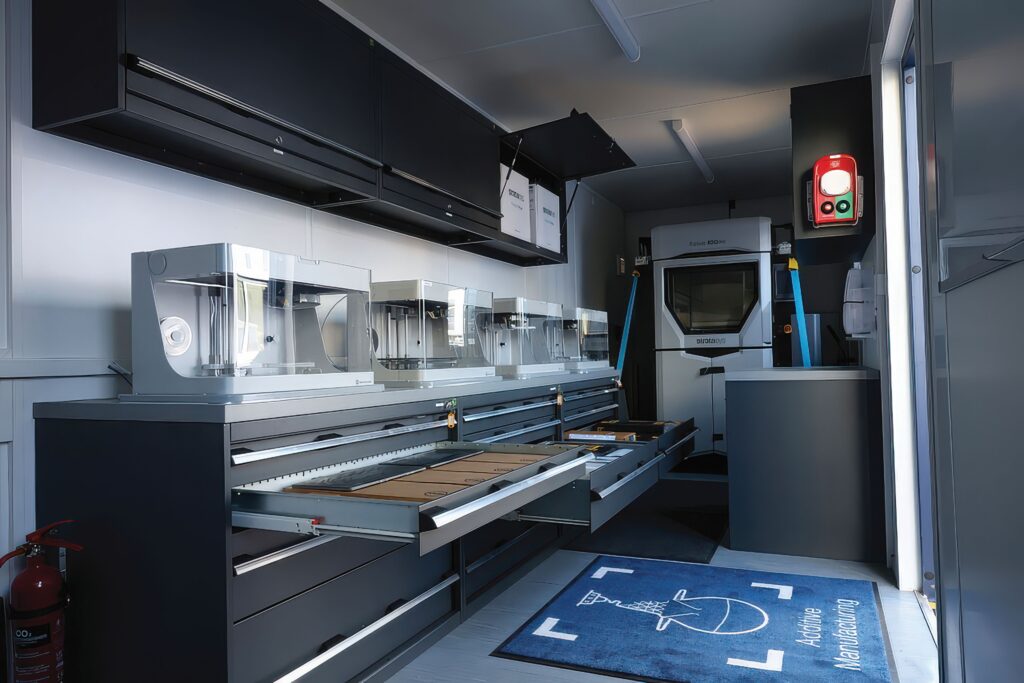
This means field-ready systems must be rugged enough to withstand heat, cold, dust, shock and vibration, and capable of operating with limited or unstable power sources. The control systems also need to be secure against cyber threats targeting design files and print configurations, and simple enough to operate without specialised manufacturing staff.
Localised AM is also being deployed in the UK for maintenance of submarines.

Custom-built shipping containers can provide on-site AM capability that includes metal printing, scanning equipment and dedicated engineering workspace.
One method of creating the digital design files for components uses handheld scanners, operated by specialist engineers, to capture precise measurements of components on board. This dataset is converted into digital files that can be used to manufacture bespoke replacements in steel, which is particularly valuable for one-off or legacy parts where no existing design file exists.
Materials
Composites of carbon fibre and other fibre-reinforced polymers offer a high strength-to-weight ratio, as well as high degrees of stiffness and corrosion resistance while enabling lighter airframes, longer flight times, greater payload and extended range. For drones, this leads to enhanced endurance, agility and performance.
Higher structural stiffness helps with vibration control, which is important for sensor accuracy and durability in harsh environments. For example, carbon fibre-reinforced drones can better resist fatigue and corrosion than drones made of metals.
By incorporating components such as nylon into composites, manufacturers can produce materials that are much stronger, more durable and more heat resistant than plastics but just as light.
The corrosion resistance of these materials reduces the need for personnel to conduct some maintenance, while the rigidity and durability of carbon fibre components mean they require fewer repairs and suffer less structural deformation, which benefits sensor calibration and component alignment.
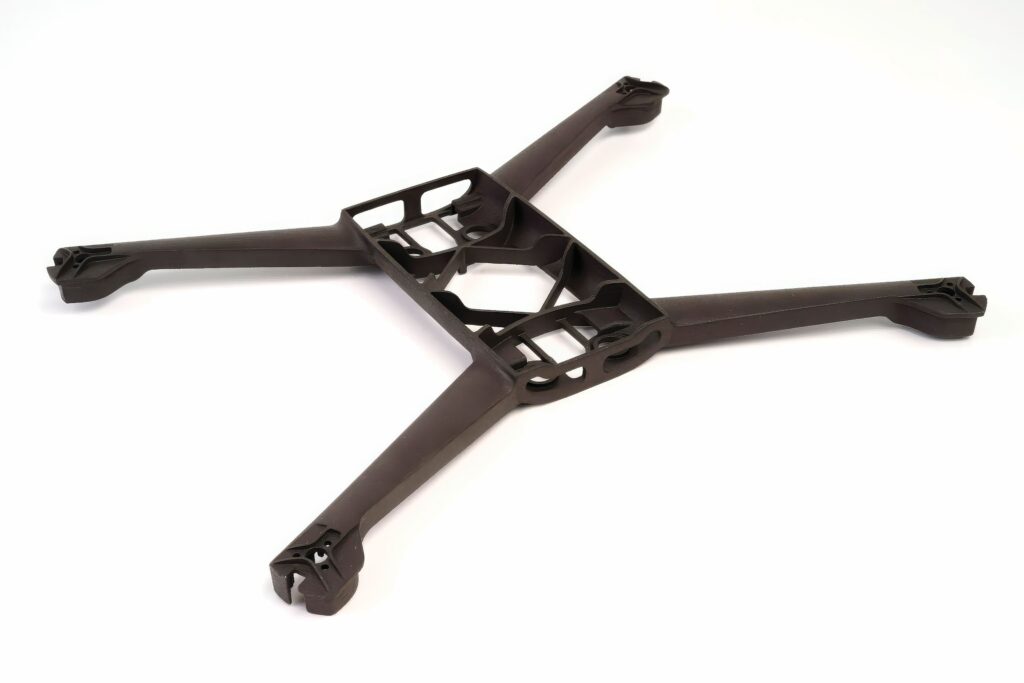
Thermoplastic materials such as Windform are already being used for a UAV fuselage manufactured for Hoverfly, which has successfully completed Mil-Std-810H validation testing. Windform has also been used for AlbaPod, which is a PocketQube satellite deployer 3D printed for Alba Orbital that has flown 10 space missions and deployed nearly 60 satellites, demonstrating the long-term reliability of the material.
A surface treatment such as vapour smoothing enhances the functional performance and uniformity of selective laser sintering, helping to boost the aerodynamic performance of the end component.
High-performance materials
Research into materials and processes for high-performance components is delivering advances in ceramics and high-temperature alloys.
Researchers in Germany have developed a material system that enables two different ceramic materials to be combined into a single component directly during the printing process. This provides the basis for multi-material AM (MMAM), which makes it possible to deliberately integrate different functional, mechanical, electrical or thermal properties within one component. The result is high-precision hybrid ceramics with locally tailored properties – for example, a hard outer edge combined with a porous core. Additional mechanical post-processing steps such as milling or turning are not required.
The process opens up new design and functional possibilities for prototyping and small-batch production for heat-resistant, lightweight and high-strength structures for aerospace.
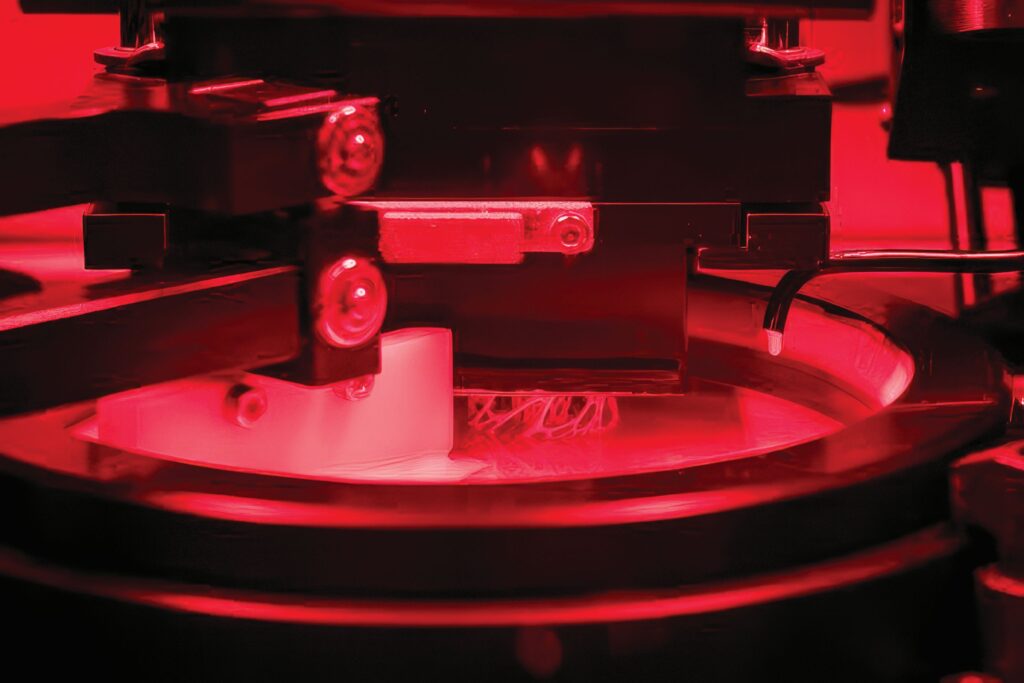
The ceramic MMAM process is based on vat photopolymerisation, which is a 3D printing technique whereby components are produced layer-by-layer from a photosensitive material containing ceramic or metal particles. The material is then exposed to light of a specific wavelength, with the aim of polymerising and curing it locally.
A specially developed binder system ensures that different materials bond durably during a single printing process. This consists of liquid polymers, functional additives and a photoinitiator, and it is removed after completion of the printing process through debinding, following which the part is sintered.
(Image: CRP / Gianluca Muratori)
This allows fabrication of multi-material components with novel and even partially contradictory material properties, and it makes completely new and previously impossible designs and functionalities possible, such as ceramic gears with flexible interiors and especially hard surfaces.
Another approach is to use microwaves to improve the quality of high-temperature multiphase oxide ceramics, specifically mixtures of alumina, yttria-stabilised zirconia and yttrium aluminium garnet.

Laser 3D printing, which melts ceramic powder layer-by-layer, acts like a surface blowtorch. The microscopic pool of melted rock heats and freezes so violently that gas bubbles get trapped inside as permanent voids. This rapid freezing also forces the material’s internal crystals to grow in weak, predictable bands.
To eliminate these flaws, a hybrid machine uses a laser to melt the ceramic while the entire printing zone is bathed in a 2.45 GHz microwave field. This provides significant improvements in structural stability.
The microwave field can cut the total amount of empty space inside the ceramic by 85.5%, bringing the porosity down to a near-zero 0.11%. The size of the few remaining pores is reduced to almost half, dropping to an average width of 38 μm. With fewer microscopic holes to act as starting points for cracks, the material can handle 22.2% more bending force before breaking, maxing out at 373.8 MPa.
While a laser alone sears the surface, microwaves penetrate and heat the material volumetrically from the inside out. This deep internal heating keeps
the tiny pool of liquid ceramic molten for 1.86 seconds, more than double the usual 0.85 seconds. That single extra second acts as a crucial mechanical escape window, allowing trapped gas bubbles to float up and exit before the material freezes.
The microwaves also attack the microscopic voids on a subatomic level. The energy accelerates free electrons inside the trapped gas, sparking an internal plasma that destroys the remaining bubbles through avalanche ionisation.
At the same time, the zirconia phase within the ceramic acts like a microwave sponge, generating intense localised hot spots. These sudden temperature spikes force the growing crystals to jumble together in random directions instead of forming neat, easily breakable lines.

This has so far been used only to print small test bars in a lab but the 3D printing machine is being scaled up to produce larger components.
CNTs in plastics
Plastics are indispensable in AM, but they have inherent weaknesses in terms of mechanical strength, electrical conductivity and thermal conductivity. CNTs boost mechanical, electrical and thermal properties but traditional approaches cannot uniformly disperse and blend high-load CNTs into polymer matrices. This limits the performance improvement of plastics and severely restricts their advanced applications in cutting-edge materials and devices.
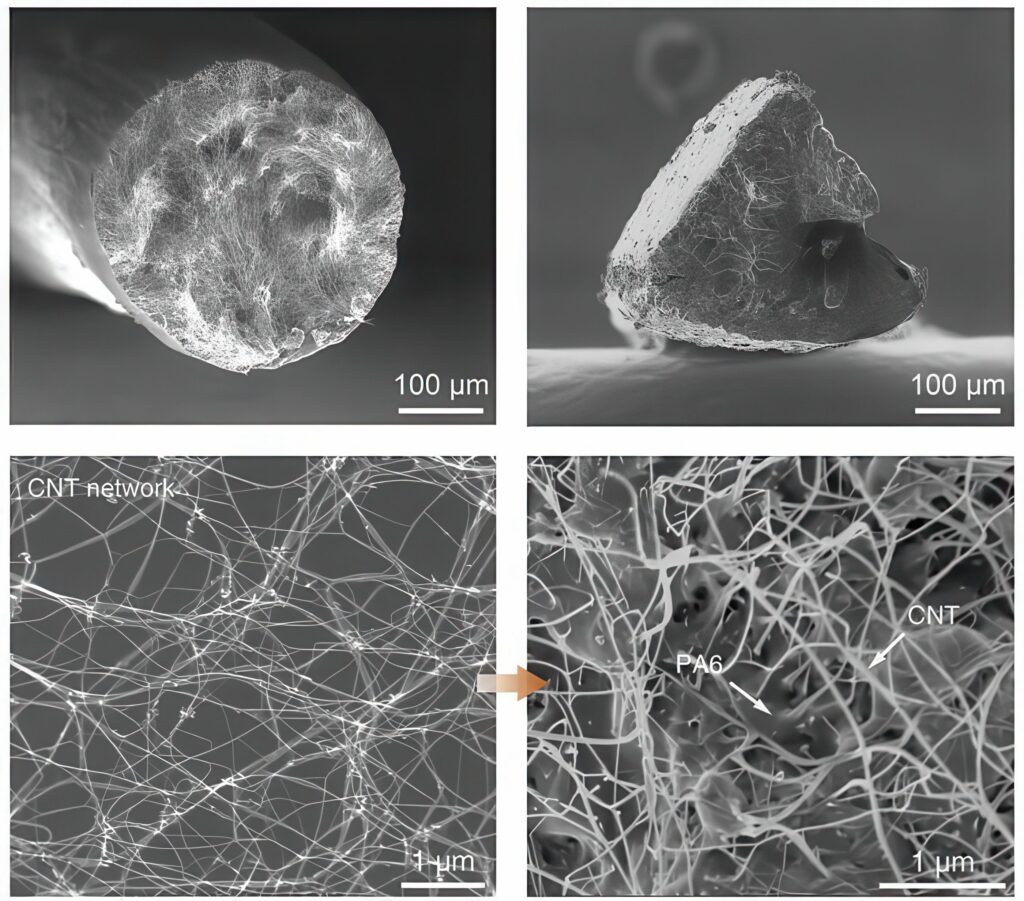
This is tackled with a universal compounding technology that combines high-loading CNT networks with thermoplastic polymers to make CNT superplastics. First, continuous CNT networks are grown through floating catalyst chemical vapor deposition. Then, these networks are continuously impregnated and compounded into various polymer solutions, including polyamide 6 (PA6), polyvinylpyrrolidone, polyacrylonitrile, polycarbonate and polyetherketoneketone. This method successfully integrates up to 59 wt% of CNTs, making the CNTs fuse spontaneously with polymer molecules while keeping the original long structure of CNTs. After that, a hot working process further improves the alignment and packing density of the CNTs.
This uniform nanoscale compounding of high-loading CNTs greatly improves the material’s overall performance.
The PA6-based CNT superplastic has a tensile strength of 663 MPa – much higher than that of ordinary engineering plastics – and it also has good resistance to stress relaxation. In terms of electrical conductivity, it reaches 8.6 x 10⁴ S/m, and its conductivity decreases by less than 10% after 100,000 bending cycles. For thermal conductivity, it reaches
143 W/m/K, which is higher than that of 304 stainless steel and some aluminium alloys, and hundreds of times higher than that typical of plastics (0.1 W/m/K). At the same time, the thermal conductivity anisotropy ratio is about 123, which enables directional heat transfer and gives the CNT superplastic broad application prospects.
(Image: Karlsruhe Institute of Technology)
The CNT superplastic keeps the excellent thermoplastic processability of ordinary plastics used for 3D printing. For example, a CNT superplastic heat sink created with 3D printing can quickly dissipate heat from a 90 C heat source and achieve excellent directional heat dissipation. Compared with traditional plastics, the superplastic has greatly improved electrical and thermal conductivity, providing a new route for the development of thermoplastic polymer materials.
Steel
Adoption of AM in the manufacturing of engine components has been limited by the lack of affordable metal alloys able to withstand extreme temperatures. Expensive metal alloys were the only option for 3D printing engine parts until a new alloy, called GRX-810, was developed.
GRX-810 is a mix of nickel, cobalt and chromium with a ceramic oxide coating on the powdered metal particles that increases its heat resistance and improves performance. Known as oxide dispersion strengthened (ODS) alloys, these powders were challenging to manufacture at reasonable cost.
(Image: Suzhou Institute of Nano-Tech and Nano-Bionics)
However, this has been addressed with a dispersion coating technique called resonant acoustic mixing, where rapid vibration is applied to a container filled with the metal powder and nano-oxide particles. The vibration evenly coats each metal particle with the oxide, making them inseparable. Even if a manufactured part is ground down to powder and reused, the next component will have the qualities of ODS.
The benefits over common alloys are significant: GRX-810 can last up to a year at temperatures of over 1000 C under stress loads that would crack any other affordable alloy within hours. Additionally, 3D printing parts using GRX-810 enables more complex shapes to be realised compared with those of metal parts manufactured using traditional methods.
Initial tests on the large-scale production of GRX-810 alloy show twice the lifespan of the small-batch material initially produced, and the material is being used for flow sensors that monitor the speed of gases flowing through a turbine, helping engineers optimise engine performance.
Aluminium alloy
Aluminium is a key material for lightweight UAV components. 5xxx-series aluminium-magnesium alloys are highly sought-after in the aerospace, automotive and shipbuilding industries owing to their low density, high strength and excellent corrosion resistance. However, manufacturing these components using conventional melt-based AM methods is challenging because the melting and solidification processes often introduce defects such as coarse columnar grain structures, macro- and micro-cracks, pores and element evaporation, which severely compromise the service performance of the printed components.
Researchers in China have developed a solid-state 3D printing process called screw extrusion-plasticising friction stir deposition (SEFSD) that avoids the melting process. Instead, it uses a specially designed three-stage tapered screw tool to continuously extrude and plasticise 5183 aluminium particulate feedstock via the tool itself, fabricating a 20 layer deposition wall without melting the metal.
Keeping the metal in the solid state and using the intense frictional heat and severe plastic deformation of the SEFSD process bypasses the melting phase entirely. This not only suppresses defect formation but also triggers dynamic recrystallisation, yielding a homogenous, finely grained structure with exceptional strength and ductility in the deposition components.
The resulting printed components maintain remarkable microstructural stability despite repeated thermal cycles during the layer-by-layer deposition because of the alloy’s low stacking fault energy. Because SEFSD relies on particulate feedstock, it also allows for continuous feeding and easy customisation of alloy compositions, overcoming the limitations of previous wire- or rod-based solid-state printing methods.
Most importantly, the process enables ‘self-plasticisation’ without relying on a substrate. As a result, this could significantly reduce the thermal and mechanical forces applied to the substrate or previously deposited layers, improving processing flexibility.
Batteries
Production of lithium batteries has advanced significantly with the development of AM processes that can put down uniform layers of material. Techniques such as direct ink writing, laser powder bed fusion, photopolymerisation-based printing and fused-deposition modelling have been applied to fabricate electrodes, solid electrolytes (SEs), current collectors and thermal-management components.
(Image: Sakuu)
The development of 3D-printed batteries needs multifunctional printable materials and hybrid 3D printing workflows that couple sintering, coating and curing.
Initial 3D printing strategies have focused on producing parts of the battery, creating metal electrodes with 3D structures to boost energy density, but they have also allowed researchers to experiment with materials and structures.
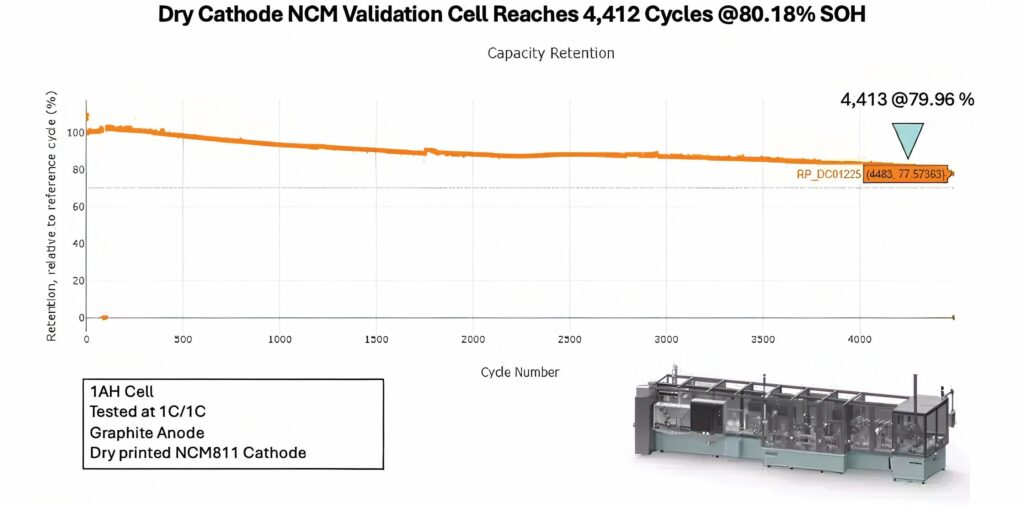
However, dry processes have allowed entire batteries to be created through AM. One such 3D-printed lithium-ion cell with nickel, cobalt and manganese (NMC811) has just reached 80% capacity after 4412 cycles.
The 1 Ah test cell was cycled at 1C/1C with a 3D-printed graphite anode combined with its NCM811 cathode, which was fully dry printed using existing chemistry materials.
Solid-state batteries
The dry AM process also lends itself well to 3D printing of all solid-state batteries.
Ceramic solid-state electrolytes (SSEs) are considered key components of solid-state batteries because of their excellent thermal stability, wide electrochemical window and intrinsic non-flammability. However, conventional processing methods often struggle to create sufficiently dense materials with an appropriate structure and good compatibility with the electrodes.
3D printing offers a pathway to overcome these issues by enabling the fabrication of customised SSE structures. Depending on the feedstock, ceramic-based 3D printing approaches can be classified into ceramic slurry-based, composite material-based and photocurable resin-based systems.
Ceramic slurry systems use inks that consist primarily of ceramic powders with small amounts of binders or dispersants to form printable non-Newtonian pastes, commonly processed by direct ink writing. Controlling the rheological properties of the slurry is essential to ensure structural stability during deposition.
Polymer–ceramic composites address the brittleness and interfacial mismatch of pure ceramics by embedding ceramic particles within polymer matrices. This allows composite electrolytes to be fabricated with tunable flexibility and ionic conductivity.
For example, extruded PLA filaments containing 77 wt% ceramic powder via fused deposition modelling form 200 μm pore grids. After sintering, lithium titanate oxide composites exhibit conductivity of 11.6 x 10⁻³ S/cm and capacity of 168 mAh/g, while lithium cobalt oxide composites show superior ionic transport performance.
Photocurable resin systems use cross-linkable prepolymers such as acrylates or epoxides with ceramic nanoparticles as printable slurries that can be processed using photolithographic techniques with sub-micrometre resolution. For example, a honeycomb lithium lanthanum zirconium oxide (LLZO)-ionogel composite built with stereolithography can achieve ionic conductivity of 2.81 x 10⁻⁴ S/cm and is stable over 500 cycles.
Pure ceramic systems offer high conductivity but limited flexibility; polymer–ceramic composites provide mechanical adaptability but depend on homogeneous ceramic dispersion; while photocurable systems combine high resolution with design flexibility for microstructured electrolytes and high-throughput screening.
Future developments include low-temperature sintering aids to preserve microstructural features, designing high-loading nanoceramic slurries and commercialising ceramic pastes for scalable SSE manufacturing.
AI for materials
Metal AM has long faced a critical barrier to widespread adoption: microscopic internal defects that are invisible to the naked eye yet significantly compromise structural integrity. A team in Korea has used AI to develop a predictive framework capable of accounting for microscopic defects in metal 3D printing processes.
As indicated, when metal AM melts layers of powder, small voids or pores can form inside the material, acting like air bubbles that substantially degrade the mechanical strength of finished components. In demanding applications such as aircraft structures and automotive parts, where materials are subjected to extreme conditions, even minor porosity can prove catastrophic.

Assessing the effect of such defects requires extensive experimentation and considerable time, posing a significant bottleneck in materials development and qualification for safety-critical industries.
Rather than attempting to eliminate defects entirely, the model aims to predict defects scientifically. It combines porosity data alongside process parameters, microstructural features and mechanical property data using a technique called Data Selection Machine Learning, which identifies only the most influential variables from the dataset. This effectively filters out noise and focuses the model on the factors that matter most.
This approach analyses the internal microstructure and defect characteristics of metal components to anticipate their mechanical behaviour before any physical testing is performed.
To validate the framework, AlSi10Mg alloy, one of the aluminium alloys used most widely in 3D-printed aerospace and automotive components, was used under a variety of process conditions. The AI-based model successfully predicted the yield strength of components with a mean absolute error of just 9.51 MPa within seconds, eliminating the need for complex experimental procedures.
This represents more than a four-fold improvement in prediction accuracy compared with that of conventional approaches, demonstrating the framework’s robustness and practical utility.
Machine learning has also generated a new class of ultra-high-strength and ductile steel for 3D printing that costs less, resists rust and requires only a fraction of the usual processing time.
Currently, producing ultra-high-strength and ductility steels through 3D printing requires heavy doses of expensive elements such as cobalt, molybdenum or high levels of nickel. Even with these premium ingredients, the printed parts must undergo complex, multi-step heat treatments in industrial furnaces to reach their final strength, and they often remain highly vulnerable to corrosion in harsh environments.
The algorithm takes 81 fundamental physicochemical features of various elements such as the atomic radius, electron behaviour and how fast sound travels.

The algorithm then calculates the specific blend of iron and chromium, mixed with precise, small amounts of cheaper elements such as silicon, copper and aluminium that would form the ideal internal structure. After 3D printing the metal using a laser-directed energy deposition technique, the metal is baked in a single-step tempering process at 480 C for just six hours.
The physical testing matched the algorithm’s predictions. The resulting steel withstood stresses of 1713 MPa and stretched by 15.5% before breaking. This represents an approximate 30% increase in strength over the metal’s raw printed state, accompanied by a doubling of its ductility.
The short heat treatment forced the metal to grow a dense network of nanoscale particles, including copper and nickel-aluminium. When physical stress is applied to the metal, these tiny particles act as roadblocks that pin down structural defects and stop them spreading, drastically increasing the force required to break the part. Simultaneously, microscopic pockets of a softer phase, known as austenite, act as shock absorbers by changing their crystalline shape to soak up energy and prevent the steel from snapping under tension.
Rust resistance
The AI-designed recipe also resolved the rust problem inherent in many high-strength alloys. In typical steels, the formation of carbides drains chromium from the surrounding metal, creating vulnerable, chromium-depleted zones where corrosion can take hold. The researchers found that the nanoscale copper particles in their new steel effectively expelled chromium during their formation, forcing it to remain evenly distributed throughout the surrounding matrix. In saltwater tests, the new alloy degraded at a rate of just 0.105 mm/year, significantly outperforming standard commercial stainless steels.
However, the datasets used for the AI are highly specific to certain manufacturing techniques. As different 3D printing methods heat and cool metals at drastically different rates, datasets from one fabrication process are often incompatible with those from another and would require another model.
New techniques
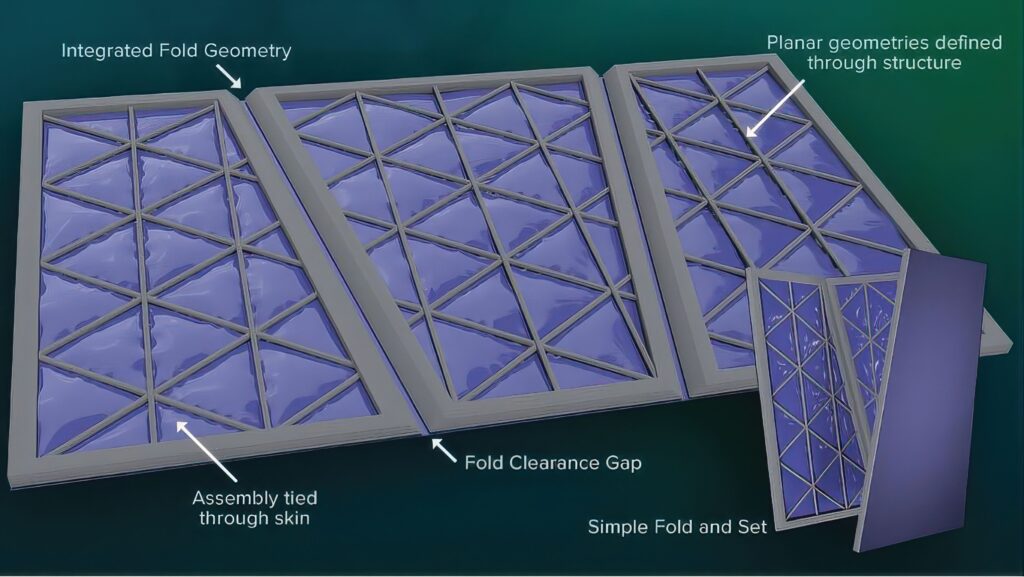
A new approach to AM integrates 3D printing techniques with hybrid composites. This eliminates the need to create moulds to fabricate a part and produces lightweight, cost-efficient structures with faster build times and greater adaptability.
Traditional composite manufacturing, while highly effective for producing strong, durable components, can sometimes involve long lead times and high mould costs that limit design flexibility. The new method uses hybrid materials in an additive process without moulds to produce structures that can be folded into 3D volumes.
The structures are composed of a high-strength fabric base such as nylon, glass fibre or resin-infused composite fibres, followed by an integration or bonding layer such as thermoplastic polyurethane for compatibility and adhesion. The reinforcing layer is then applied using deposited composite materials, including thermoplastic carbon-fibre acrylonitrile butadiene styrene for lightweight structural performance or thermoset formulations such as styrene-based or epoxy-based resins for enhanced stiffness, geometry control and durability. The materials bond at the molecular level, forming strong connections between the grid and the outer layer.
(Image: Andrew Sproles / ORNL)
This method also allows fabrication of objects larger than the printing machine itself, eliminates the challenge of storing moulds, enables rapid deployment and facilitates rapid printing of flat components directly onto sheet materials, which keeps costs down and supports thermoplastic and thermoset materials.
Acknowledgements
With thanks to Jing Wei at the Advanced Institute for Materials Research, Tohoku University, Japan, and Steven Guzorek at Oak Ridge National Laboratory, USA.
UPCOMING EVENTS