







Servo actuators
(Image: Volz)
Turn it up
Volume and certification demands are pushing new practices across actuator supply chains, design, engineering and more. Rory Jackson investigates
Growth in civilian markets for uncrewed systems continues at a steady pace, but to avoid mincing words: the defence market for our shared industries has boomed beyond all predictions. Whether by direct involvement in the active conflicts across Ukraine or the Arabian Gulf, or by preparations for war on the part of those who remain at (and still wish for) peace, orders for uncrewed vehicles in the air, at sea and on land are surging to keep pace with the world’s first full-scale ‘drone wars’, in which supremacy in uncrewed systems might constitute the primary victory condition.
This has an especially profound impact on the servo industry. Servos are mission-critical to every drone working its flaps and ailerons, every USV and AUV actuating its rudders, ground vehicles with electromechanical by-wire servos, or any vehicle throttling an ICE or using mechanised bay doors, arms, masts and so on.
On top of that, servos are often the most heavily cycled and stressed component in any uncrewed vehicle, and thus among the most frequently replaced, either due to exhibiting degraded performance near end-of-life or by breaking outright.
Consequently, orders for cost-effective servos are now running into the hundreds of thousands as a matter of course. Very few ISO- and aerospace-certified factories exist that are capable of fulfilling such orders, pushing high-end actuator suppliers to wrap their not-inconsiderable brainpower around how to possibly meet such demand, whether by growing new capacity or maintaining stock on warehouse shelves for shipping at a moment’s notice.
But even at the lower end, servos made for one-way or attritable drones must still perform precisely and reliably to ensure a payload (lethal or otherwise) is brought to its required mission location and deployed to perfection. At the higher end, servos are now being entrusted with human lives and expensive or irreplaceable cargo, ranging from MEDEVAC to urban passenger transport and cross-country logistics, meriting demand for more sophisticated control protocols, higher bandwidths and improved reliability.
(Image: Hitec)
Defects in servos at either end of the quality range must therefore be traced, understood and stamped out, with no room for actuator suppliers to fail to perform their due diligence – and thus, compliance with the highest levels of regulation is increasingly a top priority for top-quality servo manufacturers and their customers.
These two forces – volume and certifiability – are dictating much of the happenings around servos today, and defining myriad consequences across what happens before, during and after servo production, as we elaborate henceforth.
Supply chains
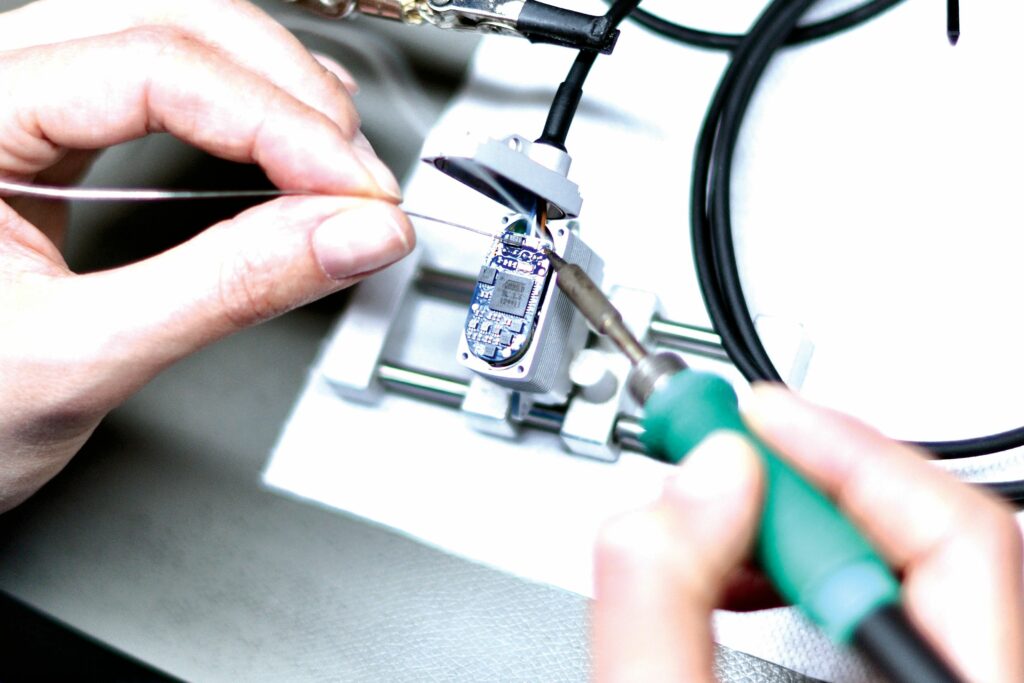
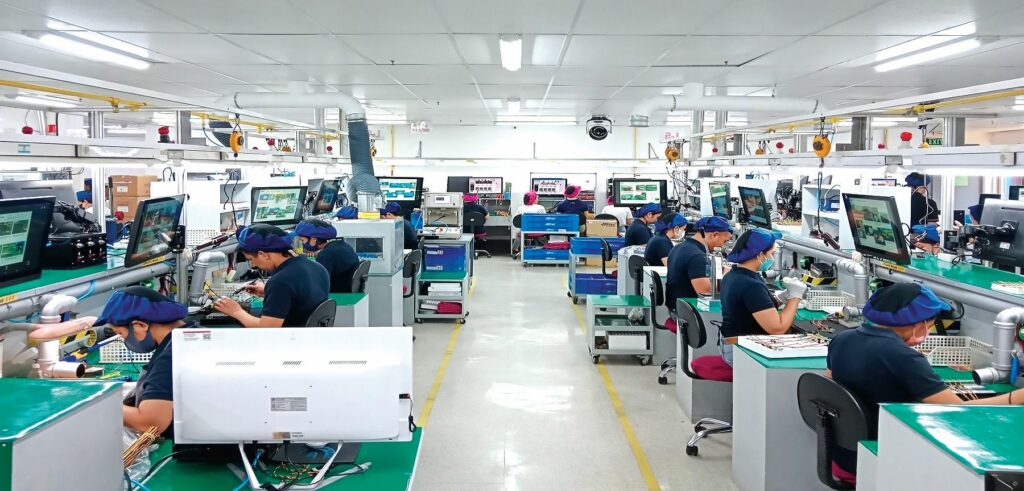
Analysis of the industry suggests servo manufacturing remains a largely manual process, with humans needed to fit, torque, solder and so on to integrate an actuator’s various cumbersome parts – comprising electric motors, ESCs, gears, shafts, wires, seals, PCBs, surface-mounted electronics and more – to exact specifications and with consistency from one batch to the next.

High-end actuator suppliers have mitigated the choke point somewhat by introducing new products designed ‘for manufacture’ over the past few years, which are produced more easily, repeatably and cost-effectively than other high-end systems (not to mention being customisable for matching bespoke requirements such as specific interfaces).
That makes the process of hiring and training new product assembly personnel easier, hence expanding manufacturing capacities tends not to be a severe bottleneck for servo suppliers. Those factories large enough to produce hundreds of thousands of servos typically have free space for additional assembly lines, and those suppliers who produce some of their own components – by, for instance, CNC machining gears or enclosures, or fabricating circuit boards and chips – can typically acquire more machinery whenever they need to.
However, upstream of assembly lie several other input factors that can stymie scaling efforts, the first of which is component supply chains. Those can link closely with design-for-manufacture initiatives because modifying a servo design to use a more simplified enclosure or PCB, which can be manufactured in the hundreds of thousands monthly, can vastly boost servo output volumes.
Similarly, when it comes to the more complex servo subsystems such as electric motors, ESCs or gears, designing a servo that can work with multiple different models or combinations of the three (so long as the output profile and performance charts remain the same and without a noteworthy margin of error) can enable a servo manufacturer to order and stockpile hundreds of thousands of COTS motors, ESCs or gear sets when such a batch becomes available, knowing they will definitely be used in a future order.
Encoders and potentiometers can also be shared by outwardly different servo designs, hence stocking up on these can help manufacturers avoid running out of input stock in the event of multiple large orders (or another global pandemic or international shipping crisis) coming to the fore.
Electric motors arguably have the longest lead times of any servo component, hence stocking up on these and enabling their swappability between servo designs is especially valuable – but high-end manufacturers must still heavily test supplied motors for months before bringing a servo built around them to market, to characterise, qualify and validate their reliability and performance for end users.
Other subsystems can also cause headaches if servo manufacturers do not account for their supply hazards with testing, countermeasures or fallbacks. Aluminium cases, for instance, can take time to cut and grind to finish, and surface-mount chips are well-known for coming from a very limited range of suppliers around the world, hence choosing quality bulk suppliers is vital to avoid high discard rates when receiving and QC’ing them in-house.
Gears pose similarly long and drawn-out order times as do motors, particularly the hardened steel gear sets vital to very high performing and long-lasting actuator designs. But on top of that, gears can form an even bigger QC bottleneck because gears received must be more exhaustively inspected for correct dimensional, surface, vibratory and other qualities, for two standout reasons in particular.
First, validating and clearing gears for servo-specific integrations is vital for preventing the various unwanted effects that may be transmitted upstream to the motor or ESC, or downstream to the output shaft and control surface, if gears do not perform or last to specifications. Second, there are sunk costs to be avoided: while motors, encoders and many other servo subsystems may simply be transferred or reallocated to a different servo design if too mis-sized for a given product, gears must be precisely tuned to the point of practical perfection to each specific servo to avoid severe performance differences versus what is advertised on specification sheets.
(Image: Ultra Motion)
Such is the importance of gear optimisation that spinning out a new servo design identical in every way to a prior, successful product save only for a faster gear ratio, will still typically take at least eight weeks of tuning (with additional time thereafter to qualify the actuator at a system-wide level) to perfect the gear set for the required speed, vibratory, torque and power performance.
Choosing new motor and gear technologies must therefore be undertaken with immense care to avoid sunk costs or wasted efforts. Hence, while some minor changes such as uptake of samarium cobalt motors for space applications or planetary gearboxes for smooth, efficient reductions in rotary servos can be seen, no major transformations in these servo subsystems’ technologies should be expected in the years ahead – not least because R&D must increasingly be performed in a certifiable manner acceptable to and understood by regulators.
Testing
Engineering new servo designs through optimisation or validation tests can also restrain the speed and agility with which servo makers can respond to new orders. As a result, servo companies work increasingly hard to run their testing work more efficiently.
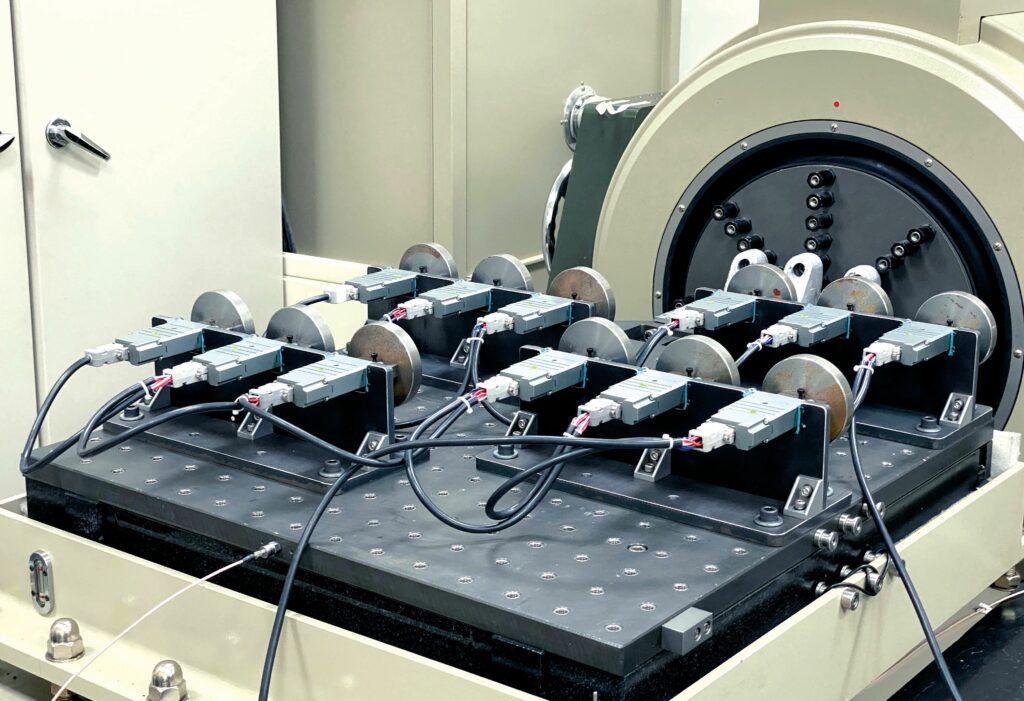
One way of doing this is hiring more staff or otherwise automating test equipment such that it can be run 24/7, with testing rigs for motors and gears forming a strong area of focus in this regard, given their standout impact on servo performance and health. That can greatly shorten overall testing times for new servo designs, components and so on, and in turn shorten lead times for new modified or custom batches.
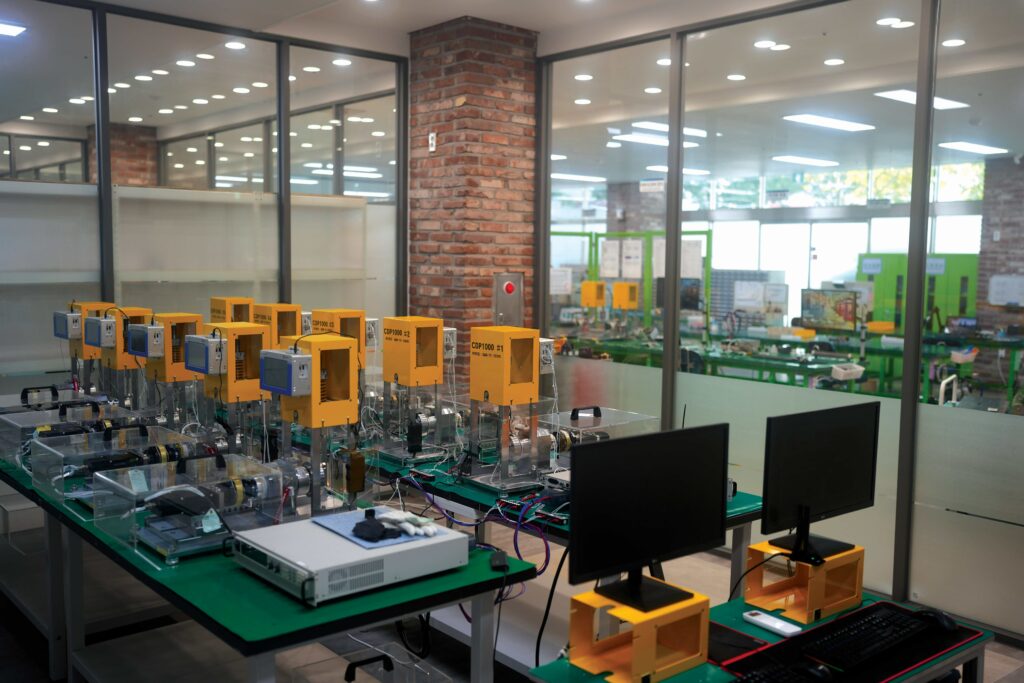
(Image: Contromax)
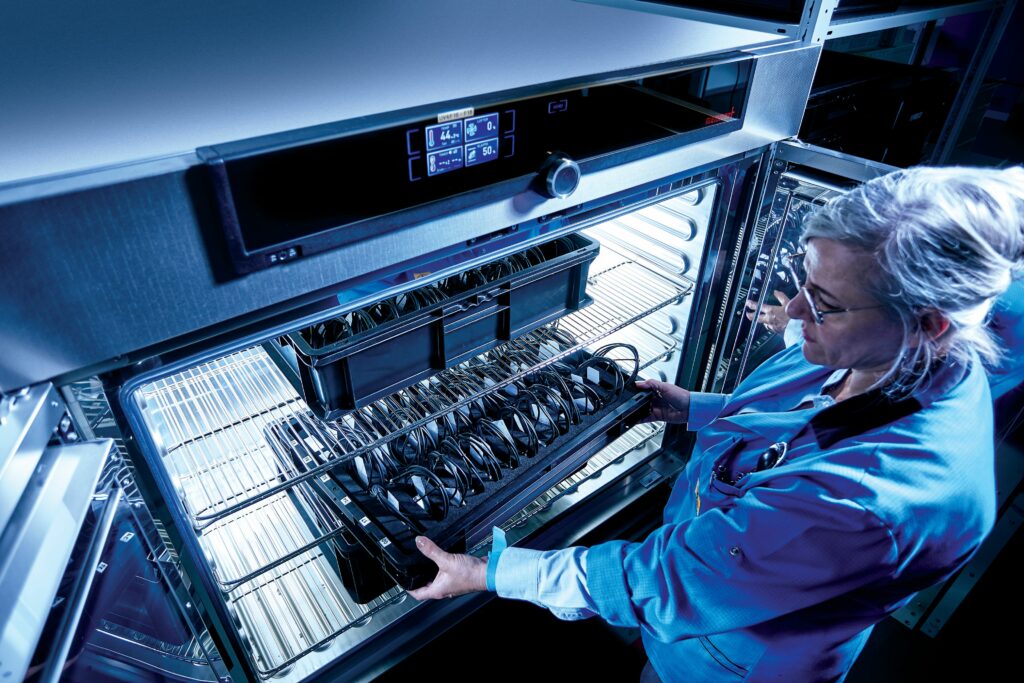
Along with more efficient testing, high-end servo manufacturers are also investing in hardware-in-the-loop testing equipment synonymous with the highest standards of certified aerospace engineering, capable of far more detailed, accurate and repeatable verification measurements and analyses than anything used in the hobby-grade or lower-end avionics space.
Naturally, assessments of test datasets can be critically valuable for improving design and simulation veracity, as well as learning vital new engineering lessons, cross-referencing or sharing analyses between test cells, and providing performance feedback to customers. To capture that value, digital recording systems using high-end local and cloud servers for logging and analysing such data are tools proliferating among servo suppliers.
As a result of data and quality enhancements, servo testing labs increasingly resemble medical labs, spotless as they must be to achieve certifiability, but also with multiple cameras for obtaining visual and heat information, often pointing at a servo from multiple angles, to analyse it as it is run through its paces in environmental, vibratory or shock tests.

Hence, as well as connecting to the electromechanical cycling rigs that servos and their parts run in, noticeably for the levers and shafts often whirring back and forth in them, data logging systems for servo engineering will often be connected to multiple cameras, test chambers, digital microscopes and specialised tools for tracking such minute parameters as servos’ angular resolutions, repeatabilities and other facets to come as high-end servo suppliers look to gain an edge in how much lifespan, performance, reliability or cost-effectiveness they can extract from each actuator.
Certification
The movement of UAVs into airspace shared broadly with civil and military aviation over the past decade has put the topic of general management of such airspace front and centre for regulatory authorities worldwide. While such discussions are, in fact, still ongoing, a certain maturity has been reached by which a realistic picture of requirements for different categories of UAVs to be permitted to fly in controlled airspace can be gleaned.
While specifics of published and anticipated UAV-specific regulations – such as Part 107 and Part 108, respectively – are publicly available, these generally place the responsibility on servo manufacturers to ensure that their customers and integrators can view all necessary documentation, processes and rigour on their parts to convince authorities that the servos form part of a compliant, airworthy UAV.
The most safety-minded and ambitious servo manufacturers will be shaping such practices to conform with the highest UAV-specific and general aerospace standards, the latter category including such standards as DO-178C on software development, ARP4754 on general development protocols, ARP4761 on safety assessments and DO-254 on electronics.
While not all civilian aviation technical standards will apply to all UAVs, accounting for all of them will ensure the covering of all bases across servo products from a given manufacturer, including customised servos, which are unlikely to fall under a pre-existing Technical Standard Order or other standard category, and therefore will need to undergo certification within the context of the use-case.
Servo manufacturers will, hence, be separated into those who can and cannot work with the customer through that certification process, and thereafter into categories according to how high of a Design Assurance Level (DAL) they plan on being capable of achieving, from DAL-E up to DAL-A.
Achieving such certifiability involves significant measures. From the outset, a servo manufacturer must change the way it performs customisations. In addition to conforming with AS9100 standards on quality management, it is imperative to establish development processes in accordance with said standards such as DO-178C, DO-254, ARP4754, ARP4761 and so on.
(Image: Volz)
In the case of DO-178C, for instance, that would mean a servo producer’s software developers must make sure to perform actuator software development, software module interactions, tests and verification procedures as laid out by the standard, as well as documenting all results in the proper way, to enable sufficient artefacts to be generated to support the certification case for the servo’s software.
Maintaining such practices in-house as a baseline is not merely critical to satisfying each customer’s specific, individual certification requirements. It is also an important cost-efficiency consideration because customisations will grow more expensive the more project-specific work (or greater the number of reconfigurations in in-house practices) that must be made to accommodate a new certification target.
Given that new UAV or advanced air mobility companies (even those extremely well-funded) will rarely produce over a dozen aircraft in their first three years of activity as a business, a servo manufacturer will struggle to afford the expense of such a small, yet highly certified batch order – unless, that is, they have already implemented the necessary practices for providing certification packages with their servos across their product portfolio.
Redundancy
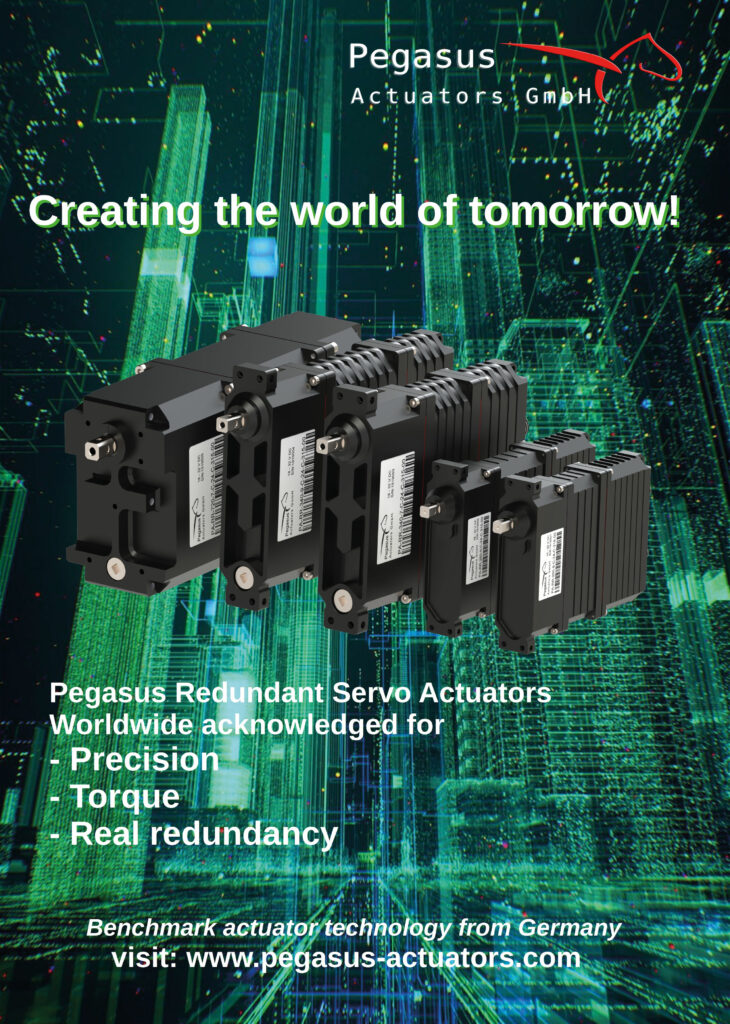
As uncrewed vehicles operate over longer distances and carry irreplaceable payloads, demand for dual redundancy is becoming especially widespread, in servos as much as in other safety-critical components.
Naturally, redundancy can mean many different things to suppliers and customers, down to features as minute and non-physical as software-based redundancy checks. In high-end servos, however, redundancy more and more often involves a longer list of internal components.
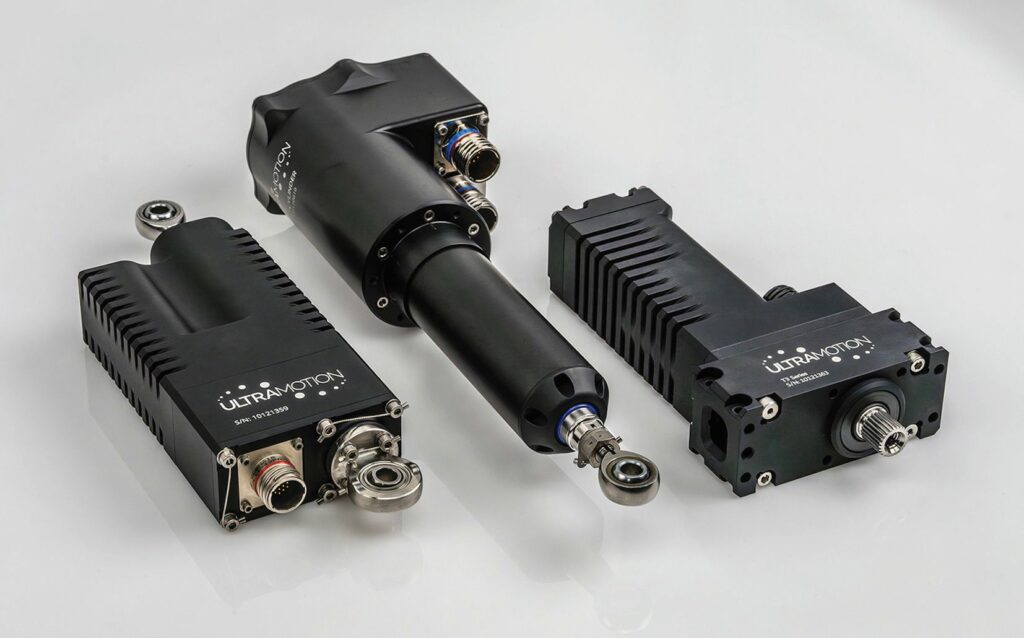
Among these, one may find growing popularity of torque-summing arrangements, in which two electric motors and motor controllers may be mounted inside a housing, isolated from one another with independent power and communications inputs running to the flight controller, but acting on a common shaft and gearbox.
For those with deeper pockets and even more onerous safety requirements with which to conform, full duplex servos that also duplicate the gearbox are available in certifiable specifications, and even triplex servos are being used in rare cases such as engine throttle applications.
Beyond the servo line components, redundancy in closed-loop control and monitoring elements is crucial to safety as much as liability concerns, and to that end, components like isolated, triplicated absolute position sensors are being leveraged more often, including servos with multiple arrangements thereof to enable majority voting (although that is most typically performed by the flight controller rather than at the edge).
And as flight termination systems become required by more aviation regulators, critical redundancy systems inside servos are also starting to include hardware disabling systems – one for each line in redundant or duplex systems with multiple servo lines – via which the flight controller may terminate one or more servo trains.
Going forward, servos will be expected to perform as part of highly redundant and integrated system networks across whole aircraft, with the servo redundancies not only having fail-safes such as dual-lane architectures, but also ‘fail-operational’ properties such as independent monitoring functions and integrity checks to diagnose faults and activate compensatory subsystems elsewhere on the craft. That will be a crucial part of compliance with the civil aviation paradigm of ‘no single point of failure’, by which a UAV will be able to continue operating even amid a noteworthy fault.
Ruggedisation
Toughening actuators is also increasingly vital to creating products that will operate reliably over long lifespans across multiple different platforms. A given servo may need to function in both a large UAV’s throttle and ailerons, and in a USV’s rudder or moon pool. Periodic submergence in sea water, splashes of fuel or oil, backlashes from bird strikes and more may hence pose serious risks to servos destined for industrial applications without sufficient physical protection.
Effective sealing is a perennial concern, gaskets being notoriously problematic to trustworthy ruggedisation. Dedication to quality sealing solutions such as precisely produced O-ring grooves can hence be vital, particularly at the shaft end. Additional systems can be used as critical extra layers of defence past the seals, such as implementing internal humidity controls by installing moulded desiccants and humidity sensors within the housing, or protecting electronics in a conformal coating.
(Image: MKS Servos)
Material choices are also a natural pathway toward a more robust and longer-lasting actuator. 316 stainless steel is a heavy but obvious choice for manufacturers looking to maximally ruggedise a servo’s housing and shaft, with particular long-term advantages over, say, a more conventional chrome-plated steel shaft.
Other materials such as 7075-273 aluminium are also being explored for their strength advantages over the aerospace-mainstream 6061 aluminium. Careful selection and tactical expense on bearing selection is also critical for ensuring that a notoriously breakable component does not form a standout weak spot in the design, and choosing fasteners with desirable qualities such as helicals for strength or Xylan coatings for galvanic protection (if steel and aluminium wind up in close proximity) will also go a long way to making servos that last longer and perform reliably over the duration.
Subsea
Though not discussed so much as drones in mainstream investigations, there has been a notable uptick in demand for quality servos among UUVs in the last two years. As readers may be aware, underwater servos are typically filled with oil to compensate for the high pressures encountered subsurface, as well as being constructed with ancillary components such as connectors rated to operations in salt water and to mission depths (including AUVs working down to 6000 m below sea level).
Other components can be vital to trustworthy operation at depth. For instance, linear actuators displace internal space as their shafts extend forwards, which might make them unsuitable for submersible applications owing to the sudden low-pressure weak point created inside the servo housing – unless a high-end linear actuator producer were to use a built-in compensator.
That may take the form of an internal bladder, wrapping over the servo cylinder’s housing and being protected by an additional shell, forming an extra reservoir of oil that reacts appropriately to prevent an active pressure differential forming between the servo’s interior and exterior.
Rotary servos are not immune to this issue either. While not displacing internally as linear servos do when actuating, their internal oil volumes can still be compressed by external pressure that grows severe enough. That can heat the oil, resulting in a thermal expansion differential that an affected servo’s seals might not withstand – unless, again, a built-in compensator is used to adjust internal volumes in response to extreme environmental pressure effects.
Compensators are not typically complicated parts in any way, and the quality or effectiveness of a compensator will largely come down to each supplier’s integration and usage thereof, rather than any breakthrough innovation. Inevitably, the overall effectiveness of a subsea servo will also depend on the selection and holistic complementarity of O-ring seals, enclosures, thermal management systems and servo-line parts inside. Specialised housing parts like sacrificial zinc anodes for galvanic protection, or stainless housings, can also be vital depending on weight and cost requirements.

The process of engineering subsea servos comes with quite different requirements to developing those that function above the water. Depth testing, for instance, will naturally require judicious pressure testing rounds, with 6000 m rated servos sometimes being trialled and proven in pressures equivalent to 10,000 m depths for comprehensive validation.
Thermal testing of subsea servos, meanwhile, can actually be run in air: the oil-filled internal environment creates a severe conductive heat transfer effect, particularly around the motor windings and similar heat-generating elements, hence the heat transfer and thermal mass experienced by subsea servos in air is far worse than that measured subsurface where direct water immersion keeps such actuators cooled.
Communications interfaces
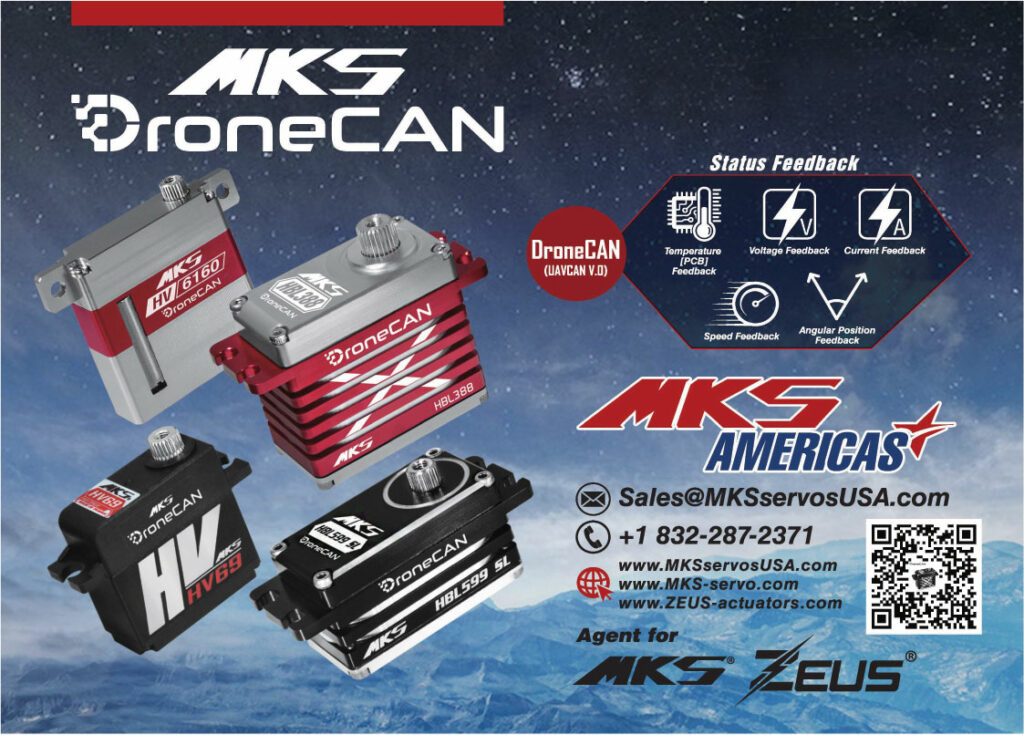
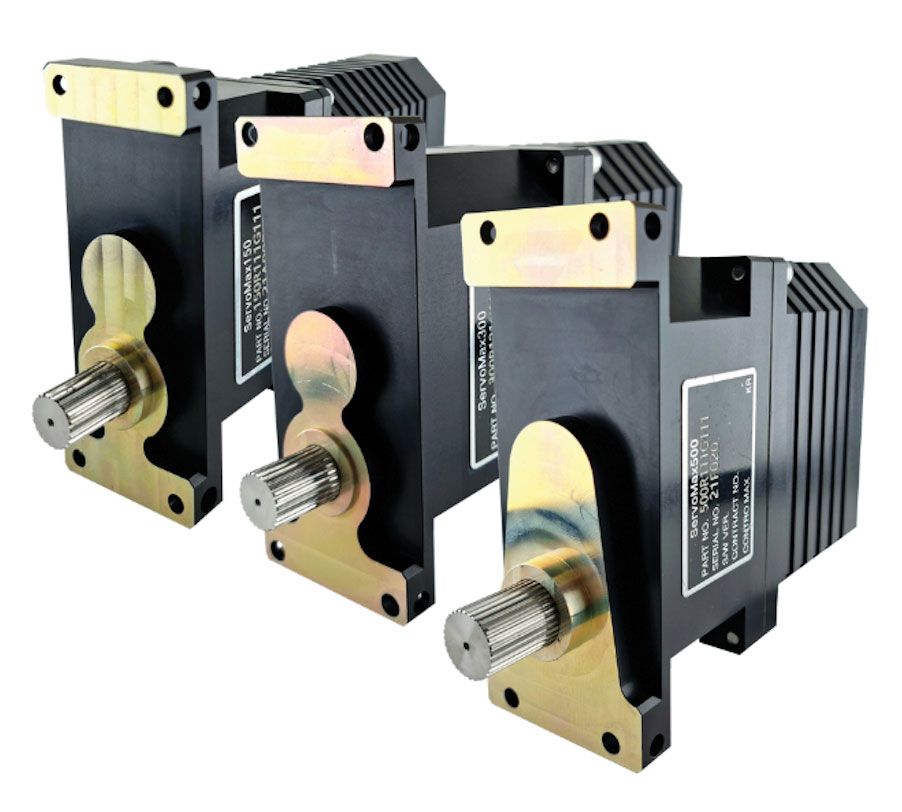
While there has been a mounting shift toward DroneCAN across much of the uncrewed world, a tangible avoidance or pushback can also be viewed elsewhere within it because certain qualities of its behaviour, documentation and ecosystem (as some argue) cause it to fall short of the standard SAE J1939 CAN, CANaerospace, CANopen and other variations.
(Image: Contromax)
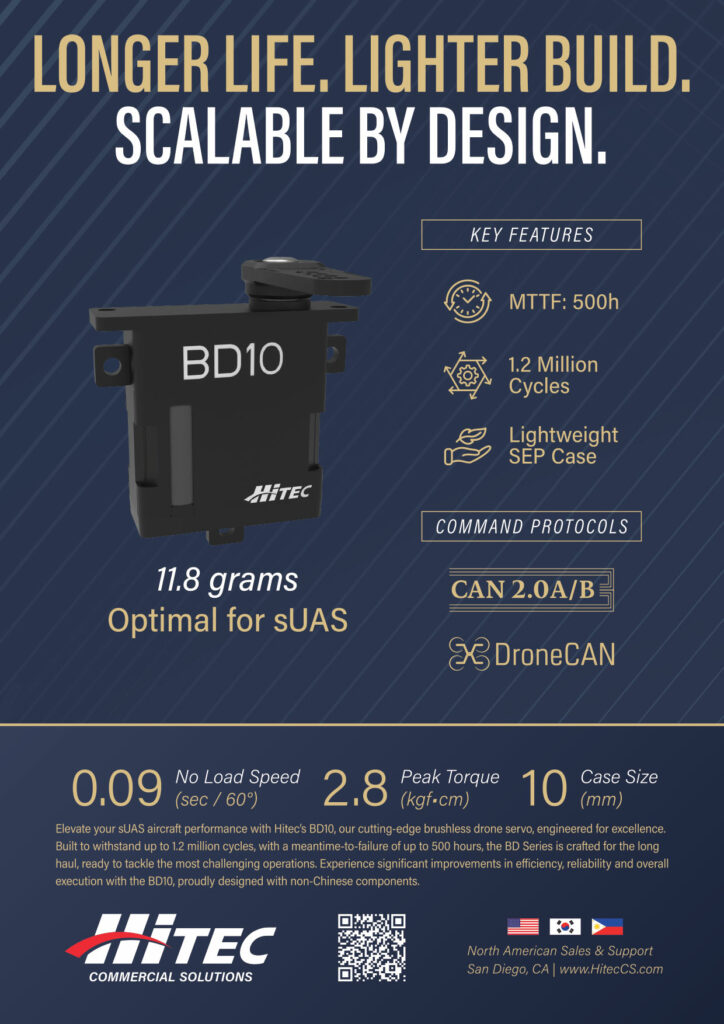
Hence, while some high-end actuator products will come with DroneCAN support, others take alternative routes toward ease of integration, high-integrity control and diagnostics of servos in vehicles. It is not unusual to find designers of very high quality servos opting for a more basic CAN that enables compatibility with a wide range of established UAV flight controller brands, including open source libraries, while also being a simpler and more workable protocol.
As uncrewed systems and missions become increasingly data- and AI-driven, software-driven developments such as new intelligent features are being delivered more often (either as factory-issued qualities or in the form of over-the-air firmware updates). One supplier has, for instance, implemented a configurable interpolation logic built to compensate or assist for situations such as extended underwater missions.
In those situations, where the autopilot computer might only be updating actuator positions at 10 Hz, end users may wish to configure their actuators to expect new updates at 10 Hz, but interpolate between those positions at a rate of 1 kHz, enabling very smooth motion despite the otherwise coarse nature of the incoming command signals.
Alternatively, some servos are being supplied with rising numbers of telemetry packets, potentially in the interest of enhanced performance monitoring or predictive maintenance analyses by fleet operators. A single servo might, hence, export multiple different telemetry streams, each with unique IDs and data rates, such as one low-rate temperature feed, a high-rate position feed and a high-rate current feed.
But for those wanting to go simpler than a basic CAN, it remains commonplace for suppliers to offer serial interfaces, including addressable RS485 buses, by which systems integrators can opt for a more binary approach over a command line interface – and PWM remains a typical offering for those in early development of a vehicle.
Future
The way of uncrewed systems customers has ever been ‘more, more, more’, and this will continue with respect to demands of servos. With industrial work, military conflict and exploration missions by autonomous vehicles ramping up worldwide, servos will unquestionably be put to harsher environments and cycling over the next several years than those routinely weathered over past decades.
Environment- and integration-specific design features will accordingly become a major differentiator among servo innovations, as will new, efficient approaches to redundancies and failovers, to help guarantee continued actuation despite impairment of a given servo.
Additional directions are under consideration by servo manufacturers and researchers looking to bring tangible advantages to their customers. One will likely be closer integrations with other avionics, to the point of high-end servos coming as integrated, certifiable packages with flight controllers, navigation systems, radios and so on, enabling more seamless installations and interactions than ever between such subsystems onboard UAVs (and other uncrewed vehicles).
Another may be different principles of control, going beyond the typical angular commands to a variety of possibilities that may serve aircraft in other ways, such as acceleration-based control or other means of making for more agile and dynamic UAVs.
The call for these – and other such innovations in the works – will naturally depend on demand from the uncrewed space, which in turn will be driven as responses to the ever-changing faces of global industry and international relations. Those are profoundly hard to predict nowadays, but whatever forms they take, the servo industry will doubtlessly be well-placed to respond.
Acknowledgements
The author would like to thank Tom Quartararo of Ultra Motion, Shawn Spiker of Hitec USA, Thomas Cooke of MKS Servos USA, Sienna Lee of Contromax, and Dr Vladislav Apostolyuk, Felix Thun and Philipp Volz of Volz Servos for their help in researching this article.
UPCOMING EVENTS