







XPONENTIAL Europe 2026

(Image: Messe Düsseldorf/Tillmann)
The monument builders
Bigger crowds, more exhibitors, and greater enthusiasm for uncrewed systems and innovations marked the second edition of the European Xponential. Rory Jackson reports
With the applause for last year’s inaugural Xponential Europe still resonating, uncrewed systems companies coalesced once again in the Messe Düsseldorf to unveil, discuss and promote their latest innovations.
All counted, 360 exhibitors came together, mostly from across Europe but with many also hailing from the Americas, Asia, Africa and Oceania, altogether nearly doubling last year’s count in their march to avail themselves of the expo’s lucrative attendance.
Many of the discussions from the expo floor to conference hall were focused on defence, with talks and product launches directly addressing the growing demand for mass-produced components, one-way vehicles, system interoperability and other strategic imperatives.
But with commercial applications also maturing, mission-critical advancements towards GNSS-denied navigation, secure comms, and clean and stable power were also widespread across the show floor.
With the Düsseldorf expo now firmly established as a vital tentpole for European uncrewed systems suppliers and markets, we once again attended to investigate the latest technologies being made available to engineers and manufacturers of autonomous solutions – a selection of which are reported on below.
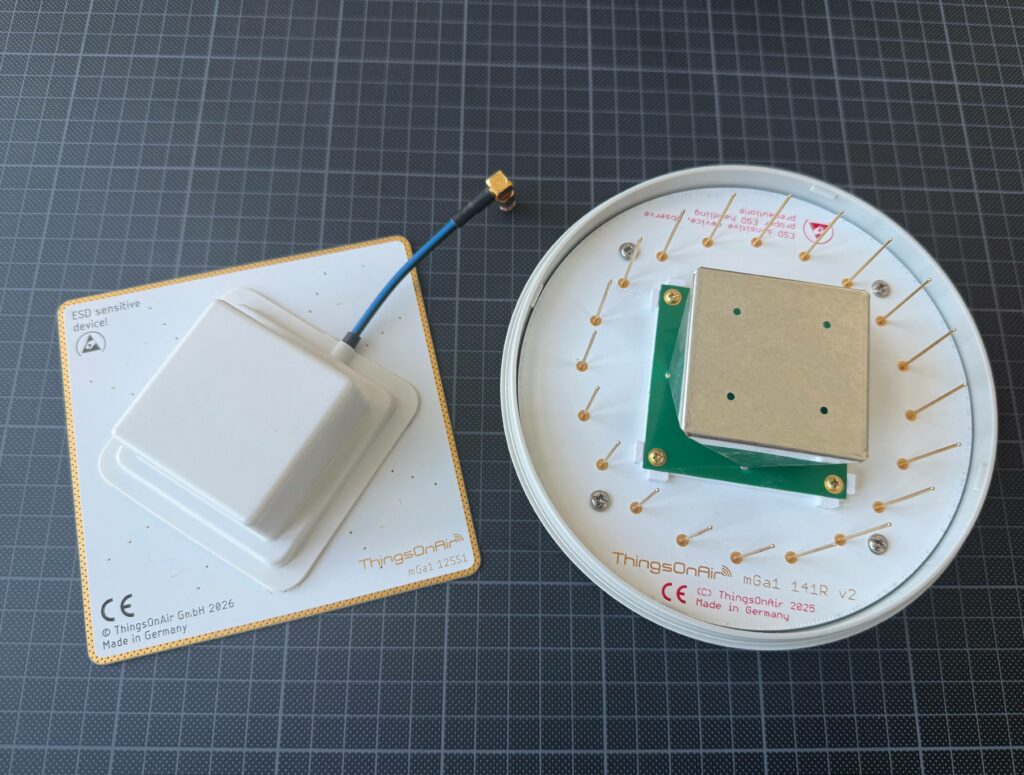
ThingsOnAir GmbH was at the show to present its unique GNSS antenna technologies for UAV applications, including a novel antenna design topology and a hardware–software solution for analysing and optimising antenna performance in the field.
“In contrast to ceramic patch or helical antennas, our antenna element uses a metallic radiator structure with a complex feed network – a topology more commonly seen on GNSS satellites than on UAVs or their GCSs,” explained Guido Weppler of ThingsOnAir.
“Developed with Fraunhofer, the design pairs the radiating element with our own ground plane, parasitic and re-radiating elements, and airframe integration.”
Performance factors cited by ThingsOnAir as setting the antenna apart include its support for the full L-band including correction services, its highly uniform radiation pattern, a very tight phase centre, and strong rejection of local interference and multipath – all of which contribute to directly improving GNSS positioning quality. It has also been designed with a compact and lightweight form factor to match modern multi-frequency GNSS receivers (specifications to be published later). The ground plane can be tuned for each airframe and use-case, and the antenna can be mounted externally or integrated inside a wing or fuselage skin.
The broadband design – which the company cites as significantly wider than helical or patch alternatives – is less prone to de-tuning by surrounding fuselage elements, and stays reliable under rapid attitude changes and in congested RF environments, making it particularly applicable in BVLOS operations where multi-constellation, multi-frequency GNSS is critical.

“We started developing this technology in 2015, and more than 700 units are flying today with leading UAV manufacturers. We’re now scaling production to serve the broader market,” Weppler added.
The company’s antenna and receiver analysis system, ARA, places multiple GNSS antennas – one a reference – on separate, time-synchronised turntables in the field. ARA then analyses the captured data to expose key metrics such as phase centre stability, multipath behaviour and position fix quality, supporting both antenna selection and integration optimisation.
Radiotechnika Marketing has engineered a range extender for UAVs, built around RCV’s DF70 engine, leveraging competencies and extensive facilities it has developed in-house for the design, testing and optimisation of high-power electric propulsion machinery.
The range extender produces 2.8 kW of continuous electric power (up to 3.3 kW peak) from a specific fuel consumption of 330 g/kWh, over a 60 V DC output, with an all-up system weight of 9 kg (thereby surpassing the power-to-weight limitations of batteries for aerospace applications).
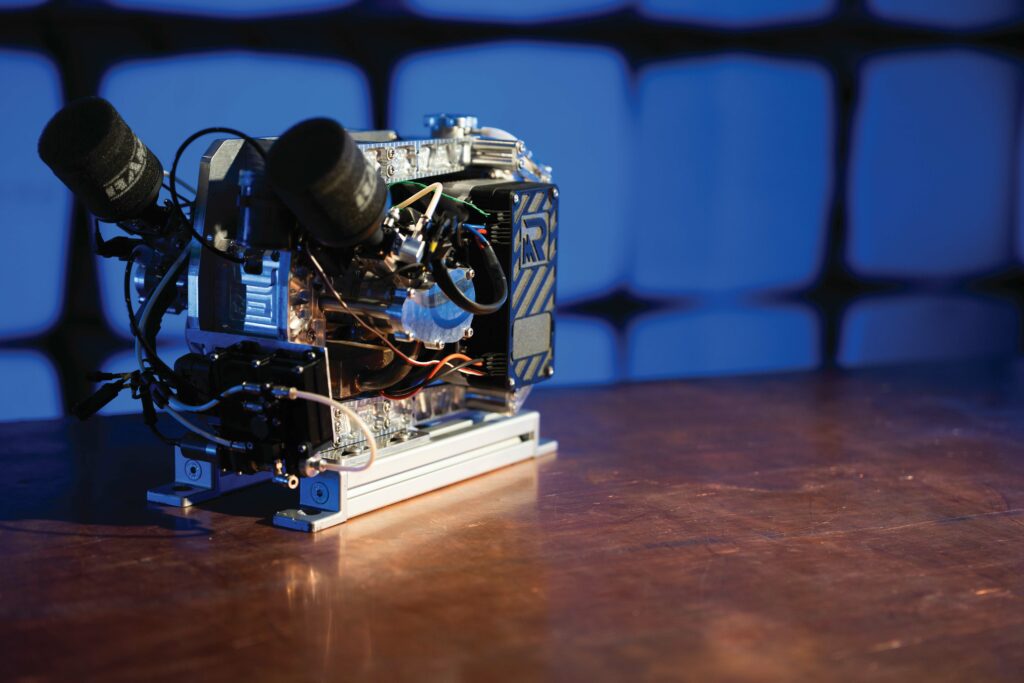
“We started as a reseller of advanced military components in the 1990s; hence, the ‘Marketing’ part of our name. But gradually we moved towards integrating and scaling in-house assembly capabilities, until eventually we started R&D into unique technologies of our own making,” said Pawel Melnarowicz of Radiotechnika Marketing.
“At first, we just worked on simple OEM designs for wiring harnesses and control units for military vehicles, and later going into more complex subsystems like DC/DC converters, power management systems and finally hybrid propulsion components like what we’re exhibiting here.”
RCV’s engine was chosen by Radiotechnika because of its high power density (both gravimetrically and volumetrically) and fuel efficiency, and through its enabling of the range extender to run on not just gasoline but also JET-A1, JP-8 and JP-5 heavy fuels, the combustion engine’s rotary valve technology enables these advantages.
Meanwhile, Radiotechnika’s starter-generator facilitates the powertrain’s AC electricity production, with DC output coming via its power electronics, and its selection of liquid- and air-cooling installations ensures robust thermal management for stable power output and safe operations.
Kappa Optronics is developing the FlightEye-NG, a 4K resolution, high-performance, FPV-style aviation camera module family, integrating onboard edge AI processing capabilities and several other noteworthy features.
“It’s a new design on an existing DO-160 qualified, ITAR-free camera solution, which is powerful enough to enable automated and intelligent autonomous flight,” said Kappa’s Olaf Schultz.
“We will have defined the full specification by June, with the first demo units by Q1 2027, including very lightweight Ethernet or SDI interfacing for video output, and plug-and-play integration, along with extremely low latency.”
The FlightEye-NG also integrates onboard compression to H.265, H.264, and M-JPEG standards, an integrated heater for de-fogging and de-icing, and external time synchronisation via Precision Time or Network Time Protocol to ensure matching timestamps with other onboard UAV subsystems.
“Right now, our smallest existing Rolling Shutter camera is around 65 g, but that lacks the full capabilities we’re planning for FlightEye-NG, and so for the latter we’re anticipating a 250–300 g total mass, along with extremely low power consumption,” Schultz added.
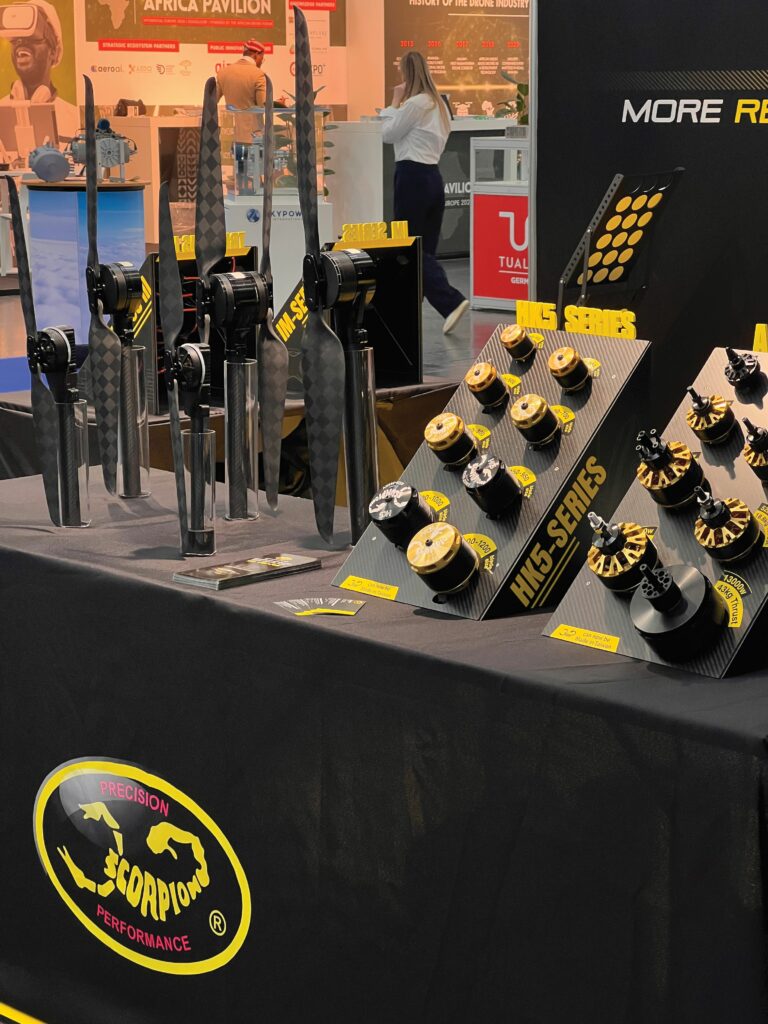
Scorpion Power System showed us several new additions to its electric UAV propulsion portfolio. First among them was a pod-version of its IM-60 Series motor, integrating its new 60 mm stator motor and Legatus FOC ESC presented together in a convenient tube mount ready to bolt on and use.
“There are two sizes of that 60 mm diameter motor, so one of those new pods enables 3 kg of continuous thrust, up to 6 kg peak, and the other does 6 kg continuously, up to 12 kg peak,” said Kyle Dahl.
“Those, along with the ESC, safety LEDs and wiring sit inside a waterproof, injection-moulded plastic housing that we’ve designed to be as strong yet lightweight as possible.”
Scorpion Power has also expanded its range of ESC sizes to suit the widening variety of customer applications, with the biggest now available (as of writing) being a 70 V, 320 A device.

It has also been working intensely on custom-designing its own propellers, those being the critical transmission between rotational torque and efficient lifting power. Scorpion does not yet identify as a propeller supplier, but exports the designs to its trusted prop supplier, and tests the results to find considerable efficiency gains in its bench tests, particularly in kilograms of force per watt.
MostaTech has made a digital-output version of its VG2103S fibre-optic gyroscope (FOG), enabling delivery of 24 bit data over an RS422 serial interface for real-time applications, at data rates of up to 8 kHz.
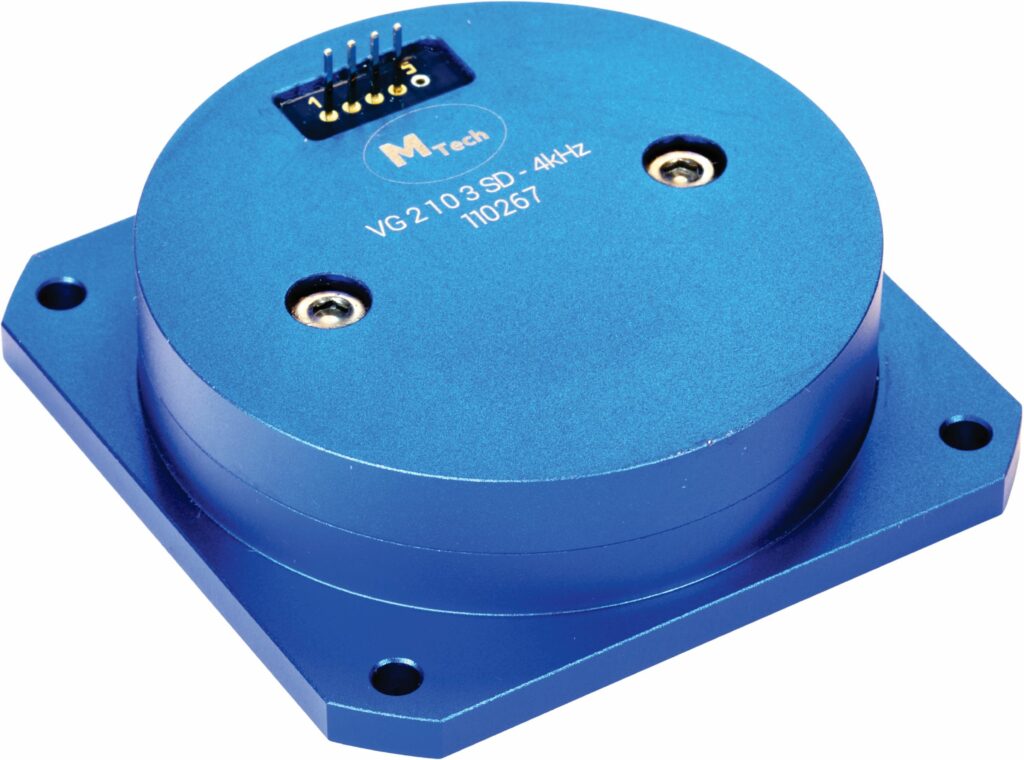
“This means we now have three versions of the VS2103S FOG, alongside the standard version and the VS2103S-3000, which is designed for 3000 g of shock resistance,” said Olga Pogorelova at MostaTech.
On top of the digital output over RS422 making for easier integration into uncrewed vehicles, the new VG2103SD comes with performance improvements including angular random walk as low as 0.015 deg.sq.h and dynamic range of up to +/-400 deg/s, with the same 60 x 60 x 17 mm dimensions and 18 g vibration tolerance as the standard version.
“With this addition, we have at least 26 models of single-axis FOG, plus three models of triple-axis gyro, and three IMU products; we’re also beginning production of our smallest FOG units in μ-metal for extra magnetic immunity,” Pogorelova added.
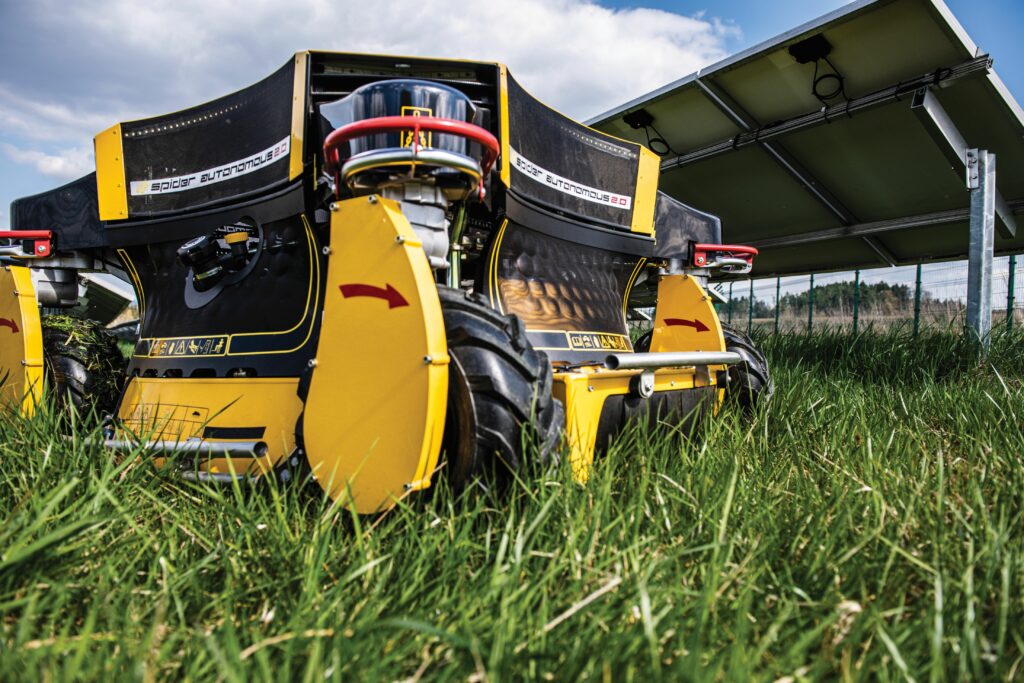
SMAUT is a Czechia-based developer and integrator of autonomy systems – both software and hardware – for ‘greencare’ robots, meaning solutions tasked with mitigating vegetation encroachment in industrial settings.
“These are not home lawnmowers but industrial mowers; large, combustion- or electric-powered vehicles that can each cut a full hectare per minute,” explained Fabiola Vlk Gallegos of SMAUT.
“It’s very physically demanding for humans to operate these vehicles. They must cover huge areas of terrain, including some dangerous environments such as agricultural fields or power infrastructure, so it’s hard to recruit greencare workers in the first place.
“Making the mowers autonomous means they’re not only much more efficient, but also that humans can monitor and operate them remotely, with a much better quality of life, and with minimal remote or manual intervention needed even in sensitive operating environments like vineyards or solar farms.”
Through SMAUT’s hardware and software integrations, a single worker can monitor and operate three mowers (or more, if they so choose) at once. The mowers are also equipped with SMAUT’s object classification AI to ensure that they brake or otherwise avoid living beings detected via Lidar, radar or cameras. That covers both humans and animals, hence preventing damage to communities and ecosystems living in or around deployment areas.
The company also supplies fully integrated autonomous mowers as its own badged commercial solutions, with all production, construction and integration taking place in the Czech Republic.
Harwin exhibited a range of its latest connector designs and capabilities, along with some key applications in which they are presently employed.
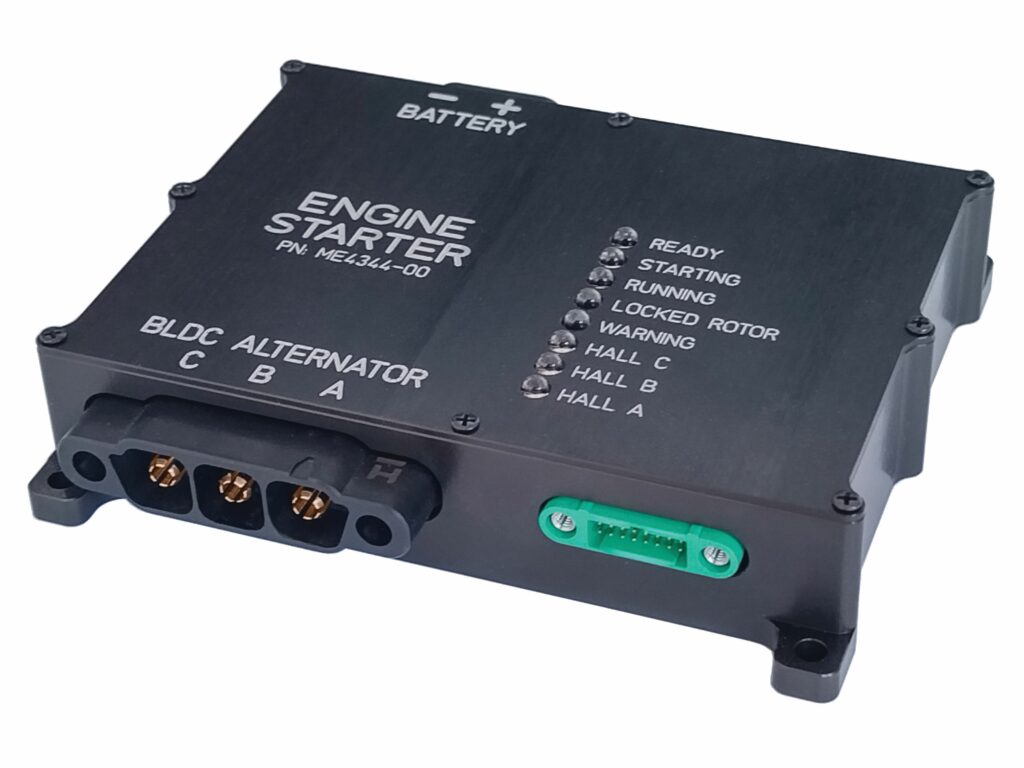
“For instance, our Kona and Gecko connectors have been selected by visionair for their UAV Engine Starter electronics module,” said Harwin’s Ben Green.
“Kona is our highest-power connector, at 60 A per contact, while Gecko is our smallest high- reliability and density connector, featuring a
1.25 mm pitch. Both are ideally suited to high vibration and shock environments, hence why they’re used in the visionair system, which is typically integrated in the hot, harsh engine bay of combustion-powered UAVs, and has to be built to avoid any discontinuity in power or signal delivery.”
The Kona series connectors come in configurations with between two and four contacts in a single row at an 8.5 mm pitch. Each is a ‘six finger’ clip-type contact, being a reliable design amid high shock and vibration, and is also individually shrouded and recessed to prevent accidental touching. The Gecko contacts are four finger designs, and capable of taking up to 2 A each.
Both systems are rated to 100 gs of shock tolerance, and also come with locking mechanisms, including mate-before-lock screws (as well as latches for Gecko) to ensure that their cables remain mated throughout usage.
Actuonix displayed a range of its linear actuators, including some which were being demonstrated in a moving bionic hand, its fingers moving and undulating naturally with the servos closely imitating the human hand’s flexor digitori.
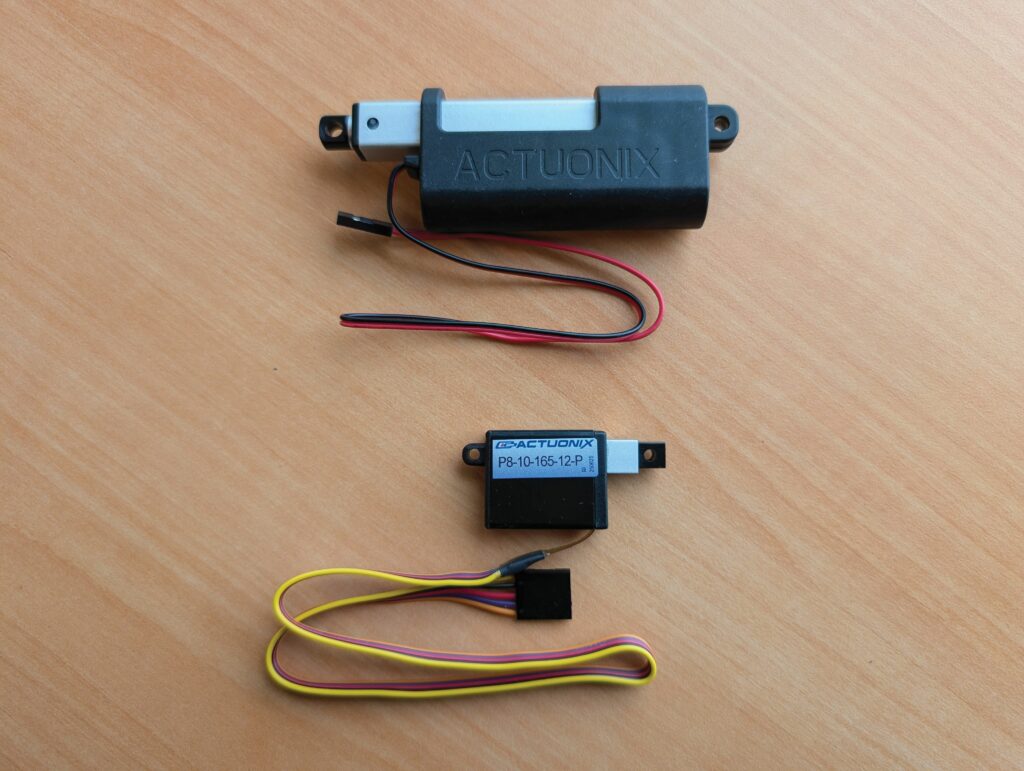
“That bionic hand actually uses four units of one of our older models, the PQ12, which comes in 6 or 12 V versions as standard and can be customised for different voltages, gear ratios and interfaces as needed,” said Actuonix’s Ruaridh Mackinnon.
“But our newest version of that is the P8, which comes in stroke lengths from 15 to 100 mm, unlike the PQ12’s 20 mm fixed stroke.”
The P8 also produces up to 155 N of force, and moves at a maximum speed of 30 mm/s. Meanwhile, the company’s largest actuator, the P16, comes with stroke lengths from 50 to 200 mm, integrates a planetary gearbox (rather than the spur gears of other models) and imparts up to 300 N of force.
Cobra International showed us two noteworthy new composite material technologies based on experience producing Olympic-grade watersports equipment, which it has reoptimised for the strength, weight and cost requirements of uncrewed aerospace.
The first was its Hollow Sandwich Technology, in which two carbon sandwich half-shells are laminated separately before being joined about an internal structure composed of six bulkheads running width-wise and two stringers running longitudinally.
“It replaces foam cores with air, essentially, making it very good in terms of strength-versus-weight,” said Cobra International’s Danu Chotikapanich. “It does take several steps including different gluing and laminating rounds, though, and our other new technology, our Dual Density Core Monolithic Lay-Up, is constructed much faster.”
The Dual Density Core Monolithic Lay-Up combines foam cores of different weight densities into composite structures to optimise both strength and weight based on part-specific needs. In the samples shown to us, heavier foam was installed at the outer layers for rigidity and ruggedisation, and lighter foam in the centre was used to save weight and deprioritise unnecessary strength. In construction, the outer layer is simply injected around the inner foam, before the composite skin is moulded in a single shot.
Chotikapanich added: “Cobra is very much focused on civilian markets and on being a solution for scaling, meaning we only field markets once customers there seem to be coming to us to scale-up their production to serious industrial levels – and based on what we’ve seen among civilian drones in the last six months, we’re very excited.”
Septentrio has launched the AsteRx EB, a compact, cost-optimised RTK GNSS receiver built around the essential technologies needed for reliable high-accuracy positioning.
“EB stands for ‘Essential Box’,” explained Jasper Laurent at Septentrio. “It offers the core Septentrio GNSS performance customers expect, including AIM+ protection against jamming and spoofing, in a streamlined receiver for robust wired applications.”
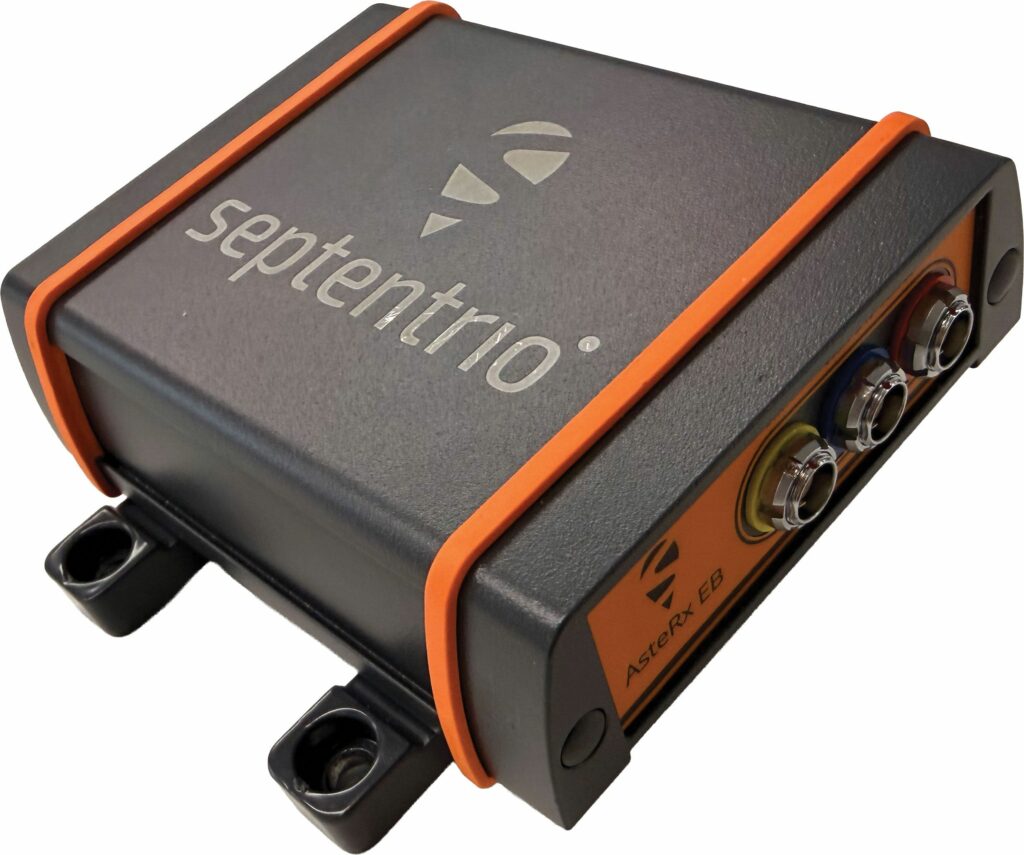
Housed in Septentrio’s proven IP67 AsteRx SB3 enclosure platform, the AsteRx EB combines industrial durability with a focused feature set. It supports multi-constellation, multi-frequency GNSS, measures 118 x 102 x 36 mm, weighs 497 g and consumes up to 2.5 W.
EDePro (Engine Development & Production) and Green Power Turbine Systems are two Serbian designers and manufacturers of high-power air systems, including munitions and engines, which were co-located at Xponential Europe where they displayed the jointly-developed TPE-200 engine.
“The TPE-200 is a turboprop engine fully developed by us, including the carbon fibre propeller and gearboxes,” said Miroslav Borzanovic.
“We have other, smaller turbojets suited for military applications. But for this engine, we’re targeting civil certification, and as a private company, we’re fully self-funding its development thanks to our other products.”

The TPE-200 runs on Jet A1 (with 5% turbo oil) to produce a confirmed 200 kW at ground level, including 3 kW of electric power generation, with a 460 g/kWh specific fuel consumption. It measures 1290 mm long, weighs 70 kg (sans propeller) and is presently rated to a TBO of 2000 h, as well as a 7000 m maximum operating altitude.
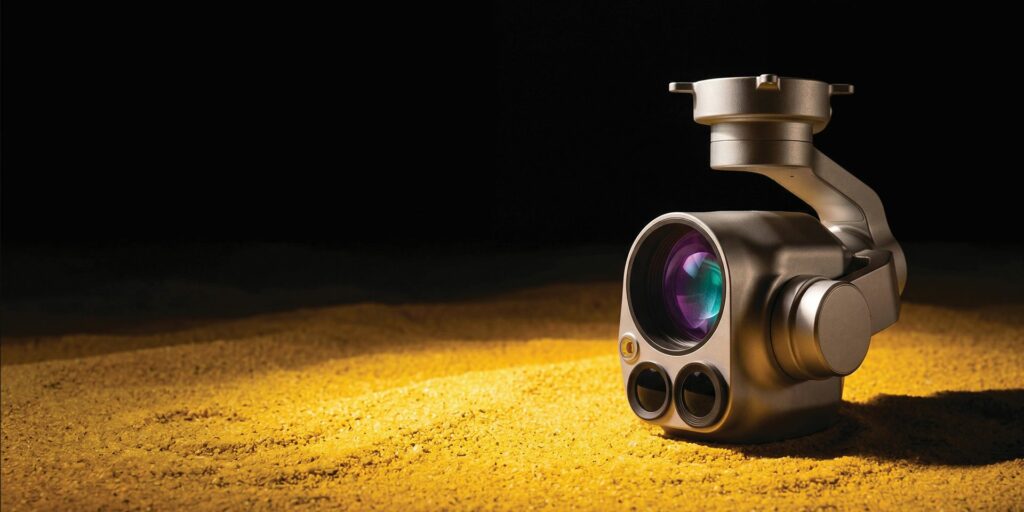
Gremsy attended the show to unveil an upcoming ultra-lightweight and ultra-compact payload product, which – at 200 g weight – it says will feature the highest performance and capabilities relative to its mass of any 3-axis EO/IR payload elsewhere on the market.
“As currently engineered, the electro-optical camera features 26x optical zoom, extendable up to 52x with digital enhancement, and 8x digital zoom on the thermal camera. For edge computing and machine vision, we have integrated the Qualcomm Dragonwing QCM8550, enabling advanced capabilities such as smart tracking, object identification and other AI-driven features. These can also be co-developed with drone manufacturers through our open architecture,” said Jay Huynh at Gremsy.
The new payload is officially named KESTREL – after the small species of falcon that Gremsy notes for its precise hovering and keen vision. As well as being engineered for NDAA-compliance and secure operations, the KESTREL also integrates a laser illuminator to support missions in public safety, drone-as-first-responder and other applications requiring precise directionality.
Achieving high optical zoom in a compact size required extensive R&D by Gremsy’s camera module department, into which the Vietnamese OEM has invested for many years to achieve in-house optimisations of optics and other vital camera ancillaries.
The KESTREL payload will be officially released in Q3 2026.
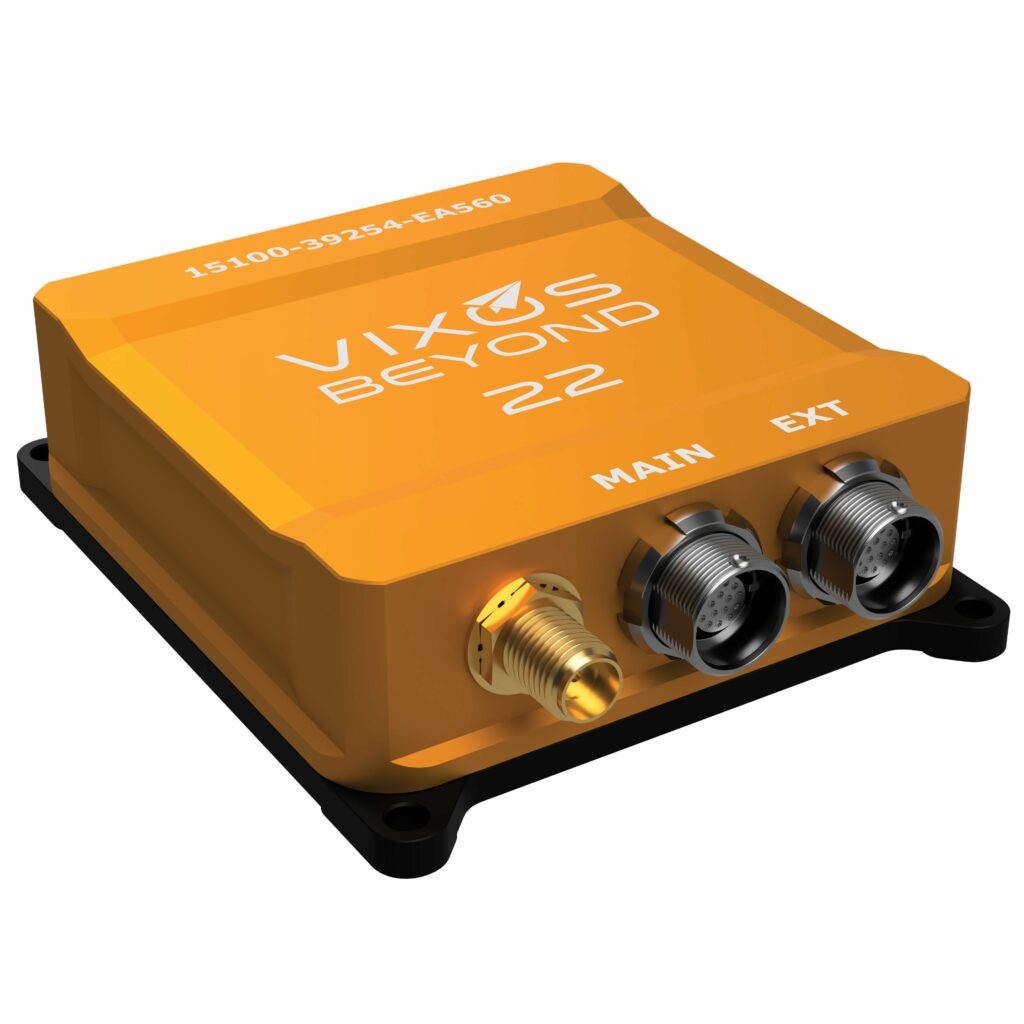
Vixos unveiled its new Beyond 22 flight termination system (FTS), which bears several key enhancements over its predecessor Beyond 12 FTS based on customer feedback received across 2025.
“Instead of four channels for termination processes, the Beyond 22 has eight, as some customers need to control more actuators, to perform a termination. Similar to the Beyond 12, it is a satcom-based FTS,” Simon Jensen at Vixos explained.
“It can also now terminate a UAV with CAN bus actuators, meaning it can either disconnect a CAN line, or even inject other, termination-specific messages into the network.”
The Beyond 22 also comes with CAN filtering. If, for example, a UAV’s servos are on the same CAN as certain sensors, it can terminate all signals to the servos, while allowing the sensors to continue operating. Hence, the manufacturer or flight operator can keep collecting data or feedback on the aircraft throughout a termination procedure.
Lastly, the Beyond 22 enables automated terminations based on breaches of geofencing or geocaging, thus incorporating regulation-compliant terminations into the autonomy of UAV missions.
The new FTS will be available from the end of 2026 onwards. Meanwhile, Vixos is also currently supplying versions of the Beyond 12 system. For added safety, the Beyond 12 system can now be augmented with an internal radio, which fits into both Beyond 12 and Beyond Base, and works seamlessly together with the satcom link.
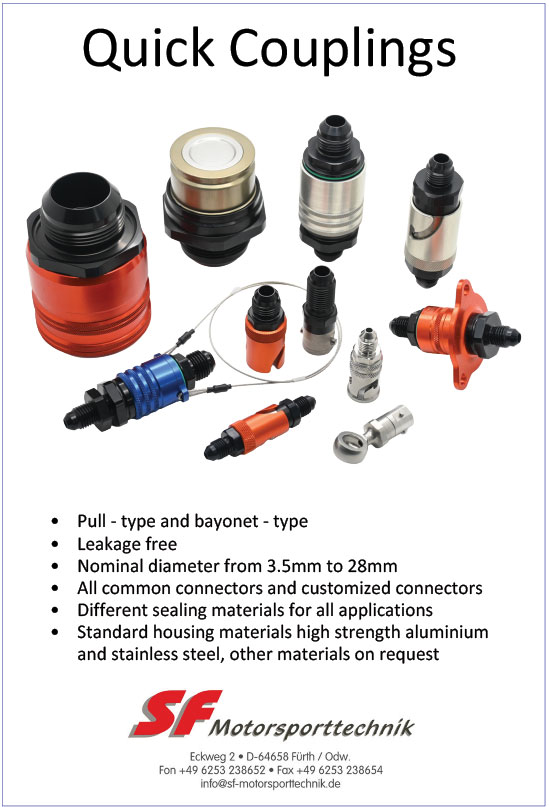
SF Motorsporttechnik showed us a new T-form fluid filter (so-described for its approximate shape) suitable for fuel, oil and other liquid applications depending on the required filtration rate.
“Most interesting in it is the automatic bypass feature. If an impermissible pressure drop occurs at the filter element, usually by some blocking at the filter element, an automatic bypass will open to make sure the engine still gets supplied with fuel or oil,” said Martin Spickermann at SF Motorsporttechnik.
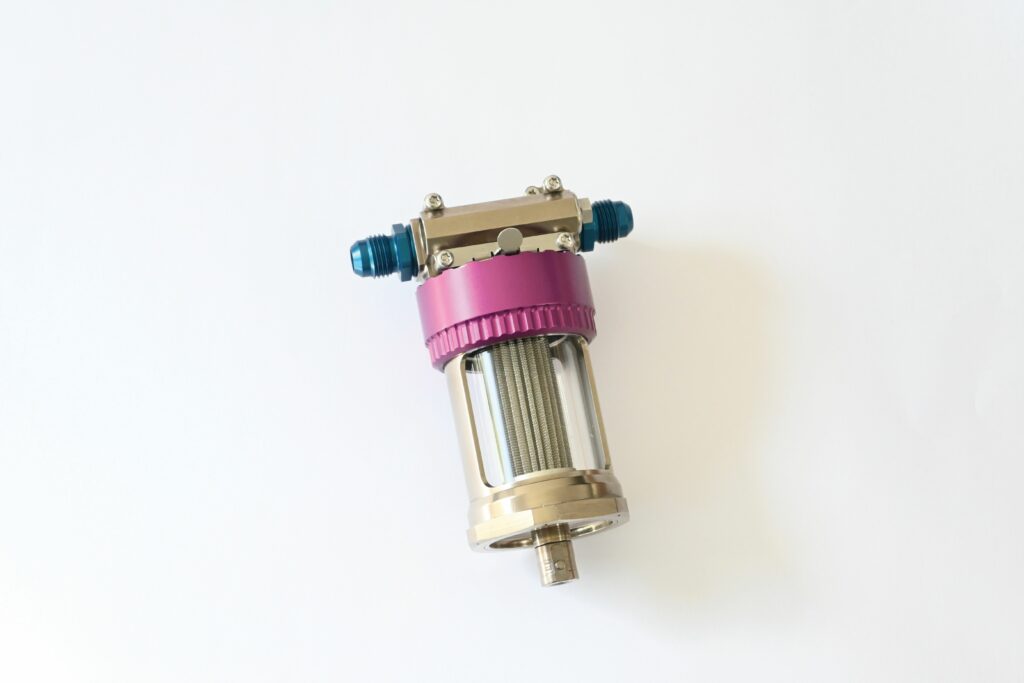
“It’s far, far better and safer to keep getting unfiltered fluid than to suddenly start losing power mid-air because you couldn’t bypass the filter.”
The new solution is also the smallest version yet of the company’s T-form fluid filters, following demands for ever smaller designs, and thus is more suitable for drone-type SWaP requirements. SF is also working on smaller next-generation versions of its fuel pumps, quick disconnect couplings and other fuel componentry.
Embention has released a new low-cost flight controller for loitering munitions and counter-UAS applications: the Veronte Autopilot KAI.
“The Veronte KAI is built on a unique two-layer architecture that separates mission-critical flight functions from high-level processing,” explained Javier Espuch at Embention.
“The first layer is a deterministic, high-integrity flight control engine designed to guarantee stability, navigation and secure execution of critical functions, including warhead activation, under the rigorous principles of DO-178C and DO-254.
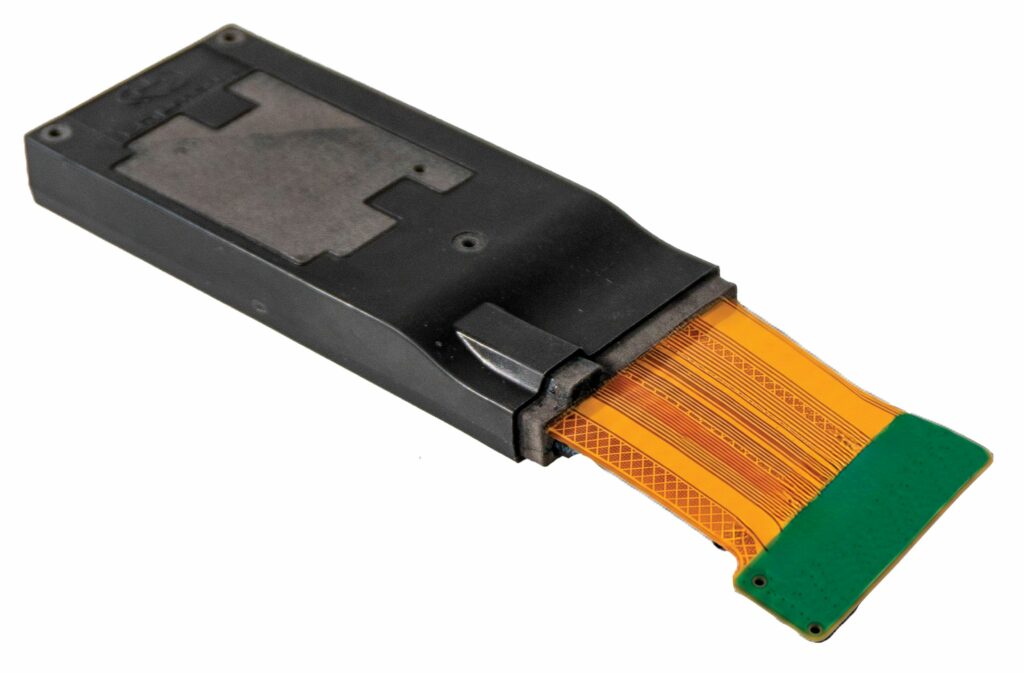
“The second layer is a high-performance computing core dedicated to embedded computer vision. It enables advanced capabilities such as target recognition, feature tracking and GNSS-denied navigation, while maintaining full compatibility with both internal and external sensors to ensure maximum situational awareness and mission adaptability.”
These systems incorporate significant cost savings because they build upon proven technology from Embention’s Veronte Autopilot 1x, reducing development time and engineering resources required. In addition, the architecture removes certain redundancies and non-critical components, which lowers part count and overall system size, while also simplifying and enabling more efficient mass production.
The device measures 12 x 5 cm and weighs approximately 60 g (in its OEM version). It additionally incorporates a full coating and other protections to prevent access into the electronics, including the ability to erase all internal data, so that in the event of capture, the munition system cannot be probed for information such as its launch location, GCS location, target and so forth.
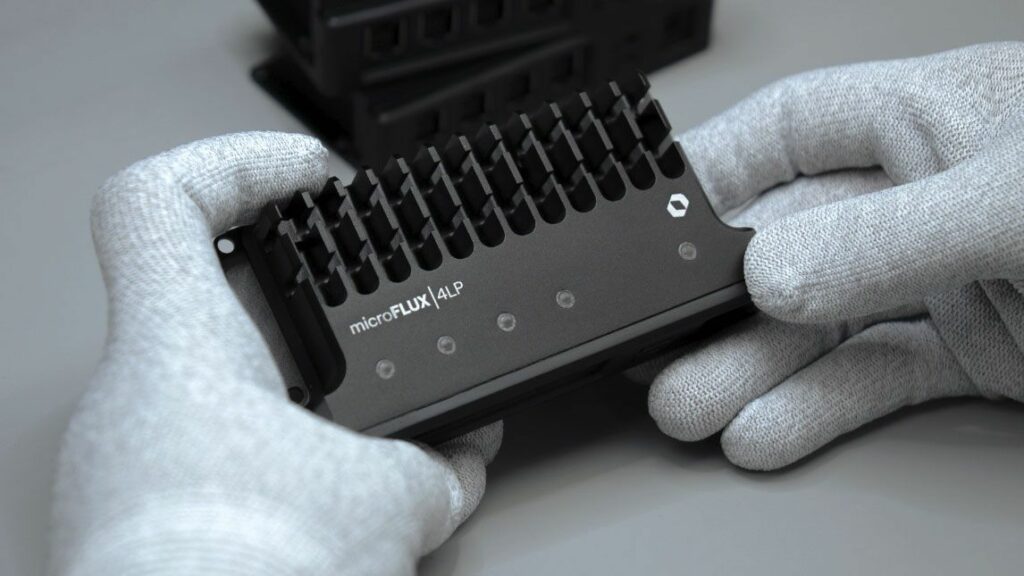
Hargrave Technologies exhibited its new microFLUX range of smart power supply units, which are NDAA-compliant, software-configurable via DroneCAN, and designed for reliable power distribution across different low-voltage subsystems such as cameras, sensors, flight controllers and actuators.
“The microFLUX systems’ output channels can be configured from 3.3 to 28 V, in certain steps, including switching them on or off during flight, meaning non-flight-critical systems like payloads can be turned off mid-mission to save power or mitigate an electrical fault,” said Felix Schulz at Hargrave.
Three microFLUX products are available as of writing. The microFLUX 2MP has two output channels and is rated for 20 A of continuous current per channel, the microFLUX 4LP has four channels and is rated to 7 A of maximum continuous current per channel at its lower voltages and 5 A at higher voltages, while the microFLUX 2LP is another dual-channel device, with the same current per channel as the 4LP.
All microFLUX products report and log current, voltage and temperature, and DroneCAN telemetry also allows communication of errors like over- and undervoltage of inputs and outputs.
The 2MP and 4LP measure 103 x 56.85 x 21 mm, while the dimensions of the 2LP are 70.4 x 56.85 x 21 mm. The 2LP meanwhile is the lightest at 83 g, with the 4LP and 2MP weighing 113 and 118 g, respectively.
Those units include an aluminium heat sink, meaning the user need not worry about overheating thanks to the effective heat dissipation the sink facilitates. Additionally, an integrated configurable over-temperature limiter further helps in preventing thermal damage to the unit and the application.
Lowental Hybrid displayed its LH Series of very small, parallel-hybrid UAV powertrains, which come as turnkey systems integrating electric motors, propellers, belt drives and single- and opposed-cylinder reciprocating engines.
“In each of our powertrains, there is a transmission system between the electric motor-generator and the combustion engine, controlled via our ECU such that the e-motor can be used to start the engine mid-air, for instance, if your UAV takes off vertically and you don’t want to start the engine until after you’re at a cruising altitude,” explained Itay Lowental.
“Then, the electric motor can directly drive the propeller to initiate forward flight, and once the engine has reached its operating power with the EFI we’ve developed, the e-motor switches to being an alternator to power onboard electrical systems.”
The powertrains can also switch seamlessly between electric and combustion propulsion to meet area-specific noise, stealth or emissions compliance needs.
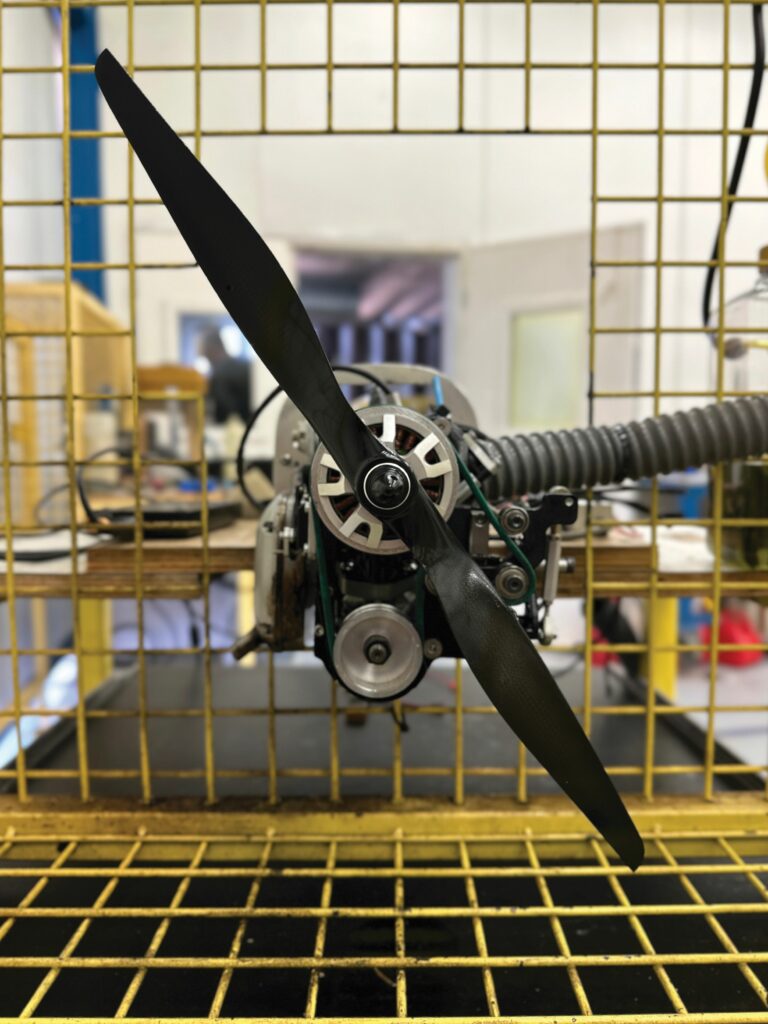
Smallest in the LH Series is the flagship LH-01, a 2.5 kg unit designed for 25 kg MTOW fixed-wing UAVs, which outputs 1.9 hp of maximum gasoline power and 3.69 hp electrically (for a combined 5.59 total hp when temporary boost speed is required).
Meanwhile, Lowental Hybrid’s LH-02 is a 3.3 kg system producing 3.2 hp via gasoline and 4.82 hp of electric power; the LH-03 weighs 4.65 kg and outputs 4.55 hp on gasoline and 9.86 hp on electricity; and the LH-04 weighs 6.1 kg and produces 8 hp on gasoline and 12.25 hp on electricity.
The engines can also be configured for heavy fuel, with SFCs running slightly higher on heavy fuel than for gasoline.
NW Blue is an Oregon-headquartered manufacturer and distributor of UAV avionics, which displayed its new NDAA compliant (and Blue List-approved) PROH757 autopilot, an OEM-style device running CubePilot’s CubeNode.
“The CubeNode uses the same processor as the Cube Orange+, the STM32H757, and so the PROH757 is functionally more or less a miniature Cube Orange+, with all the power minus some of the redundancy, but all on a board small enough for installation in FPV drones or lightweight fixed-wing aircraft,” said Ezekiel Bierschank at NW Blue.
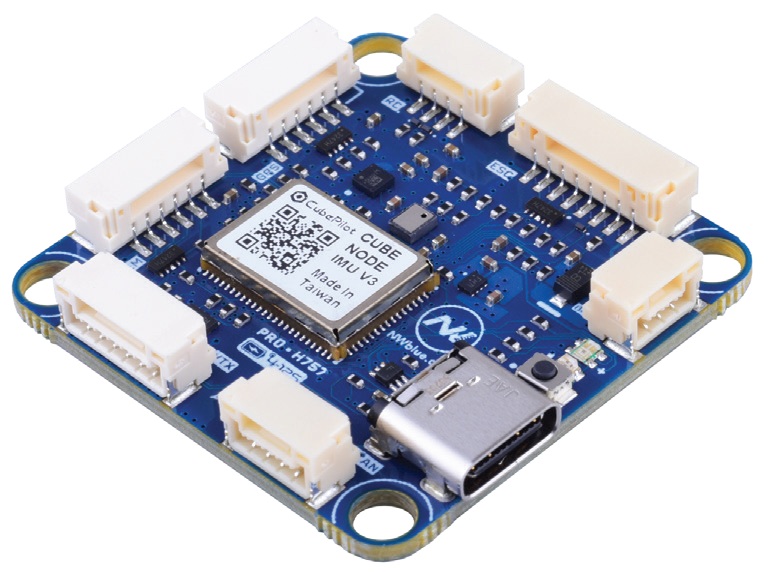
“The PROH757 flight controller comes fitted with JST-GH connectors for ease of installation and automotive grade components to ensure high quality and reliability. It features multiple UART ports, plus two 2.5 A power rails: one at 5 V and one at 10 V. The 5 V rail is current-limited with respect to externally-integrated devices, so if something were to draw extra power from that solder pad, it won’t brown-out the autopilot.”
The PROH757 also comes with several SPI, I²C and CAN peripherals, along with up to nine PWM outputs and functions on battery power inputs from 4S to 12S. It operates with Ardupilot, PX4 and Betaflight. The PROH757 is additionally manufactured in the USA, with all components securely sourced from US or allied suppliers, thereby meeting the guidelines for NDAA compliance.
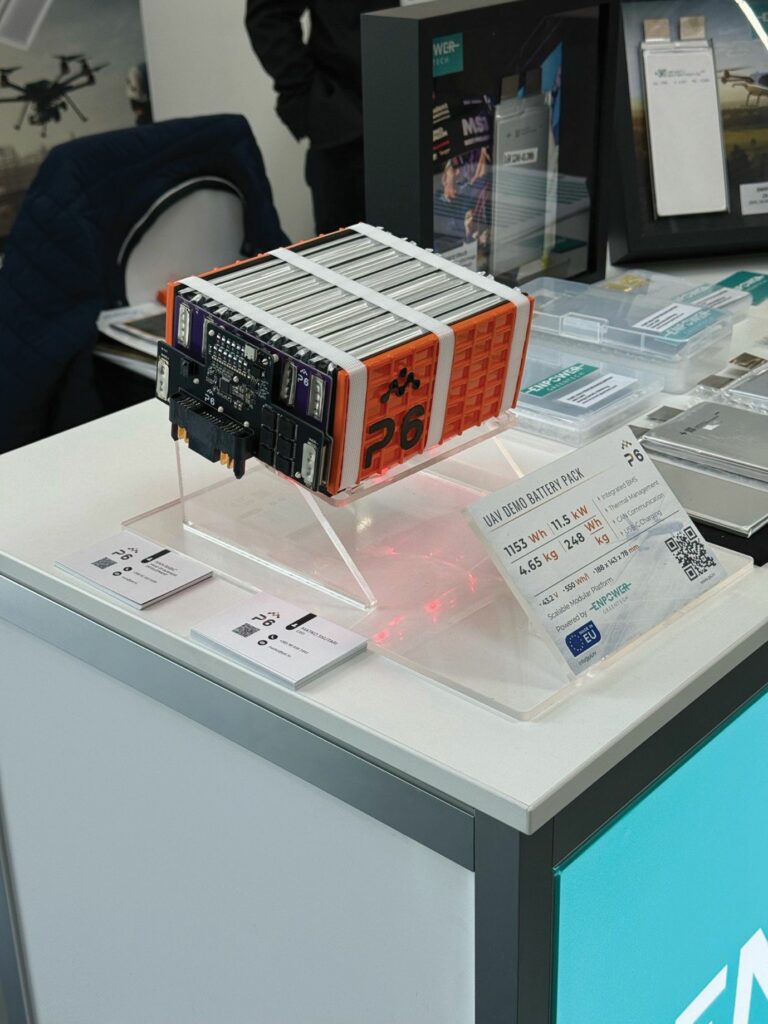
P6 is a Croatia-based developer and manufacturer of high-performance battery systems that it designs and optimises by applying its deep automotive battery engineering experience, particularly to target strict certification, SWaP-C and scalability requirements.
“We specialise in partnering with carefully selected and verified cell suppliers to suit different drone and eVTOL integration cases. Here, we’re co-located with global battery cell supplier Enpower Greentech, and we’ll use cells from them and similarly high-quality companies to deliver the best pack we can for each customer,” said Matko Skutari of P6.
Initial conversations between P6 and aircraft manufacturers typically cover the latter’s needs regarding energy density, power delivery, operating environment conditions and SWaP-C constraints, after which P6 offers proposals for how they mean to achieve all of these.
P6 aims to reduce the number of design iterations required. So, usually, one design loop is sufficient for P6 to go from prototyping to series manufacturing because it carries over automotive competencies such as smart BMS engineering, comprehensive thermal management and designing-for-manufacture. Depending on the project priorities, P6 can select cells from European or Asian suppliers to balance performance, supply-chain security, certification readiness and cost.
“But we do prefer higher-tech solutions than most pack suppliers. We’ve seen tape or elastic used to bind pouch cells and we’re really not big fans of that,” Skutari added.
“At a minimum, we measure individual cells’ voltages and temperatures, and algorithmically monitor state-of-charge, state-of-health and state-of-power, with precise calculation of how long a drone can fly before it needs to start its descent, and continual export of such important actionable data via CAN to the drone’s flight computer.”
As mentioned, US-headquartered Enpower Greentech shared a stand with P6, and was available to discuss some standout particulars of its pouch cell technology.
“We’ve advanced and optimised our battery technology through a lot of different commercial deployments in China, from infrastructure inspection to industrial mappings, and to logistics and deliveries, including last-mile package delivery services,” said Enpower’s Dr Yong Che.
“I can tell you for a fact, fewer than 1% of the battery cells used for drones in China are cylindrical cells, except maybe in drone light shows. Everything in other applications uses pouch cells, which provide higher energy and higher power compared with cylindrical cells.”
The company preferentially uses high-nickel NMC (lithium nickel manganese cobalt oxide) cathode materials in its cells, and sometimes opts for lithium cobalt oxide chemistries when working with customers who prioritise a reliable voltage and gentle discharge curve over cost-effectiveness.
In its anodes, a silicon-graphite blending is typically applied, with a high silicon content to maximise energy density, although without sacrificing too much graphite and hence power density.
“We also have developed lithium-metal batteries [LMBs] using a lithium metal chemistry as the anode,” Dr Che added.
“When paired with high-nickel NMC, LMBs can achieve really dense energy levels, above 500 Wh/kg. Bottom line, we can formulate and optimise chemistries and cell design to provide precisely customised cell solutions, especially through listening very closely to what customers need in performances, life cycles, safety and so on.”
Natrix exhibited its Natrix NXU UGV, a multirole, electric, four-wheeled autonomous platform engineered for a range of military and heavy industrial capabilities.
“The vehicle weighs around 200 kg, and measures 133 cm in length and 106 cm wide, dimensions specifically chosen so that the UGV can be physically manipulated and deployed by a team of just four people, for instance, to take it in and out of a larger transport SUV,” said Natrix’s Kaspars Zilins.
The Natrix NXU is a modular platform, with interchangeable payloads covering logistics and casualty evacuation (CASEVAC). On the expo floor, the Latvian manufacturer had the UGV displayed with a cargo box featuring a stretcher attachment on top. Zilins told us that the UGV has been used in Ukraine for both CASEVAC and logistics purposes and, accordingly, the stretcher solution has been the most heavily utilised of available options there.
“It’s now incredibly dangerous for any human to enter Ukraine’s ‘kill zone’, because of the sheer number of weaponised uncrewed military systems constantly patrolling. So, using UGVs like Natrix NXU in place of personnel for logistics or medical missions is vital for aiding Ukraine’s frontline troops,” Zilins explained.
“Having the stretcher add-on also means the UGV can take provisions or munitions out to frontline squads and then take a casualty back, making use of both mission phases.”
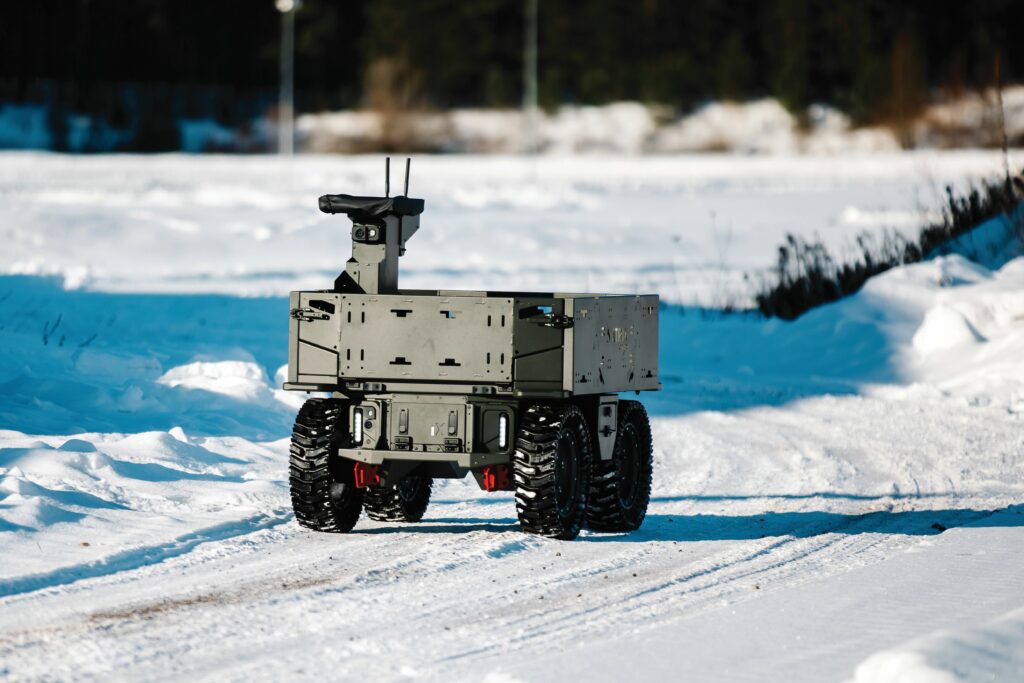
Just over 200 kg can be carried atop the Natrix NXU, and the vehicle’s battery range at full load is estimated at 50 km, with an operating speed of 12 kph.
Skygor is a Belgium-headquartered software company providing a swarming software platform developed by an international team with Ukrainian operational experience, enabling monitoring and simultaneous control of multiple uncrewed assets, including ground, aerial and maritime vehicles.

Its solutions notably integrate network and edge devices from different suppliers (be they vehicles, GCSs, field personnel or other key mission nodes), to organise them functionally and seamlessly inside a single ecosystem. Readers may recall from our cover story (page 20) that such an approach was key to Ukrainian teams soundly beating NATO’s teams in recent drone exercises.
“We can supply both a civilian network model for large-scale mesh communication between uncrewed systems and GCSs, and a more military-oriented compute model combined with an operating system for end users to create the kinds of models or settings they need for actual swarm control,” explained Anton Dovhobrod of Skygor.
“Swarms aren’t only vital in modern warfare now, but also in civilian industrial work with drones too. They’re huge cost-savers because a swarm system empowers one pilot to safely manage
100 drones. Otherwise, a company with 100 drones for monitoring infrastructure or conducting logistics may need 100 pilots to avoid accidents from human error and cognitive overload, meaning potentially huge training expenses and turnover,” added Victor Udintsov of Skygor.
Skygor’s software includes a wide variety of swarm-enabling features, such as setting intelligent formations and subgroups, chains of command, geofences, conditional autonomous behaviours and more.
To generate a single common operating picture for multiple analysts to view all uncrewed assets and other pertinent, actionable information at once, Skygor has also created its Cascade AI solution, which embeds edge computing models and large language models across said assets to display vehicles, teams and detected objects (including levels of concern or priority) across mapped terrain. Customers can, alternatively, choose to have just raw data displayed rather than analytics, if preferred.
Semai Aviation displayed and discussed the latest in its test equipment for UAV motors and propellers, which are certified to ASTM and ISO standards.
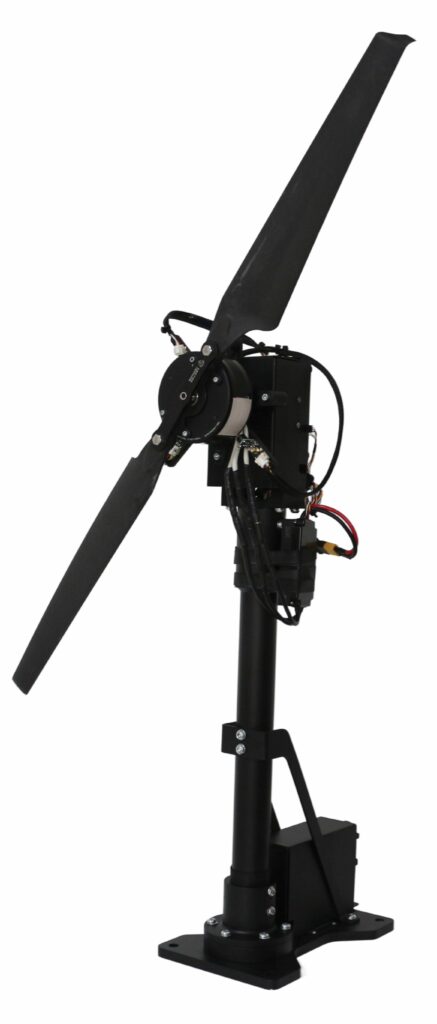
“Our test equipment – particularly our Dynotis family of test stands – provides all necessary information for R&D engineers to track iterations of motors and propellers, for motor, prop and drone developers alike to feel satisfied that they’ve made an effective propulsion solution,” said Mehmet Ali Makbuloglu.
“In particular, UAV engineers with a test stand could buy one of each motor they’re interested in, and ground test them one-by-one in controlled conditions to validate their operating behaviours, instead of having to buy four or eight to flight-test them all at once, and in potentially uncontrolled aerial conditions too.”
Through Semai’s testing software, users can create their own rpm curves, filtered for vibrational effects to analyse thrust, torque and other parameters with 99% confidence in full-scale accuracy – meaning, for instance, a maximum 100 g of potential force measuring error if using a Dynotis stand designed for measuring up to 10 kg of force.
AvioRace is an official distributor of TE Connectivity’s new WILDCAT connectors for UAVs, which were derived from the motorsport DEUTSCH connector series, using similar mechanics and layout.
“But WILDCAT is lighter in weight, and has better long-term reliability and temperature performance for aerospace applications, thanks to the new black zinc nickel plating,” said Dario Zinelli at AvioRace.
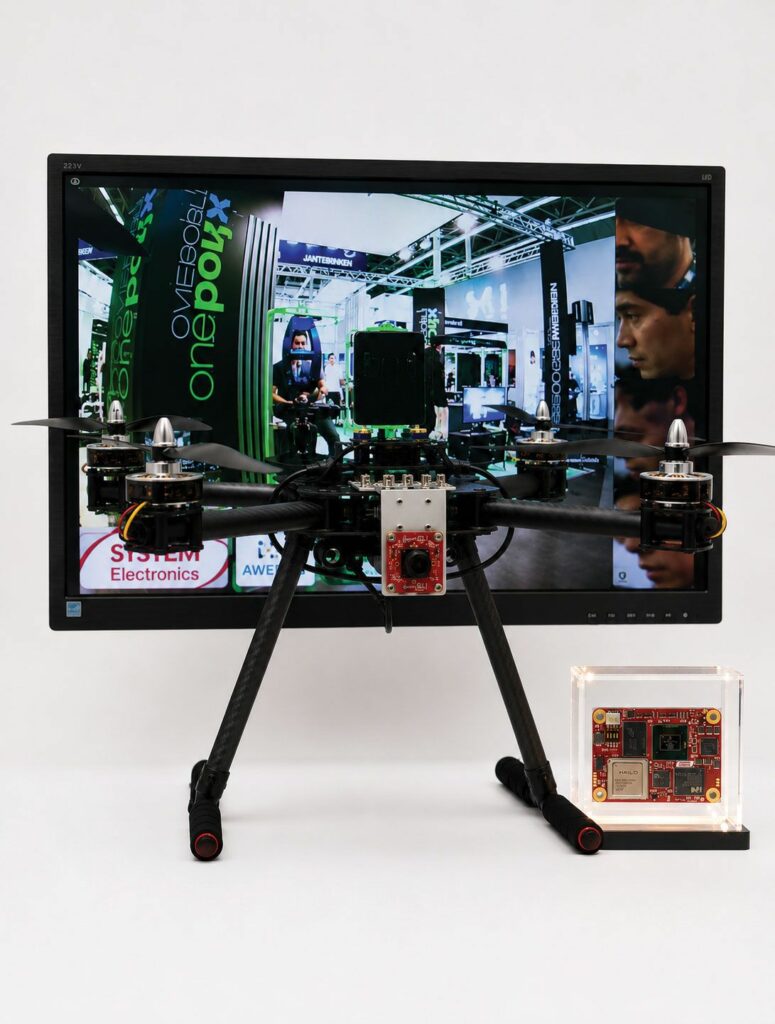
“We’re also showcasing the new Astrial System-on-Module [SoM] from our partner company System Electronics, which integrates the Hailo-8 AI Processor plus an NXP i.MX8 processor unit into a single, small, simplified PCB for programming AI capabilities such as object recognition and classification.”
The Astrial system can interface over Gigabit Ethernet, MIPI CSI, MIPI DSI, USB 3.0 and PCIe Gen3, and comes with up to 26 TOPS of AI processing. It also integrates several baseline AI camera features including noise reduction, high dynamic range, motion compensation and image stabilisation from the Hailo library.
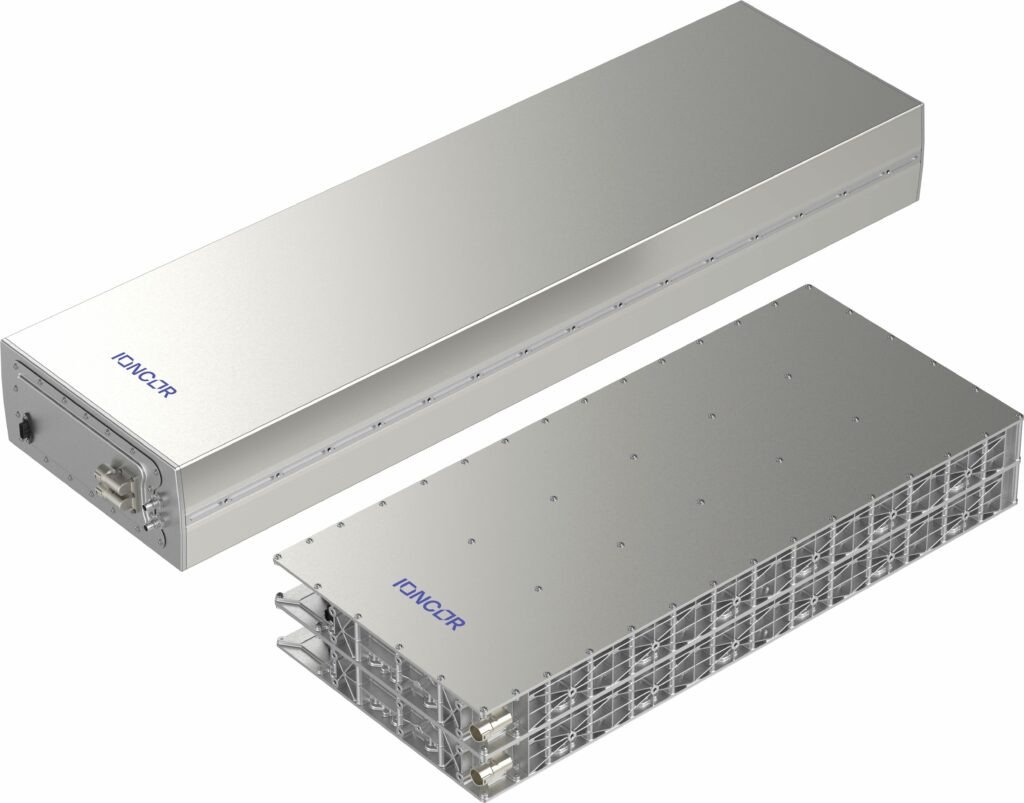
IONCOR is a battery pack manufacturer with factories in Finland and Germany that has through contract manufacturing produced more than 3 million batteries to date for both large OEMs and smaller integrators.
It exhibited at the show to display a range of new solutions, which form its own, unique product line-up and can be interconnected modularly to suit different vehicle types.
“We have, for example, our Energy Pack which is a 46.5 kWh module available so far, and by next year we’ll also have our Energy Pack Long which will be 79 kWh. These systems can be integrated for up to 1.5 MWh total in a pack,” said Jari Siirila at IONCOR.
The Finnish company can also customise its solutions for end-users’ needs, via in-house development, prototyping and testing facilities across its three factories. It is agnostic to cell type, using cylindrical, pouch and prismatic cells from a range of different suppliers and with different chemistries, as befitting each project’s specific requirements.
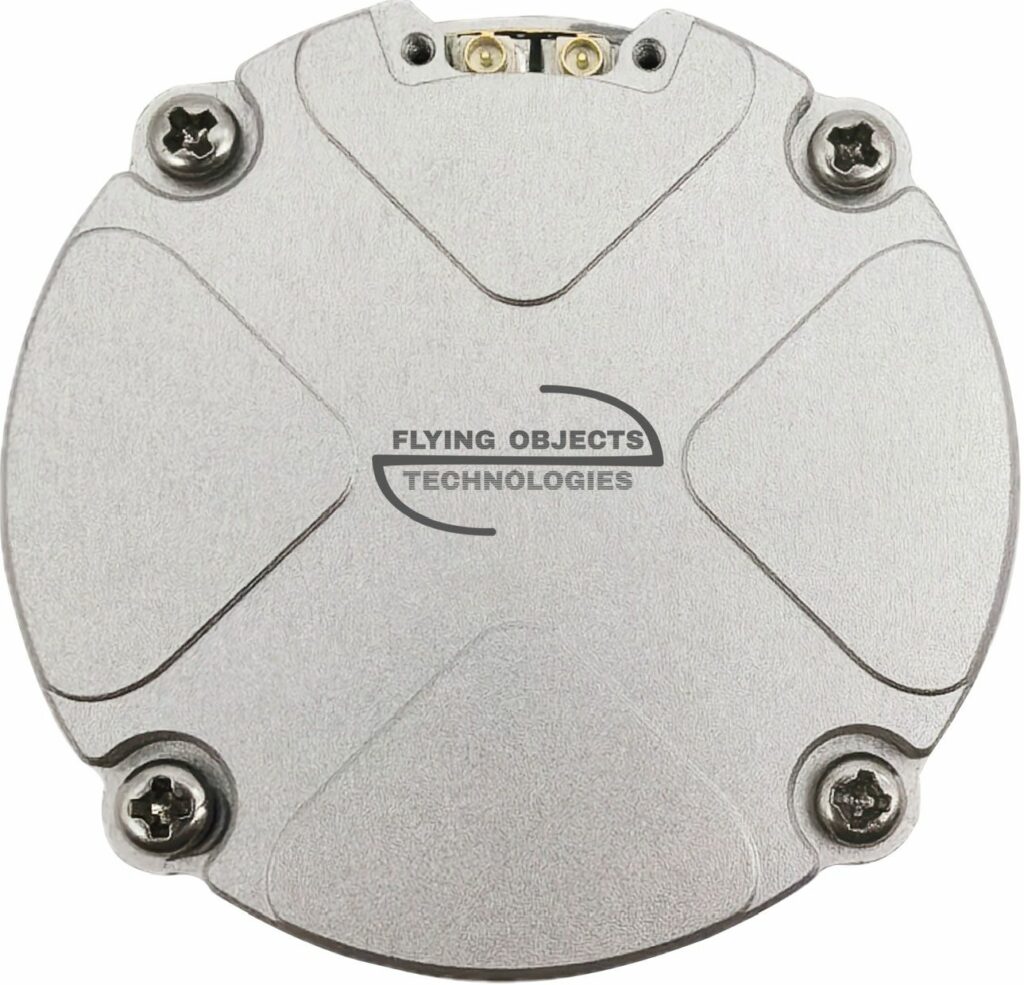
Flying Objects Technologies, a French avionics OEM, presented its FOTMini software-defined radio (SDR), which it claims (as of writing) to be the smallest drone data link on the market.
“It weighs about 25 g and enables effective, bidirectional video and telemetry links up to 35 km away,” said Jean-Luc Laydevant of Flying Objects Technologies.
“It is also sold at a very affordable price point relative to its performance and, starting this quarter, it is EU manufactured – specifically in the Baltic States – and we’re ready to manufacture it in really high volumes.
“Being an SDR enables a much smaller physical format than standard wi-fi radios, and so much greater performance efficiency. The low-price, high-volume output makes it ideal for dual-use applications.”
The FOTMini can function over frequency bands from 1 to 2.2 GHz, with 10 MHz bandwidths and 27 dBm standard operating power. The 13 mm tall, 49 mm diameter device offers downlink throughputs of up to 10 MB/s, uplinks of 600 kB/s, operating latencies of 20 ms and functions on input voltages from 9 to 26 V.
Flying Objects Technologies also displayed its FOT100, a larger SDR with various anti-jamming technologies that include adaptive frequency hopping. Its additional functionalities over the FOTMini include configurability for operations on the 5.2 GHz band, with up to 33 dBm transmit power.
Simplex Motion is a Swedish manufacturer of electric motor solutions for actuation and propulsion purposes. Among a diverse range of products on its stand, it showcased a UGV Motor Drive Unit (MDU) that it has designed particularly for powering traction in electric autonomous mobile robots (AMRs) such as those increasingly used in warehouses and factories.
“We’d long had all the parts necessary to make this kind of UGV powertrain, but a customer came to us requesting a fully-integrated turnkey solution, so we put it together for them,” said Pär Jalbin of Simplex Motion.
“As well as giving fine propulsion and steering control for indoor AMRs, it is programmed with CAN communication, safe torque off for emergency stopping and safety-limited speed, along with similar vehicular safety functionalities. It’s being rolled-out at Volvo Trucks’ facilities as we speak.”
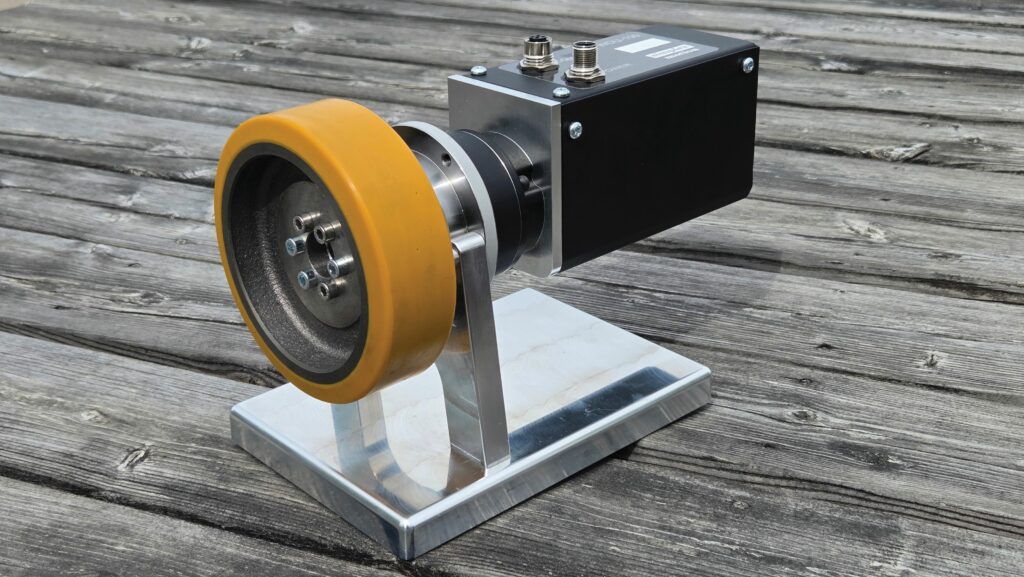
Each MDU is built with a planetary gear for compact, smooth transmission of the electric motor’s high speed into torque, which the company can provide in reduction radios from 3:1 up to 70:1. It can also have them designed for various sizes and hence load tolerances, the display demonstrator having been built to handle loads of 300–400 kg.
“The gearboxes are supplied by a very reliable and trusted partner we’ve worked with for years, and the e-motors and ESCs are made by us,” Jalbin added.
Simplex Motion also produces a wide range of e-motors and ESCs for drone integrations, from 300 W to 3.9 KW per motor.
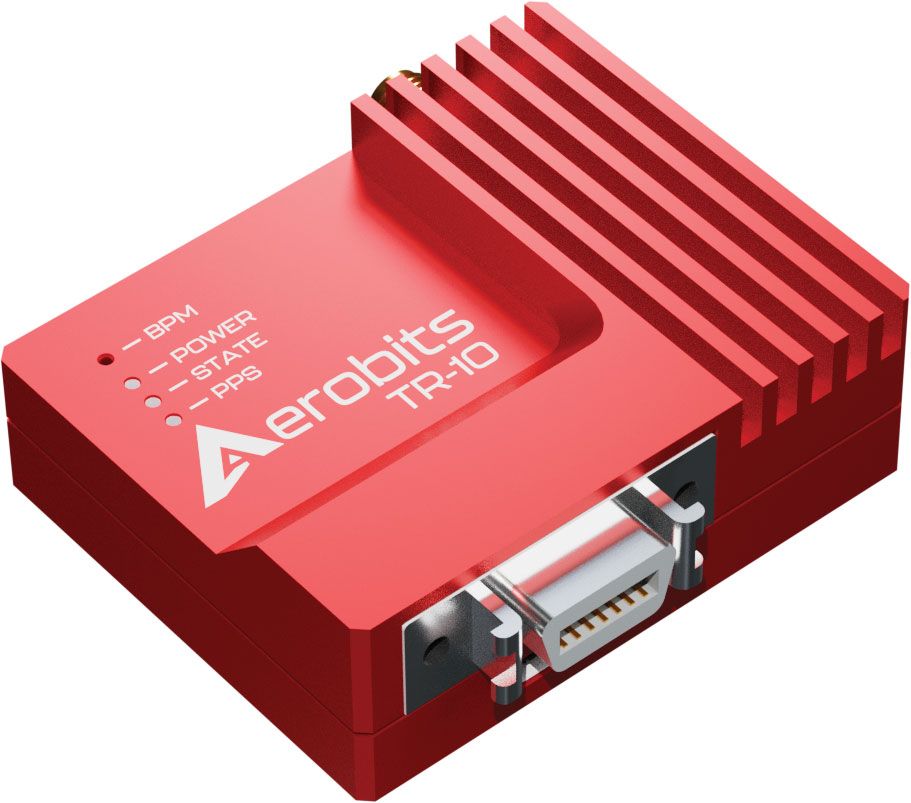
Aerobits exhibited a number of its air traffic and aviation safety solutions and, in particular, discussed its new TR-10 transponder with us.
“It’s a low-power transponder designed to function in Mode A, Mode C and Mode S with Extended Squitter options including ADS-B Out when you connect it to GNSS,” said Konrad Cioch at the show.
“We’ve already sold 500 units, with a further 800 set to be shipped over the next six months. There’s a huge demand for it in detect-and-avoid applications, including BVLOS and near airport operations.”
The TR-10 weighs 75 g and measures 53.5 x 43.5 x 18 mm. The system outputs up to 10 W in standard operation (which entails transmissions over the 1090 MHz band), and functions with an input sensitivity of -72 dBm (typically over 1030 MHz), with power input compatibility from 9 to 36 V DC.
Skycharge spoke with us about the company’s new product line of autonomous docking and charging hangars for UAVs, which currently includes two sizes incorporating the company’s patented cross-platform docking technology.
“Drones land on the docking system, where charging contacts integrated into the landing gear automatically connect with corresponding contacts on the pad,” said Andrea Puiatti, CEO of Skycharge.
“This enables automatic docking and battery charging without robotic swapping, moving mechanical parts or drone-specific docking actuators, significantly reducing system complexity while maintaining compatibility across different UAV platforms.”
Readers may recall that Skycharge’s charging system is designed with stainless steel contactor plates positioned separately to allow water drainage and enable reliable weatherproof operations, while its voltage and current dynamically adapt to the charging profile and power requirements of each UAV battery. The Skycharge SDK also enables detailed remote monitoring, management and diagnostics of the charging system, docking system and hangar.
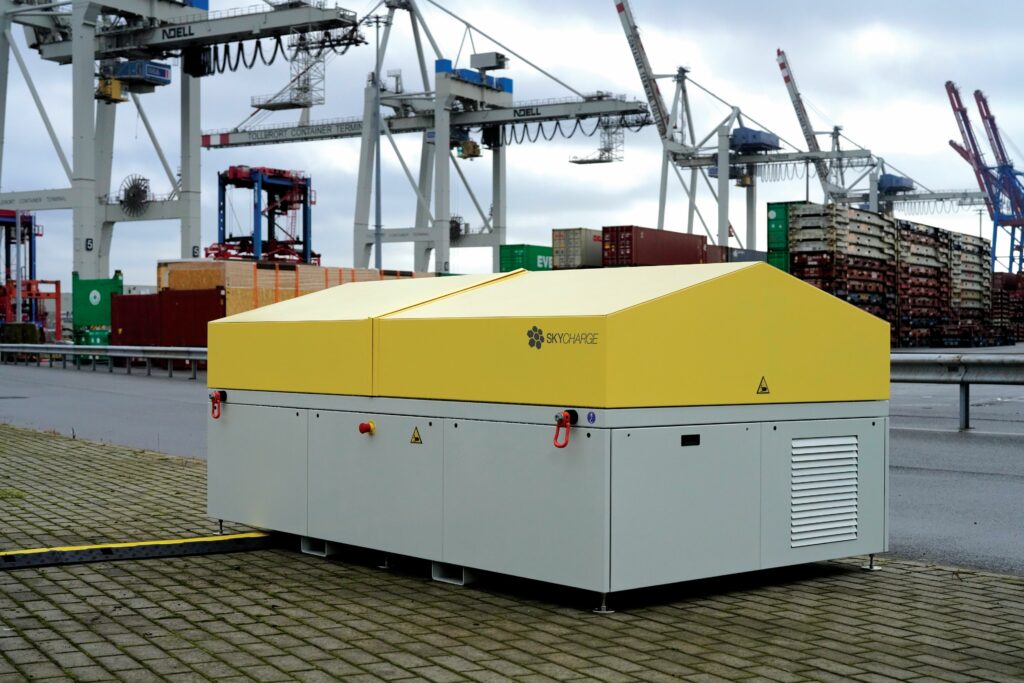
“In August, we’ll start implementing a new hangar model that should complete our product line as planned for now,” Puiatti added.
Custom versions of the Skycharge solution are also available upon request.
UPCOMING EVENTS